Neufchatel
The Three MusketeersNeufchatel is presented as a strategically placed relay in d'Artagnan's urgent journey, transforming an uncertain flight into a coordinated passage through hostile country. Its importance lies less in local description than in what happens there: the town reveals the reach, efficiency, and secrecy of the network assisting him.
A Relay in a Secret Route
Neufchatel is the second confirmed stage of d'Artagnan's route after St. Valery. At the preceding stop, he is instructed to travel from Blangy to Neufchatel and to seek the tavern of the Golden Harrow, where a password will identify him to the landlord. The instructions make the town part of a continuous chain rather than an isolated destination: each station recognizes the same mission and prepares the means for its continuation.
The Prepared Horse and Weapons
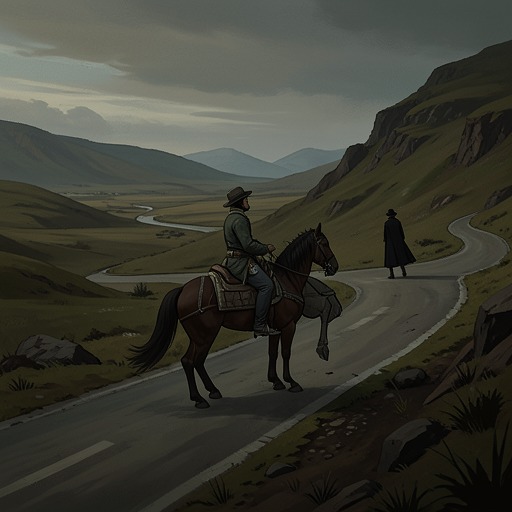
Four hours after leaving the previous relay, d'Artagnan reaches Neufchatel and follows the directions exactly. He finds another horse already saddled and waiting for him. The provision is not merely transportation. When he attempts to transfer the pistols from the horse he has ridden to the fresh mount, he discovers that the new holsters contain similar pistols. Neufchatel therefore supplies both mobility and arms, allowing him to continue at speed without losing defensive capacity or pausing to negotiate for equipment.
Passwords, Identity, and Operational Secrecy
The exchange at Neufchatel confirms the disciplined secrecy of the route. D'Artagnan identifies his destination in Paris as the Hotel of the Guards, company of Dessessart, and asks which road he should take next. He is directed toward Rouen, with instructions to leave the city on his right and stop at Eccuis, whose only tavern is the Shield of France. The same password is to be used there. Neufchatel thus functions as an information checkpoint: the travelers do not need names or explanations, only a recognized password and the next precise instruction.
Place in the Wider Conflict
Neufchatel's relay scene belongs to the same larger political and military world as the Siege of La Rochelle. The siege is described as an attempt to destroy the last major refuge of French Calvinism, whose political unrest was entangled with foreign intervention. The port also remained the last harbor in the kingdom open to England, making its control a matter of international strategy. In this setting, a prepared horse and duplicated pistols acquire broader significance: private missions move through the same logistical pressures that govern armies, ports, communications, and supply lines.
Narrative Significance
The town's narrative function is to make hidden organization visible through practical details. The route is funded in advance, the horses are saddled, the pistols are duplicated, and the next password is already established. D'Artagnan's movement is consequently shown not as a solitary feat of courage but as a passage through a distributed system of loyalty and intelligence. Neufchatel is a small but decisive hinge in that system, converting danger and distance into forward motion while preserving the secrecy on which the mission depends.