Palais-Royal
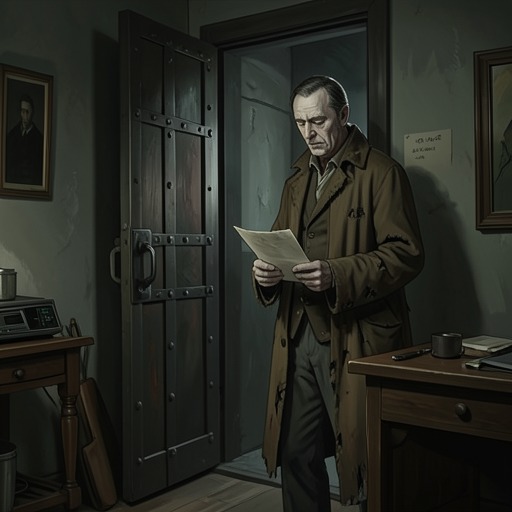
The Three MusketeersPalais-Royal functions in the novel as more than a Parisian address: it is a space where political authority becomes personal pressure. When an emissary of Cardinal Richelieu visits d'Artagnan’s lodging, he says that the cardinal wishes him well and asks him to follow to Palais-Royal. The invitation is outwardly courteous, but its hidden purpose is unmistakable. The emissary adds that d'Artagnan’s fortune may depend upon the interview, turning access to the palace into an instrument of coercion.
Political Setting
Palais-Royal belongs to the world of competing sovereign powers that surrounds the action. The citizens of Meung live amid overlapping conflicts involving nobles, the king, the cardinal, Spain, robbers, mendicants, French Huguenots, wolves, and scoundrels. This atmosphere establishes the broader political culture in which a summons to a royal or ministerial residence cannot be treated as an ordinary social call. The palace represents the institutional side of the same instability: authority is concentrated there, while danger may approach under the forms of service, courtesy, and official business.
The rivalry between Louis XIII and Cardinal Richelieu gives such spaces a divided political meaning. Louis XIII appoints M. de Treville captain of the King's Musketeers and surrounds himself with a devoted military body. Richelieu responds by maintaining his own Cardinal's Guards, and the two rivals compete over the courage and reputation of their men. Although both publicly condemn duels and brawls, they secretly encourage their servants to fight and take pleasure or disappointment from the results. Palais-Royal consequently stands within a system in which formal government and private faction are inseparable.
The Summons to d'Artagnan
The palace enters d'Artagnan’s immediate story through an attempted summons. The visitor sent on Richelieu’s behalf is described as affable, even honeyed, but his message carries a threat beneath its civility: d'Artagnan is expected to present himself at Palais-Royal, and his future may depend on obedience. The young man recognizes the maneuver as a snare and smiles at its clumsiness. His response is significant because it reverses the intended relation between palace and outsider. Instead of being overawed by the cardinal’s proximity, d'Artagnan reads the invitation as evidence that Richelieu is trying to draw him into a controlled encounter.
The episode also clarifies the political value of d'Artagnan. He is not yet securely established within the King's Musketeers, but his recent conduct has made him important enough for Richelieu’s circle to seek him out. The proposed journey to Palais-Royal is therefore both an offer and a test. It promises advancement while threatening entanglement, showing how court favor can be made conditional upon submission to a minister’s private designs.
Power, Law, and the Mousetrap
The palace’s political significance is sharpened by the novel’s account of the mousetrap, a method of secret arrest developed alongside organized police. In such a procedure, the arrest of a suspected person is kept concealed; men wait in ambush in the first room, admit visitors, close the door behind them, and gradually take control of nearly everyone who frequents the establishment. The method converts hospitality into confinement and ordinary movement into exposure.
Against this background, the summons to Palais-Royal acquires the logic of a mousetrap even though the scene does not establish that d'Artagnan is actually arrested there. The important point is structural: a powerful authority can make a request that the recipient cannot safely refuse, while concealing the coercion inside an apparently legitimate interview. The same tension appears when Louis XIII insists that an edict remains an edict and that fighting is forbidden, yet privately allows Treville and the Musketeers to approach him by the back staircase after their clash with five of the cardinal’s Guardsmen. Official rules remain visible, but political power determines when and how they are applied.
The Palace and Wider Networks of Authority
Palais-Royal’s significance extends beyond Parisian intrigue because the cardinal’s authority is connected to war, diplomacy, and surveillance across Europe. While La Rochelle is under siege, the blockade and its dyke serve military and political purposes: the city is the last major Calvinist stronghold and the final French port open to the English. Spanish, English, and Italian malcontents, together with soldiers of fortune from many countries, gather under the Protestant banner, making the conflict an international network rather than a purely local rebellion.
News from England further intensifies this atmosphere. The capture of Montague, an envoy of the Duke of Buckingham, provides proof of a league involving the German Empire, Spain, England, and Lorraine against France. Papers discovered in Buckingham’s abandoned lodging also compromise Mme. de Chevreuse and, consequently, the queen. The cardinal therefore operates through messages, envoys, seized papers, secret interviews, and military blockades. Palais-Royal symbolizes the metropolitan point from which these dispersed pressures are organized and interpreted.
Narrative Significance
As a location, Palais-Royal is defined less by architectural description than by its function in the machinery of power. It is the destination to which a young swordsman is summoned, the place-name used to give a threat the appearance of official legitimacy, and part of the political geography linking Paris to England, La Rochelle, and the competing courts of Europe. Its dramatic force comes from the uncertainty surrounding the invitation: an interview may offer protection, advancement, or arrest, and the recipient must decide whether apparent favor conceals danger.
The palace also provides a contrast with the mobile world of the Musketeers. d'Artagnan and his companions move through streets, inns, ships, battlefields, and foreign roads, relying on speed, courage, and personal loyalty. Palais-Royal represents the opposite method of action: fixed authority, controlled access, indirect command, and the conversion of personal fortunes into instruments of statecraft. The location therefore condenses one of the novel’s central conflicts—the struggle between official power and the independent honor of armed men who refuse to let a polite summons determine their fate.