There are hours which last a year
The Three Musketeers“There are hours which last a year” is a concise expression of subjective time under terror. Spoken at the climax of Milady’s anxious wait for Felton’s escape attempt, it transforms a clock-measured interval into an experience of seemingly endless duration, making suspense itself the event.
Meaning and Immediate Context
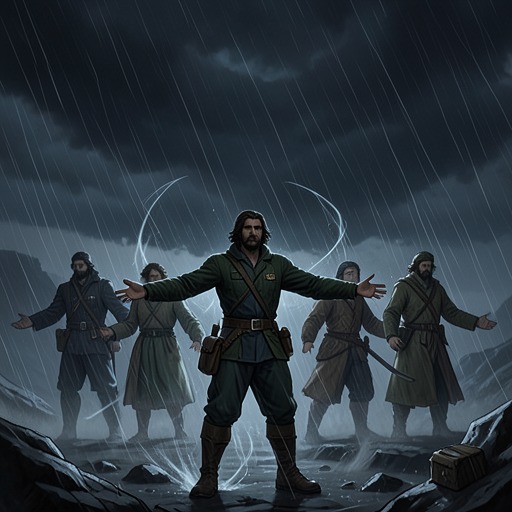
The expression appears after Milady has shut the window, extinguished the lamp, and lain down as Felton instructed. While the storm moans outside, she hears the file grinding against the bars and repeatedly sees Felton’s shadow through the panes whenever lightning flashes. The physical details establish that liberation is underway, but they do not make waiting easier: every sound in the corridor intensifies her fear rather than resolving it.
The sentence follows an hour during which Milady remains almost motionless, panting and covered in cold sweat, with her heart oppressed by frightful agony at each movement she hears. Its general formulation gives a name to that bodily ordeal. The hour is objectively brief, yet fear stretches it until it resembles a year; time is measured not by the clock but by the number and intensity of threatening sensations endured.
Narrative Function
The expression operates as a pause within a rapidly consequential escape sequence. The file is working, Felton is close, and the storm supplies continual interruption and concealment, but the narrative temporarily suspends the outward action to register Milady’s inward duration. The result is a strong contrast between mechanical progress and psychological stasis: the bars are gradually being removed, while the waiting prisoner experiences no relief.
Its placement also delays the revelation of success. Only after the statement does the narration resume the clock’s movement, marking the expiration of the hour and Felton’s renewed tap. Milady then springs from the bed and opens the window, discovering that two removed bars have created an opening large enough for a man to pass through. The expression therefore stands at the threshold between agonized anticipation and physical escape.
Time, Fear, and Suspense
The line turns an ordinary unit of time into a figure for crisis. A year ordinarily suggests extended duration, while an hour suggests a limited interval; their collision produces the paradox that gives the expression its force. Fear does not merely accompany time in this scene—it alters the scale by which time is felt. Each movement in the corridor becomes a separate ordeal, and the silence between movements becomes nearly as oppressive as the danger itself.
The surrounding imagery reinforces this distortion. Milady is described as holding her breath, panting, sweating coldly, and suffering at every sound. Her body registers duration before the narration interprets it. “There are hours which last a year” is thus both an observation about time and a summary of embodied terror: suspense is made measurable through breath, waiting, sound, and repeated expectation.
Recurrence and Thematic Significance
As a memorable generalization, the expression rises above the immediate escape and gives the episode a portable psychological truth. It explains why a short interval can dominate a character’s consciousness and why suspense may feel longer than the action that follows it. The sentence also preserves the scene’s moral and dramatic tension: Milady’s freedom depends on Felton’s dangerous labor, but her experience of that labor is helpless waiting, not control.
The decisive consequence arrives when the hour ends. Felton taps again, Milady opens the window, and the removed bars reveal a passage to freedom. The expression consequently marks not a final delay but the last, stretched instant before reversal. Its year-like hour ends at the precise moment when suspense becomes escape.