
The Arithmetic of Greed
The Wreck of the Titan, or FutilityExplores how calculation, profit, and risk replace seamanship and mercy.
increasing Bearing strength in each event
 decreasing
Bearing strength in each eventdecreasingThe Cost-Benefit Collision
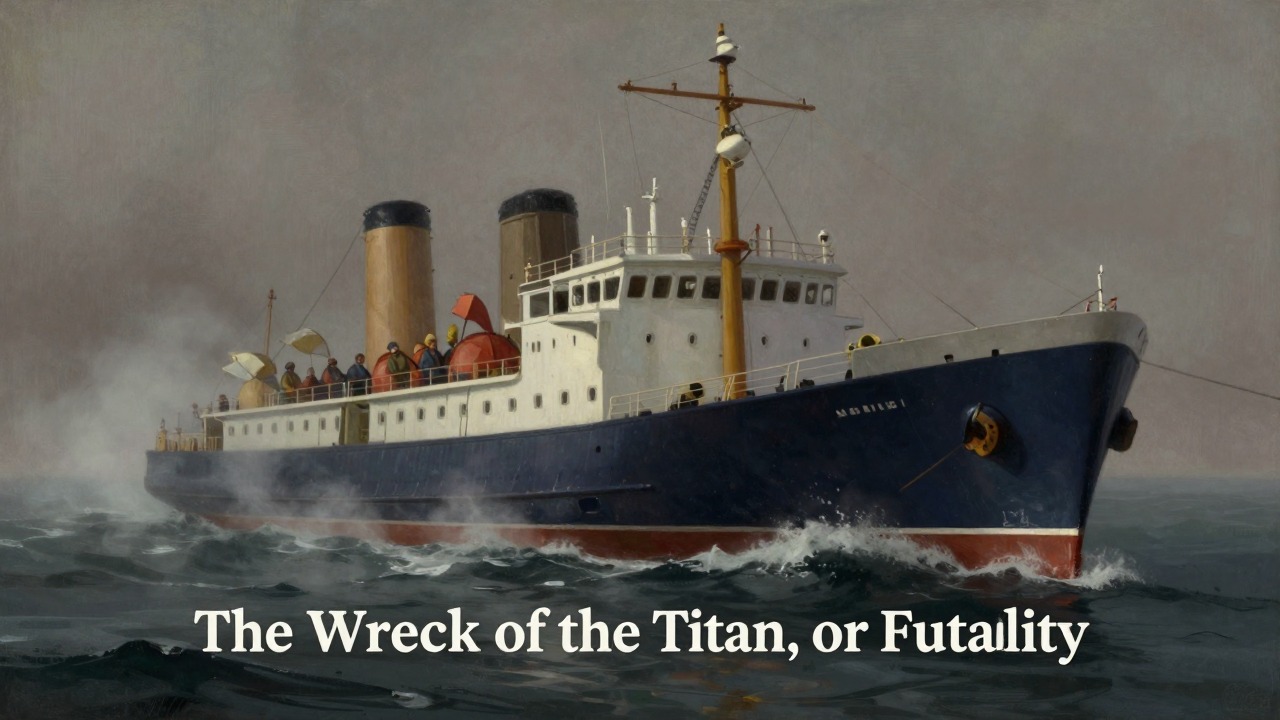
The Cost-Benefit Collision
The Moment
The company's rule for full speed in fog is justified with four reasons, all calculating which hull should suffer a collision. The smaller ship, the reasoning goes, should bear the damage.
Why It Matters
This is pure arithmetic applied to human lives. The company treats death and injury as numbers to be minimized in profit calculations.
The greed is not individual but systemic, built into the rules of navigation.
The Underwriter's Bet
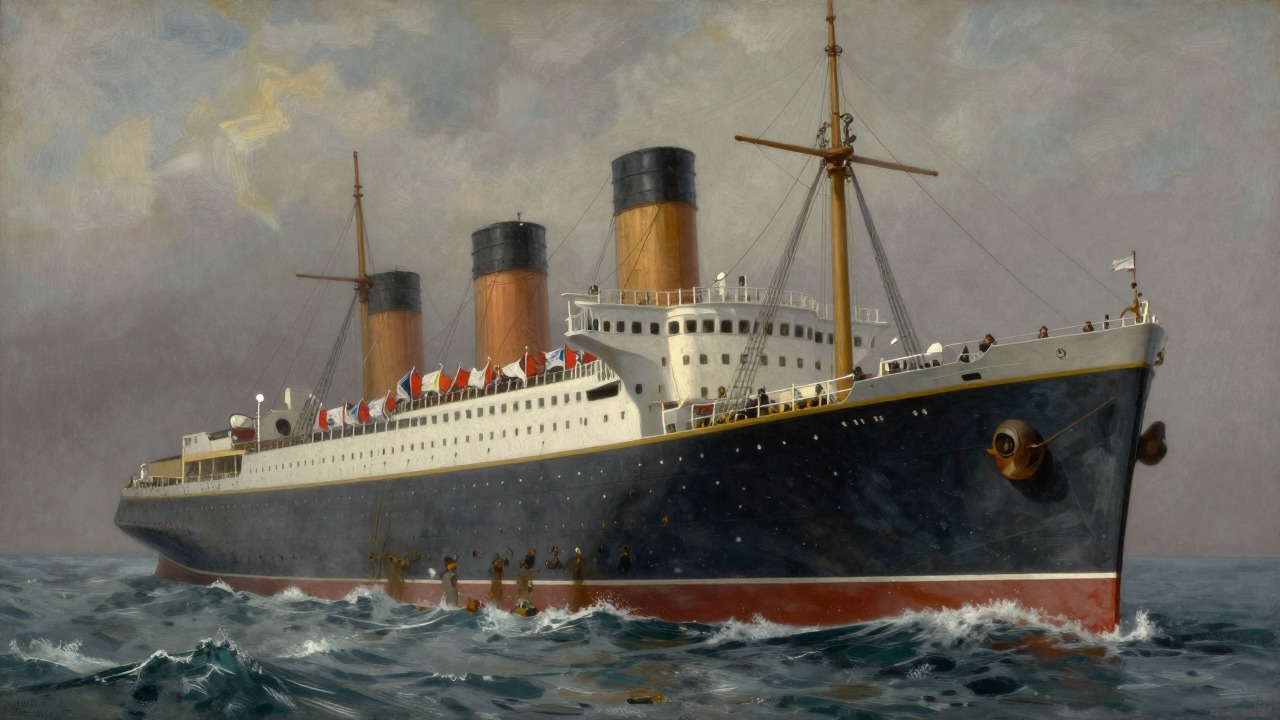
The Underwriter's Bet
The Moment
Mr. Meyer and other underwriters insure the Titan, knowing she will run the Northern Lane at full speed through fog and snow. They accept the risk in exchange for premiums.
Why It Matters
The underwriters are gambling on the ship's safety while profiting from the same speed that makes her dangerous. They are part of the moral chain that leads to death.
Meyer's later cry of ruin is not sympathy for the dead but fear for his own money.
The Maury Conversation
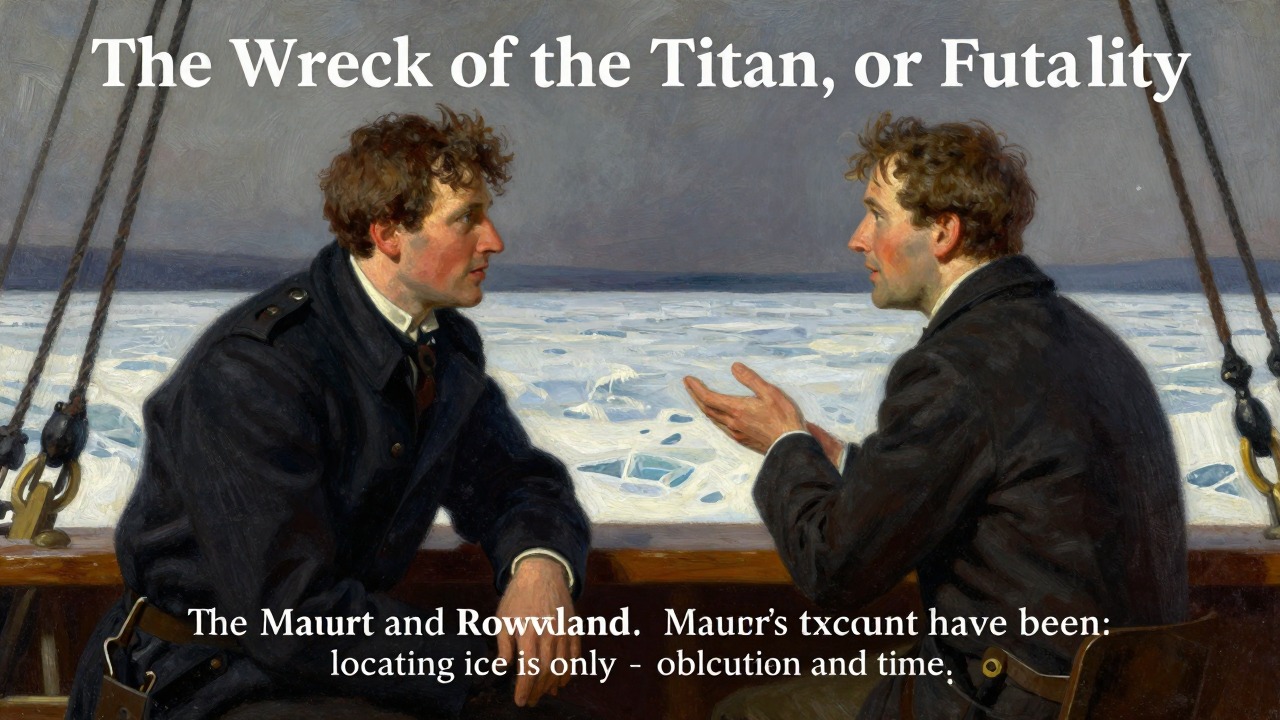
The Maury Conversation
The Moment
The first officer and Rowland discuss Maury's theories of currents and ice detection. Rowland says locating ice is only a matter of calculation and time.
Why It Matters
The conversation shows what good seamanship could have been: using science to avoid danger. But the company has already decided that speed is more important than calculation.
The same officer who discusses theory later helps drug Rowland, revealing the gap between knowledge and morality.
The Insurance Dialectic
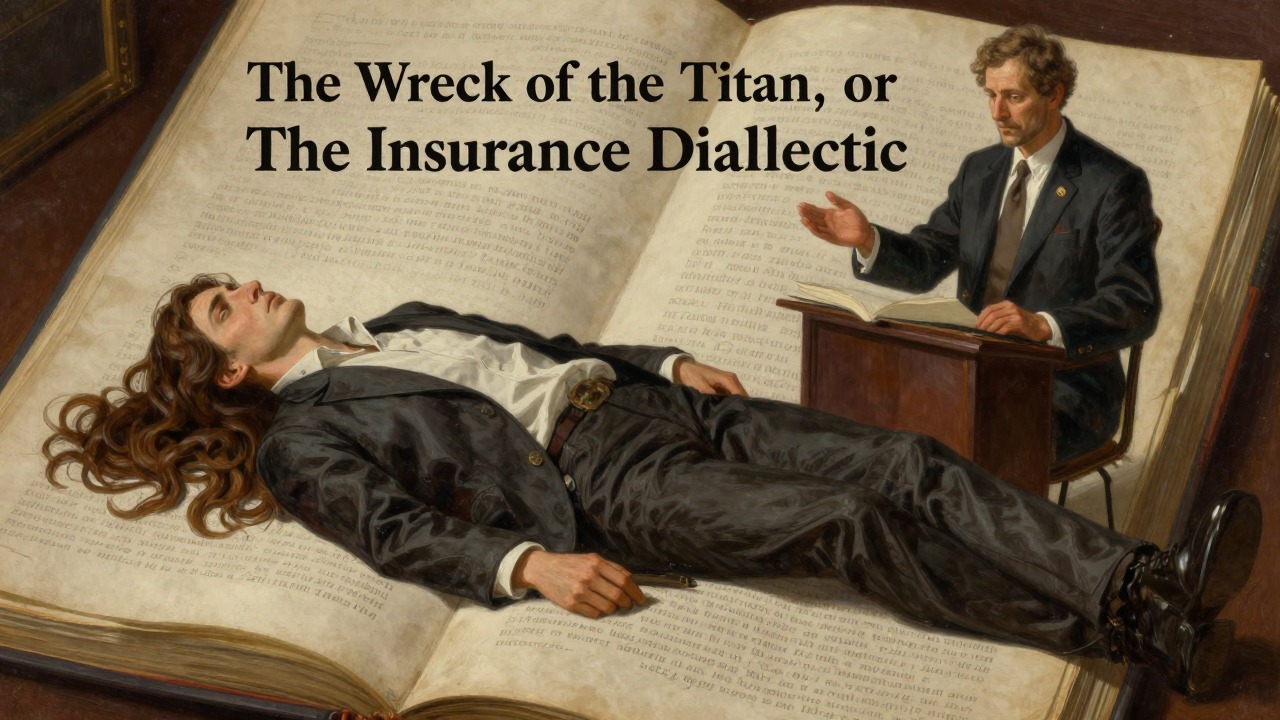
The Insurance Dialectic
The Moment
The legal argument turns on barratry, the collision clause, and part ownership. The attorney tells Meyer that concealment has no bearing on the validity of the policy.
Why It Matters
Insurance language reduces the wreck to a set of abstract terms. The dead are invisible behind the clauses.
This is the triumph of arithmetic over memory, and the reason Rowland will later reject the system.
The Ruined Stockholder
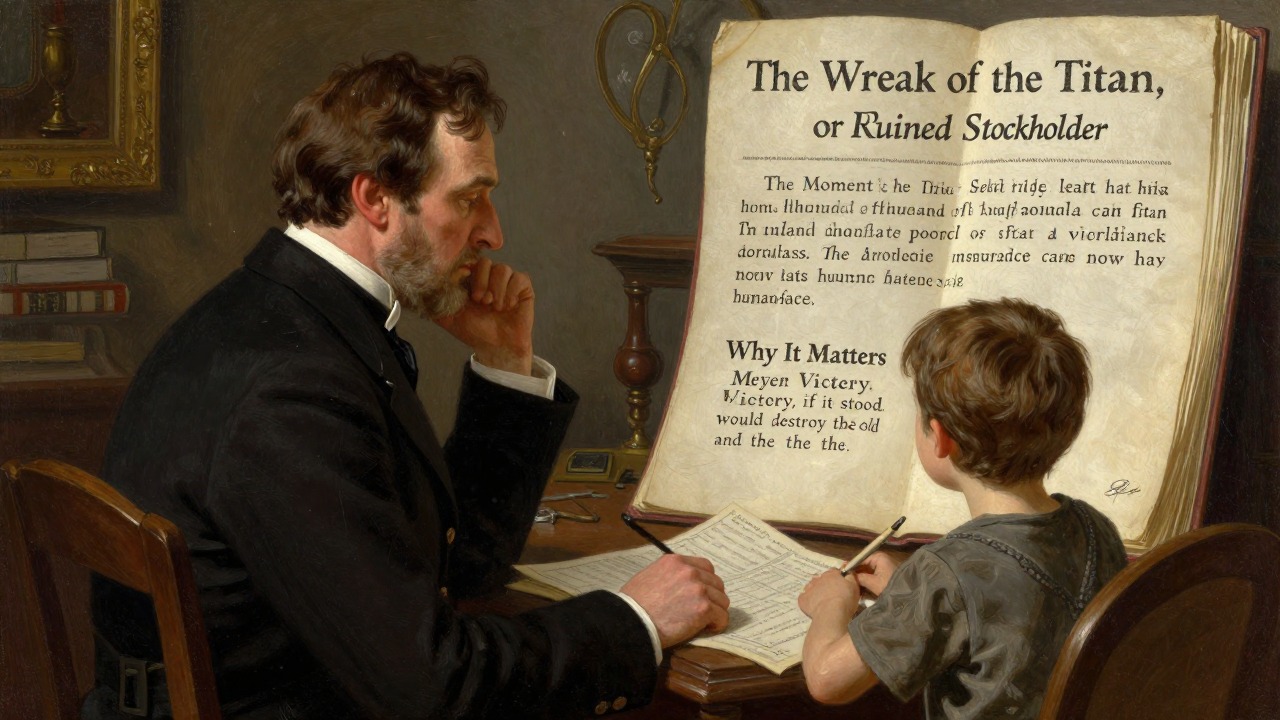
The Ruined Stockholder
The Moment
Mr. Selfridge learns that his one hundred thousand pounds of Titan stock is worthless. The arithmetic of the insurance case now has a human face.
Why It Matters
Meyer's legal victory, if it stood, would destroy the old man and the child. The cold calculations of profit and loss meet the warmth of a grandfather's love.
Rowland's refusal to testify is a rejection of the arithmetic that treats people as numbers.
before departure
before the voyage
the night of the drugged watch
at Lloyds after the wreck
in Meyer's office, Chapter Thirteen
