
The Unsinkable Titan's Fatal Voyage
The Wreck of the Titan, or FutilityTraces the great steamship Titan from its confident departure through two collisions and its final sinking.
increasing Bearing strength in each event
 decreasing
Bearing strength in each eventdecreasingThe Floating City Departs
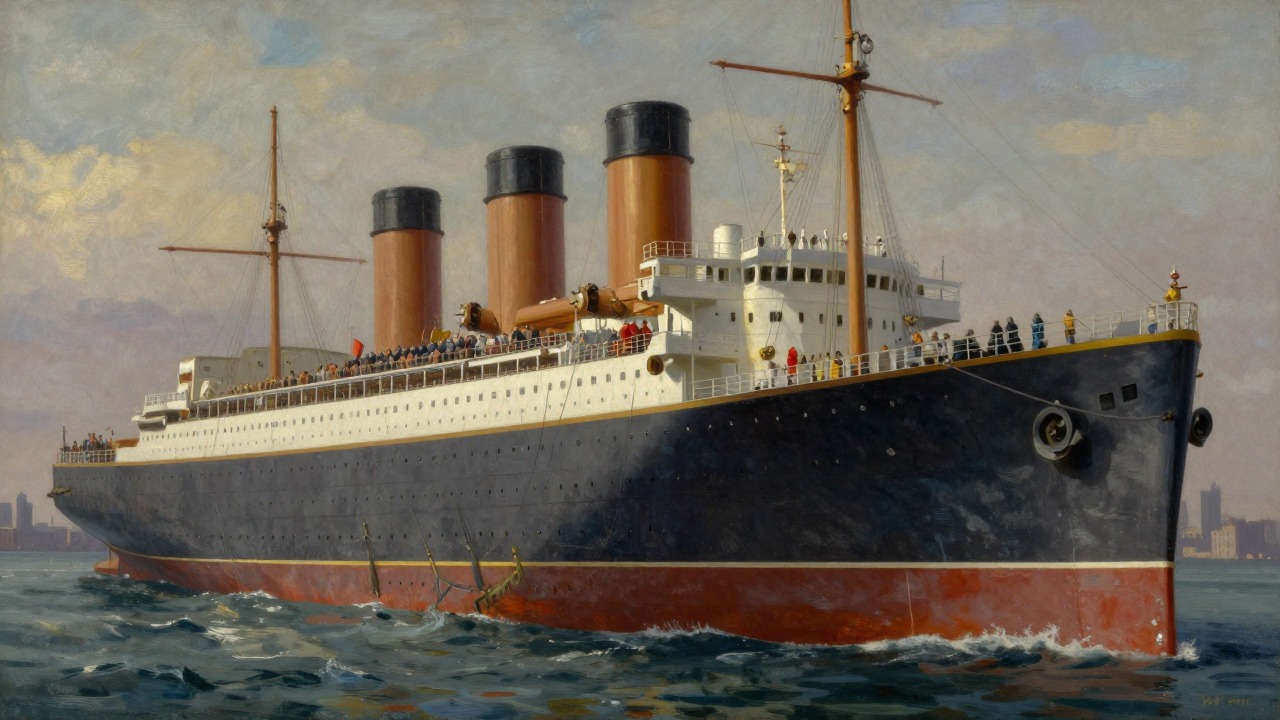
The Floating City Departs
The Moment
On a chill April morning the eight-hundred-foot steamship Titan leaves New York harbor with two thousand passengers, powerful engines, and a record to break. She is called the largest craft afloat, a floating city whose steel hull is divided into nineteen watertight compartments and advertised as practically unsinkable.
Why It Matters
The company has announced that the Titan will steam at full speed in fog, storm, and sunshine on the Northern Lane Route, winter and summer. The rule is defended with four reasons, all resting on the assumption that the smaller hull will always suffer and that the Titan herself can survive any collision.
This opening establishes the hubris that will doom the ship. Every detail of modern safety is described only to be undermined by the greed and confidence that send the Titan at twenty-five knots through the fog of the North Atlantic.
Night Collision with the Royal Age
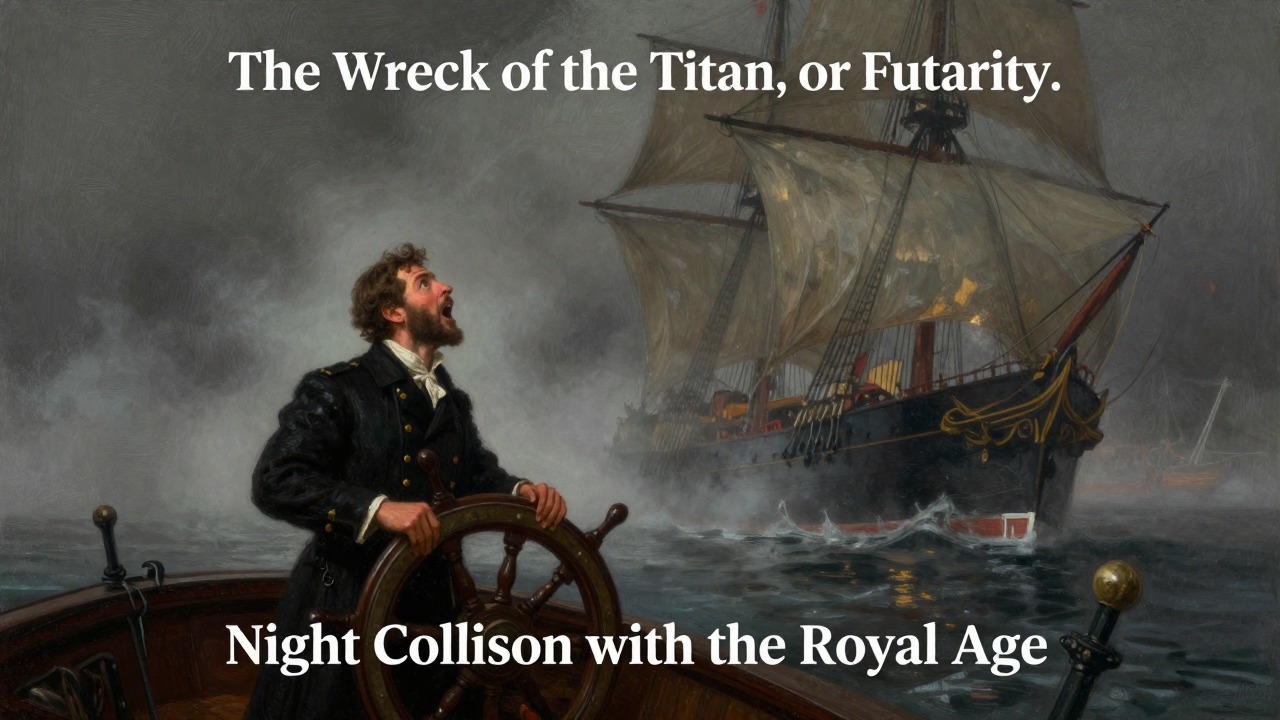
Night Collision with the Royal Age
The Moment
In a dense fog, the lookout cries out that a ship is dead ahead. The first officer orders the wheel hard aport, but the square sails of a deep-laden ship appear out of the darkness and the Titan cuts her in two almost without a crash.
Why It Matters
The two halves of the doomed vessel slide past, and from one of them comes a curse: "May the curse of God light on you and your cheese-knife, you brass-bound murderers." The Titan's officers do nothing to help, and the ship steams on.
This collision is the hidden crime that the rest of the book will expose. It proves that the full-speed rule is not merely reckless but murderous, and it gives John Rowland his moral mission.
Drugged Lookout and Iceberg
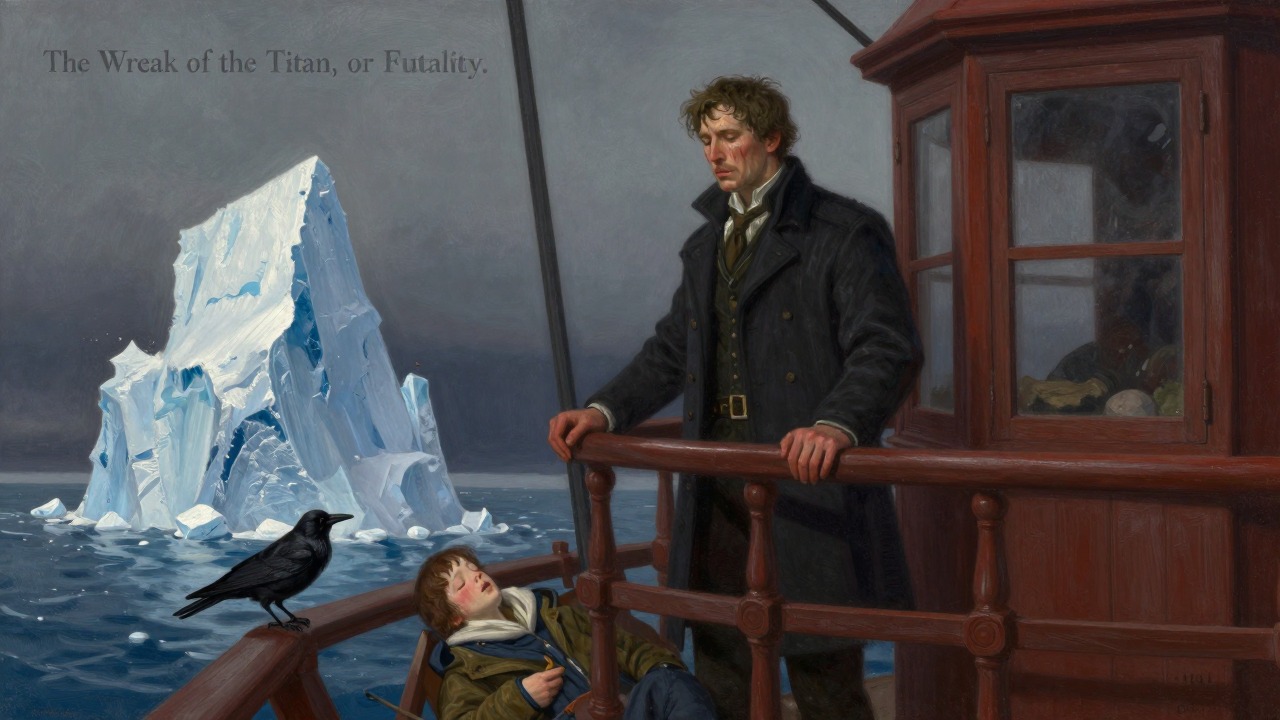
Drugged Lookout and Iceberg
The Moment
Rowland, drugged with an infusion of Indian hemp, is stationed on the starboard bridge lookout out of turn. He suffers terrifying hallucinations, then is startled awake by a sleepwalking child.
Why It Matters
Before he can fully recover, the crow's-nest screams "Ice ahead. Iceberg. Right under the bows." The first officer rings the engine-room telegraph, but in five seconds the bow of the Titan begins to lift against a field of ice.
The drug is the steamship company's weapon against Rowland's testimony. Yet the same drugged night places the child at his feet and produces the precise moment when the unsinkable liner is destroyed.
The Titan Capsizes and Sinks
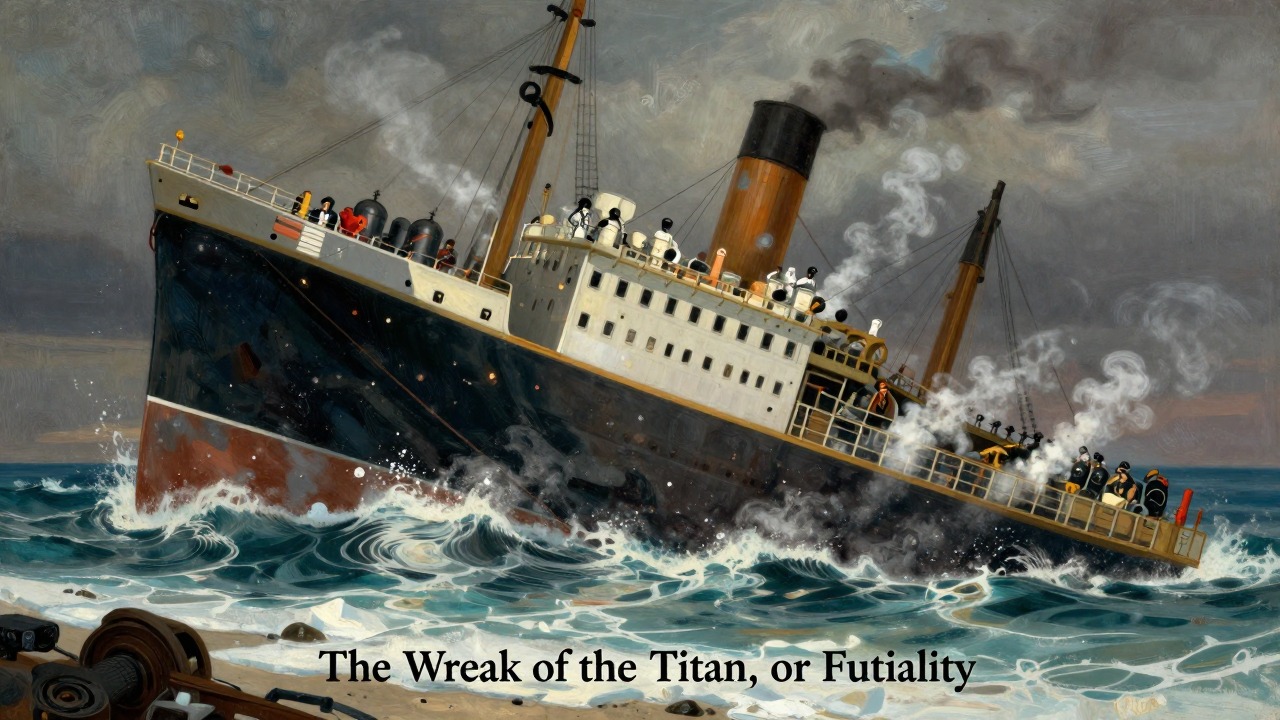
The Titan Capsizes and Sinks
The Moment
Seventy-five thousand tons of steel rush onto a low icy beach, rise out of the sea, heel, and crash down on her side. Boilers and engines break loose, scalding steam fills the engine-room, and the Titan slides back into the water as a dying monster.
Why It Matters
Nearly all of her people, unable to climb vertical floors and ceilings, are trapped inside. A boat with the number twenty-four on her bow pulls away carrying a few survivors, including the mother of the child who has just found safety in Rowland's arms.
The sinking transforms the abstract idea of the unsinkable into a mass grave. It also strips away every artificial protection of civilization, leaving only the raw struggle for survival.
World Learns of the Wreck
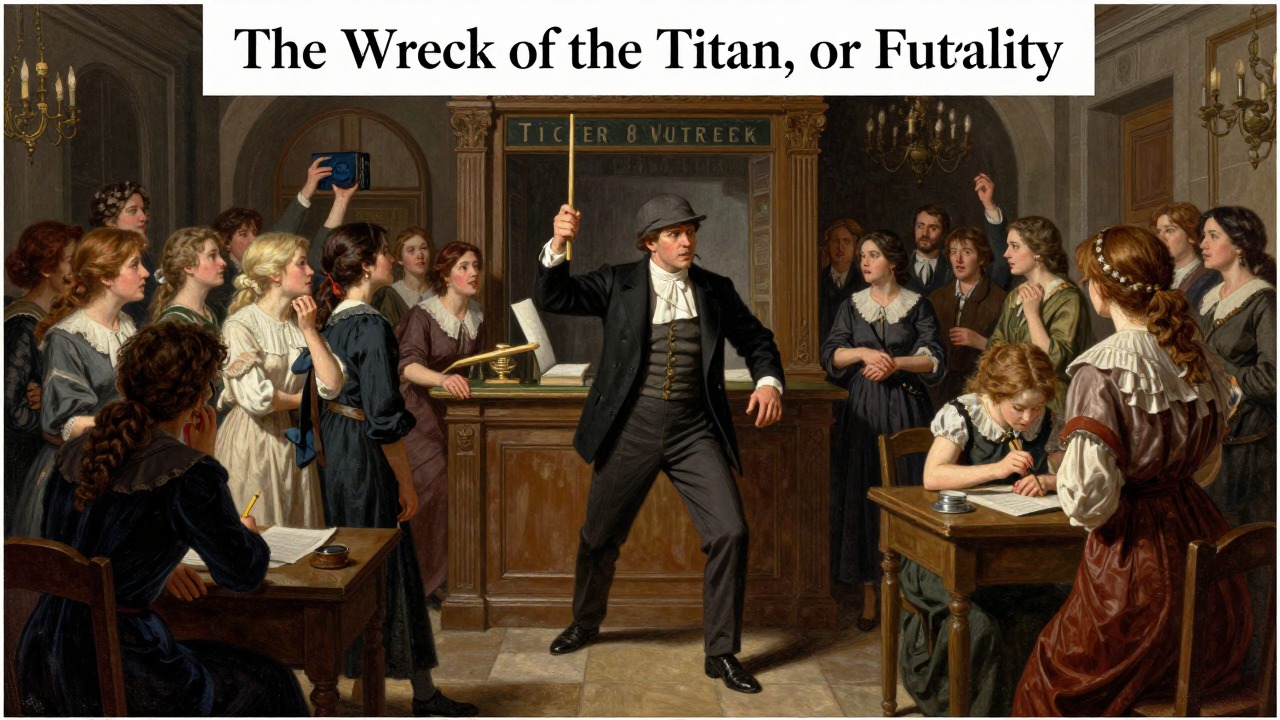
World Learns of the Wreck
The Moment
The Crier at Lloyds announces the destruction of the Titan, and the Royal Exchange is thrown into an uproarious panic. Weeping women crowd the Intelligence office while underwriters climb over desks to hear the news again.
Why It Matters
The earliest reports list the captain, first officer, boatswain, seven sailors, and one lady passenger as the saved. No one yet knows about the Royal Age, the drugged lookout, or the man and child waiting on an iceberg.
The disaster enters the public sphere as a financial and emotional shock. The gap between the official story and the truth becomes the engine of the rest of the narrative.
departure from New York, early April
first night out
second night, shortly after midnight
within minutes of the iceberg strike
days after the sinking, at Lloyds
