
Atheist in the Storm
The Wreck of the Titan, or FutilityRowland's religious crisis moves from militant denial to an involuntary prayer for the child.
increasing Bearing strength in each event
 decreasing
Bearing strength in each eventdecreasingThe Old Denial
The Old Denial
The Moment
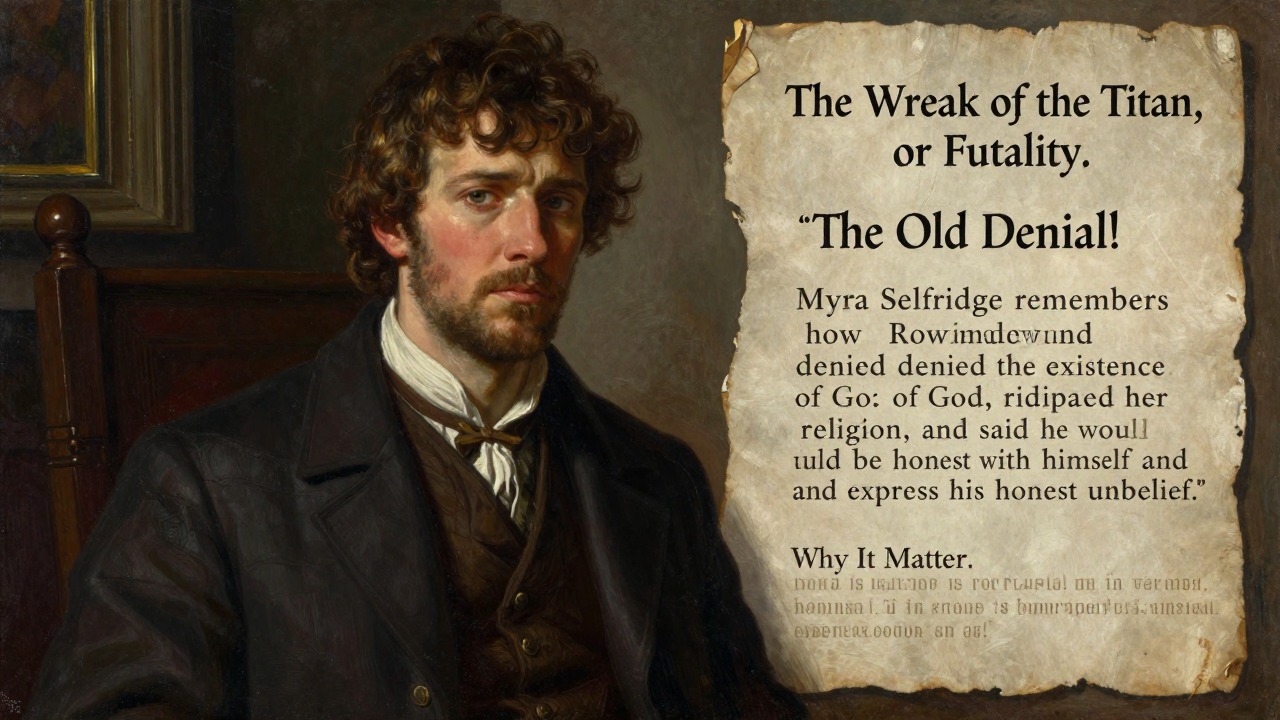
Myra Selfridge remembers how Rowland denied the existence of God, ridiculed her religion, and said he would be honest with himself and express his honest unbelief.
Why It Matters
Rowland's atheism is not casual; it is a core part of his identity. He has accepted the universe as a machine of cause and effect.
This will make his later prayer all the more significant.
The Universe Without God
The Universe Without God
The Moment
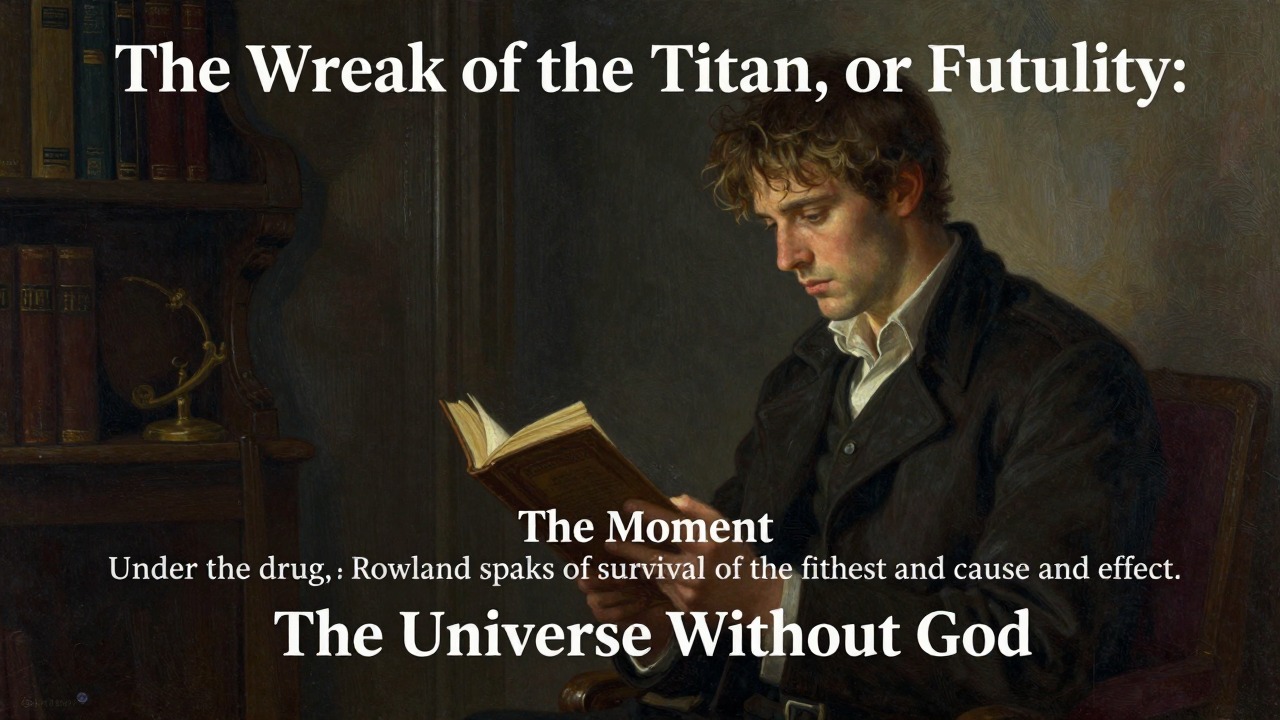
Under the drug, Rowland speaks of the survival of the fittest and cause and effect. He tells himself that the universe explains itself without a merciful God.
Why It Matters
His philosophy is articulated at the moment of his greatest vulnerability. He is still proud, but the drug is breaking down his defenses.
The speech is interrupted by the iceberg, as if nature itself is answering his denial.
The Empty Sky
The Empty Sky
The Moment
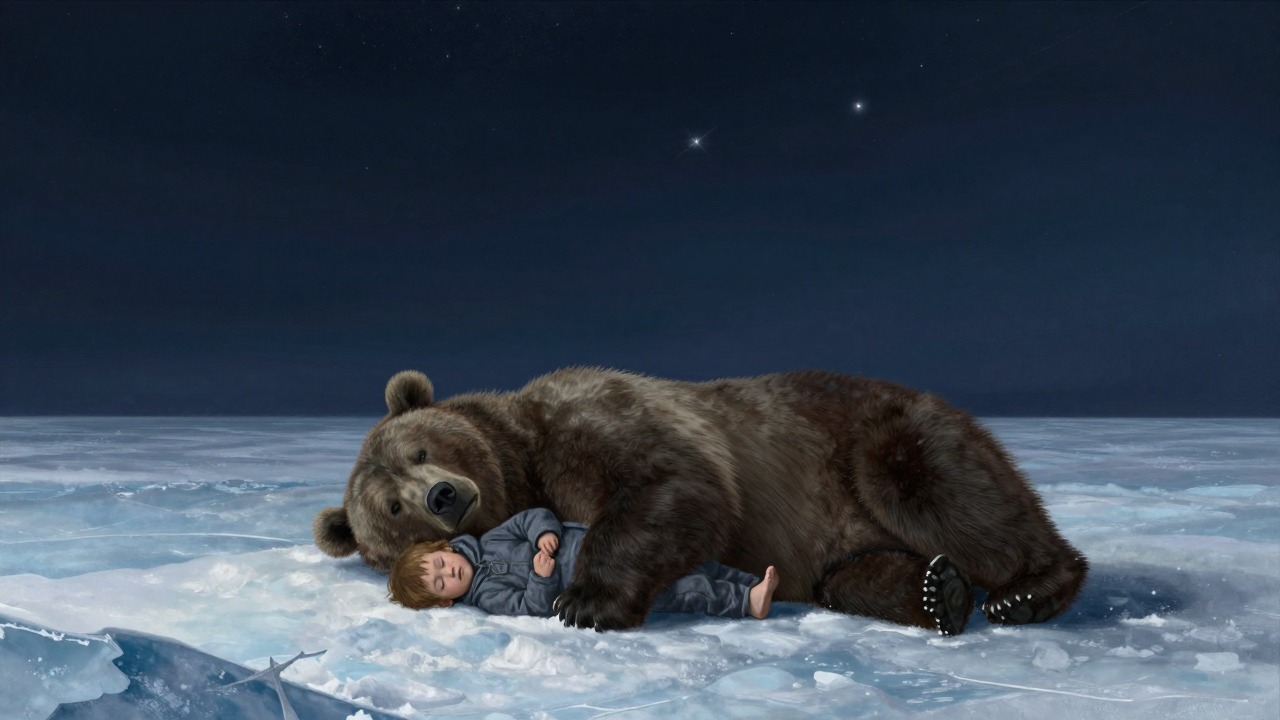
Alone on the ice with a sleeping child and a dead bear, Rowland looks up at the stars and scorns the Christians' heaven and hell. He says no good, merciful God created this world.
Why It Matters
This is the darkest point of his religious rebellion. He sees no evidence of mercy in the universe, only indifference.
Yet the child's need is about to push him beyond his own philosophy.
The Prayer
The Prayer
The Moment
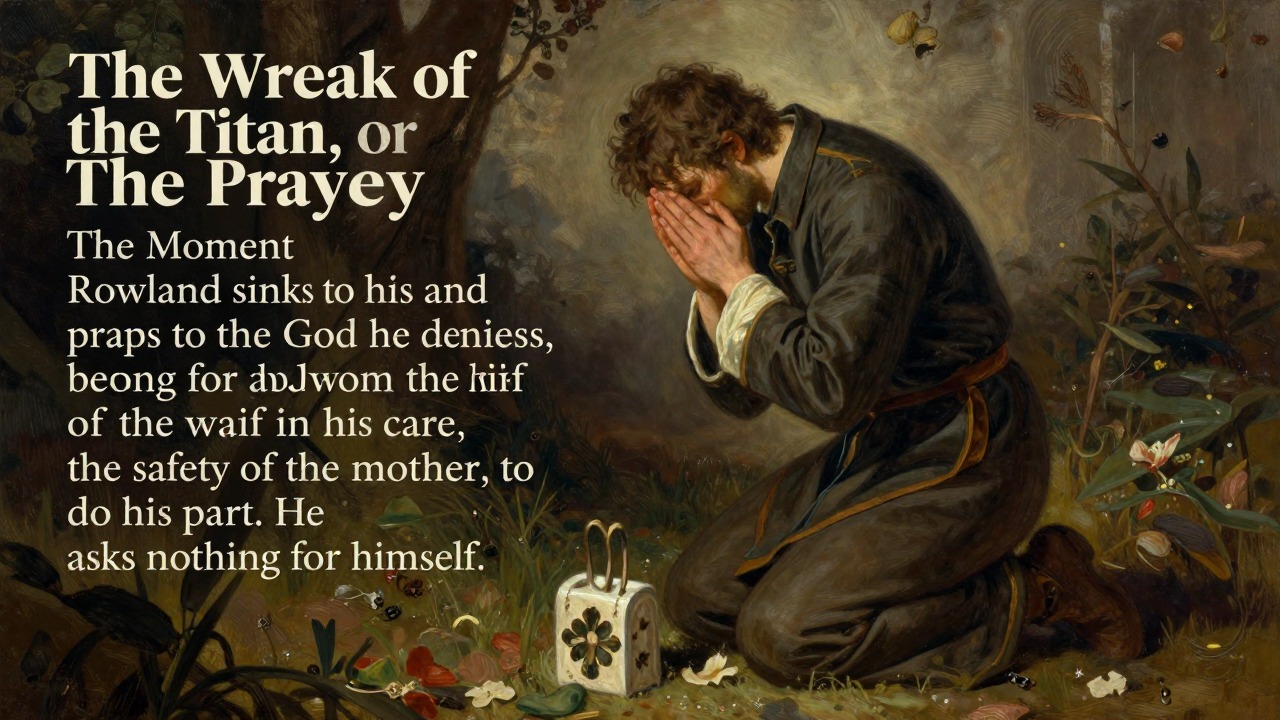
Rowland sinks to his knees and prays to the God he denies, begging for the life of the waif in his care, the safety of the mother, and strength to do his part. He asks nothing for himself.
Why It Matters
The prayer is an act of love, not conversion. He prays not because he believes, but because he has exhausted his own strength.
The phrase "For you, Myra" makes the prayer a gift of his pride, not a surrender of his intellect.
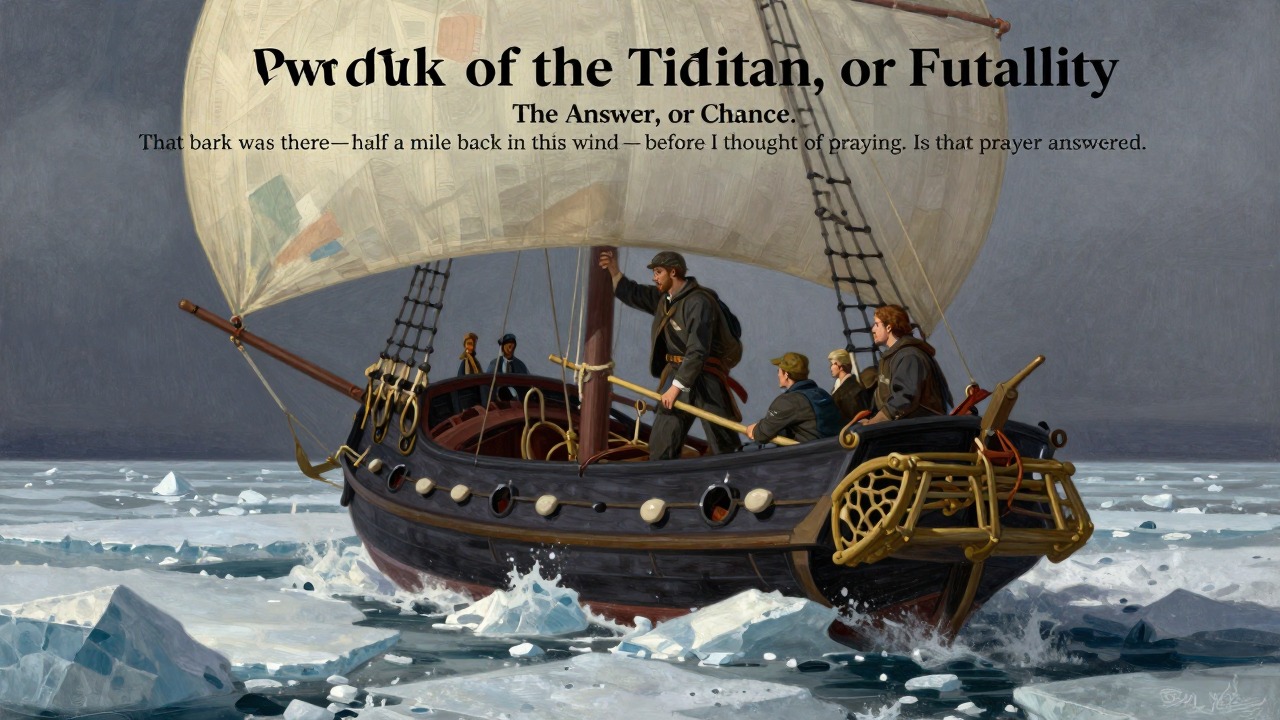
The Answer, or Chance
The Answer, or Chance
The Moment
As Rowland rises, the flying-jib of a bark appears around a corner of ice. He mutters to himself, "That bark was there—half a mile back in this wind—before I thought of praying. Is that prayer answered?"
Why It Matters
The ambiguity is deliberate. The rescue can be read as a miracle or as coincidence, and the novel refuses to choose.
Rowland's atheism is no longer absolute; he has opened a door to the unknown without abandoning his reason.
before the voyage, in Rowland's past
on the bridge, drugged, second night
on the iceberg, before the bark
at night on the iceberg
minutes after the prayer
