
Maycomb's Social Order and Caste System
To Kill a MockingbirdThe rigid social hierarchy of Maycomb that dictates behavior, reinforces prejudice, and shapes the children's understanding.
increasing Bearing strength in each event
 decreasing
Bearing strength in each eventdecreasingThe Ewells and the Cunninghams
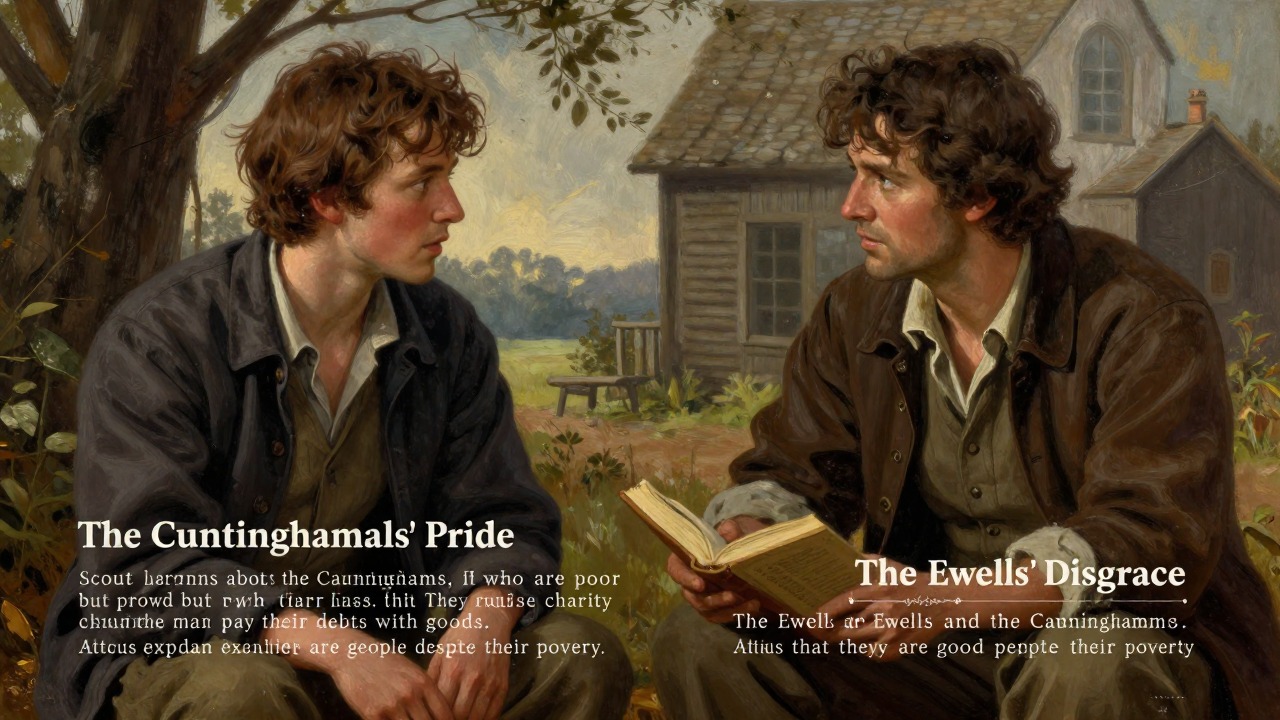
The Ewells and the Cunninghams
The Cunninghams' Pride
Scout learns about the Cunninghams, who are poor but proud farmers. They refuse charity and pay their debts with goods. Atticus explains that they are good people despite their poverty.
The Ewells' Disgrace
In contrast, the Ewells live on welfare and are considered trash. Atticus says they are absolute trash. The Ewells are at the bottom of white society, but they still have power over black people.
The Caste System Explained
Scout begins to understand the social hierarchy: white people are divided by class, but all white people are above black people. The Ewells are hated but still have the privilege of whiteness. This system is challenged by Tom Robinson's trial.
Aunt Alexandra's Class Consciousness
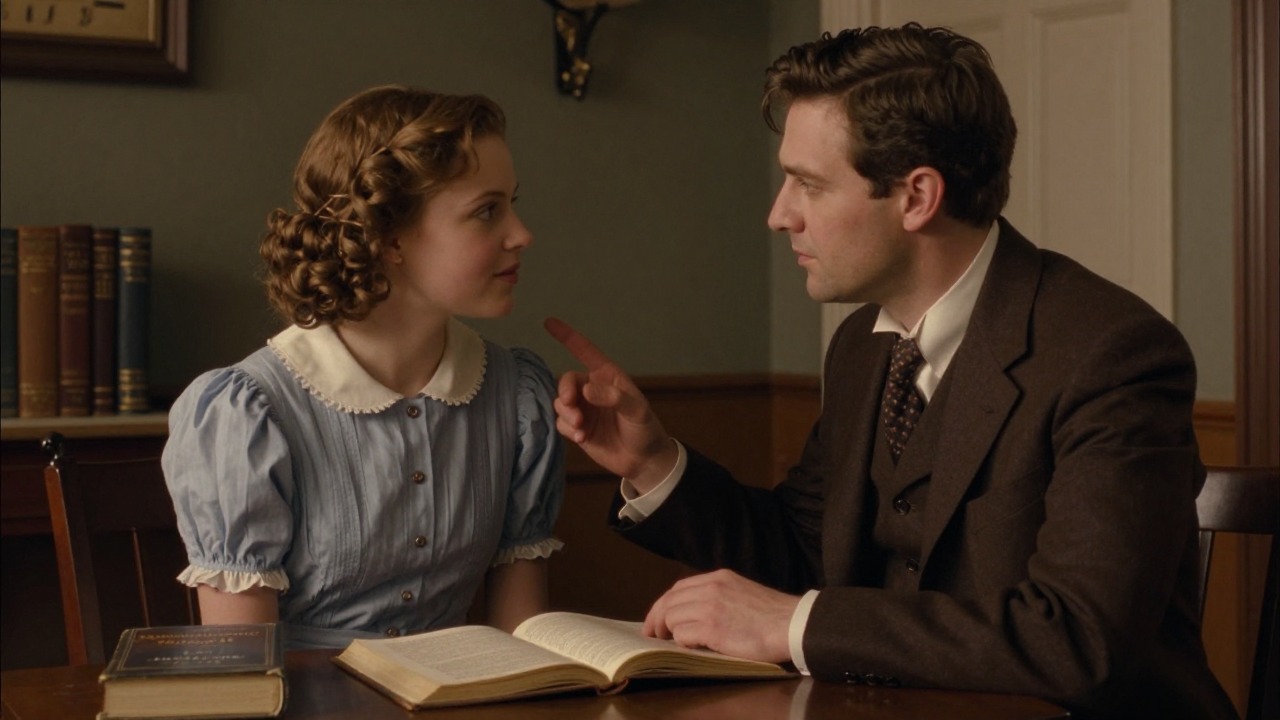
Aunt Alexandra's Class Consciousness
The Importance of Breeding
Aunt Alexandra is obsessed with family background. She believes that the longer a family has lived on one patch of land, the finer it is. She tries to instill pride in the Finch lineage.
The Conflict with Atticus
Atticus gently mocks her views, but he tolerates them. He tells the children that Alexandra doesn't understand the real meaning of "fine folks"—people who do the best they can with what they have.
The Children's Resistance
Jem and Scout find Aunt Alexandra's emphasis on heredity pretentious. They see that the Ewells have lived on the same land for generations, but that does not make them fine. The clash between Alexandra's values and Atticus's principles highlights the arbitrary nature of the caste system.
The Church Visit
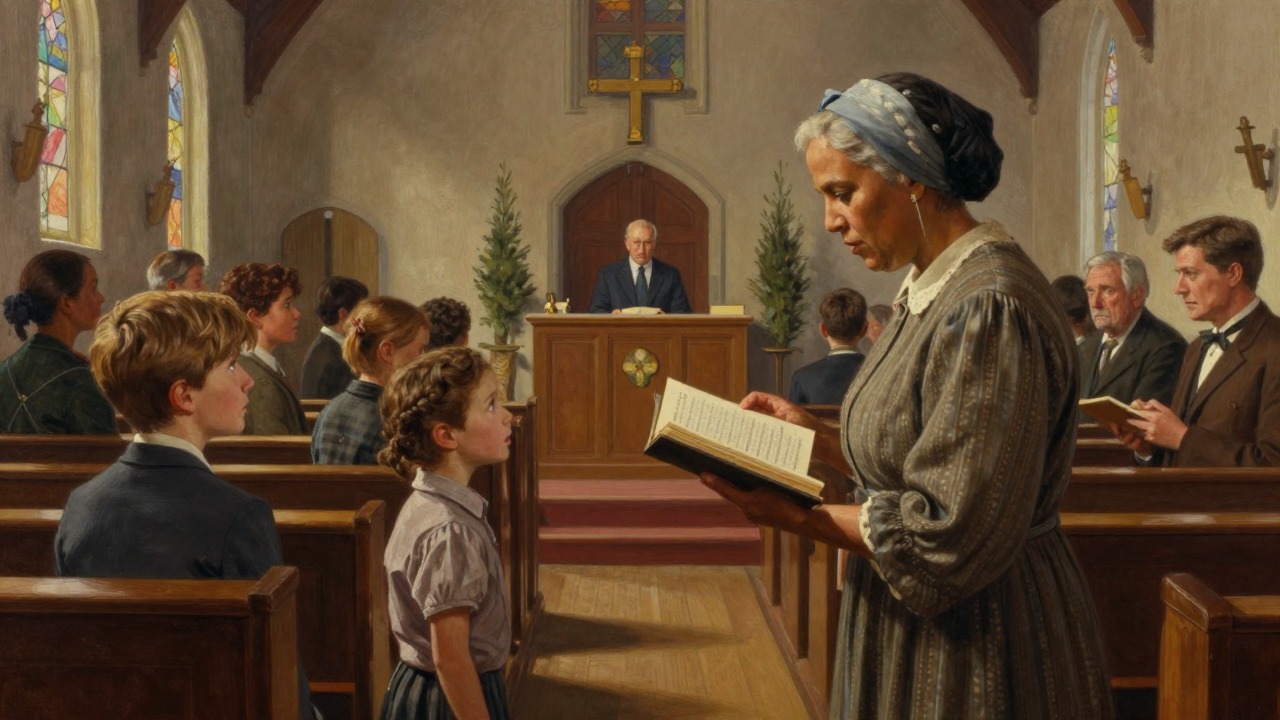
The Church Visit
Calpurnia's Church
Calpurnia takes Jem and Scout to First Purchase African M.E. Church. They are initially confronted by Lula, who objects to white children attending. Others welcome them.
The Experience of Segregation
The church has no hymn-books; the congregation lines hymns because most cannot read. The service is warm and communal. Scout sees the poverty and faith of the black community.
The Realization
The visit shows Scout the separate world of black Maycomb. She sees that Calpurnia lives a double life, speaking differently at church and at home. The church's support for Tom Robinson's family underscores the racial divide and the shared humanity across it.
The Town's Gossip and Family Streaks
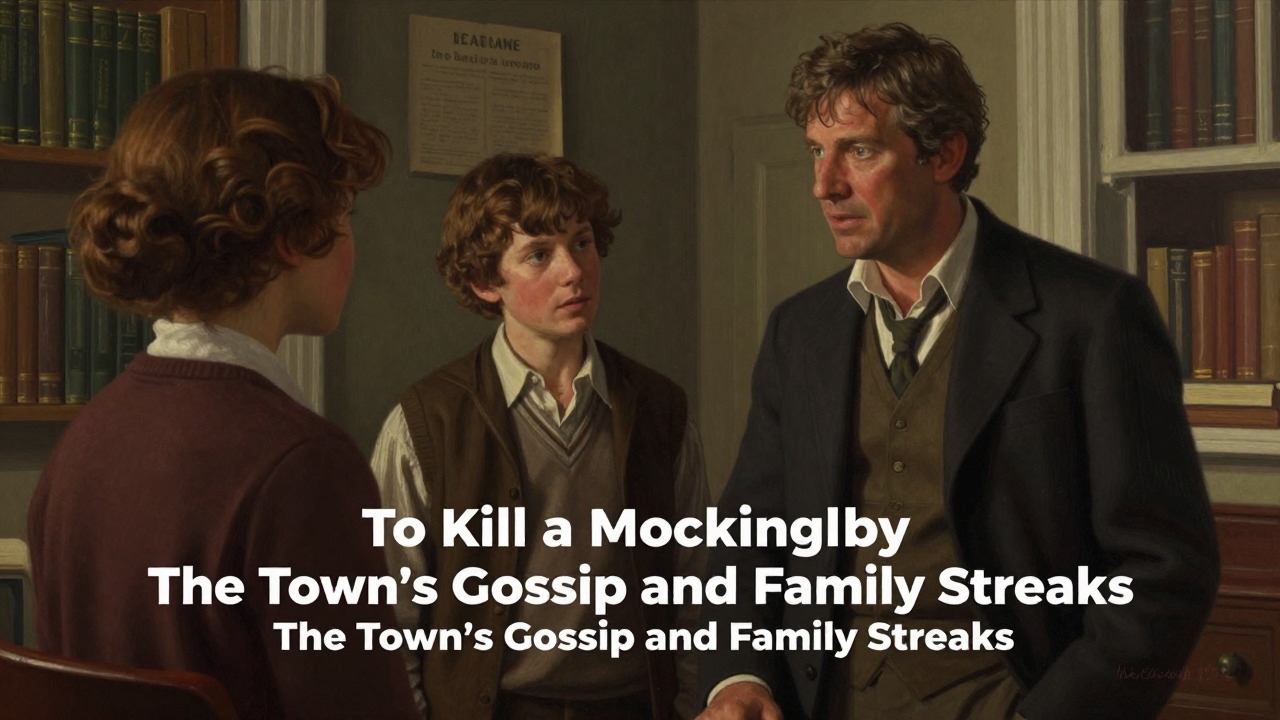
The Town's Gossip and Family Streaks
The Familiar Patterns
Aunt Alexandra catalogues the town's families by their supposed hereditary flaws: the Crawfords mind others' business, the Merriweathers are morbid, the Delafields are dishonest. These labels are accepted as truths.
The Arbitrary Nature
Jem points out that the Ewells have lived on the same land for generations, but they are not considered fine folks. The system is inconsistent. Atticus's quiet disapproval of the labels shows his own values.
The Children's Skepticism
Scout and Jem learn to question inherited prejudices. They see that people are more than their family reputations. The town's gossip system reinforces the caste system but also reveals its absurdity.
The Verdict and Its Aftermath
The Verdict and Its Aftermath
The Injustice of the System
The jury's conviction of Tom Robinson, despite overwhelming evidence of his innocence, shows the power of the caste system. The verdict is based on race, not facts.
The Children's Disillusionment
Jem is devastated. He had believed in the justice system, but the trial reveals its corruption. Atticus tries to explain that racism is a disease that has infected the town.
The Enduring Hope
Despite the verdict, Atticus has planted seeds of change. The community is divided, but a few people begin to question the system. The children's moral education continues as they grapple with the reality of injustice.
early in the story, during Scout's first day of school
after Aunt Alexandra's arrival
summer, while Atticus is away
during Aunt Alexandra's stay
after the trial
