Deposition of Long John Silver
Treasure IslandThe Deposition of Long John Silver is the pivotal mutiny within the mutiny, the moment when the pirate crew, frustrated by their failures and suspicious of Silver's loyalty, formally strips him of his captaincy by presenting him with the Black Spot. Yet the event becomes a showcase of Silver's extraordinary cunning, as he turns the accusation against his accusers, reclaims his command, and binds his fate to that of Jim Hawkins, the boy who has just confessed to being the architect of their ruin. It is a scene that lays bare the fragile, self-destructive politics of the pirate band and the desperate calculus of a man who will switch sides as easily as he changes his coat.
The Black Spot and the Council's Verdict
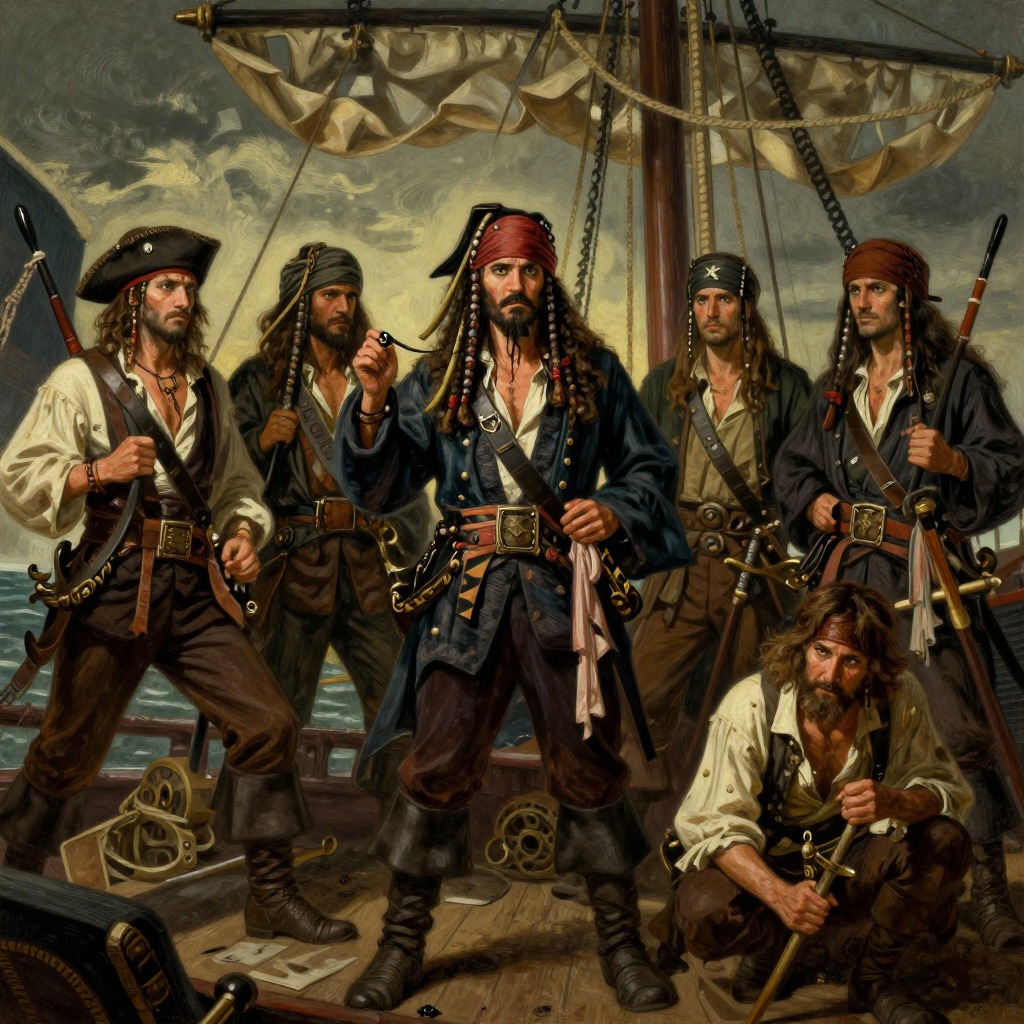
The deposition unfolds in the captured block house, where Silver and Jim Hawkins have been left alone after the mutineers, led by the yellow-eyed George Merry, have held a council outside. When they return, one of them, with a salute that Jim finds ironical, hands Silver the Black Spot. Silver examines it and immediately notes its provenance: it has been cut from a Bible, a detail that he seizes upon as an ill omen. "What fool's cut a Bible?" he exclaims, and when it emerges that Dick was the culprit, Silver declares that Dick has "seen his slice of luck" and can "get to prayers." The paper itself, which Silver later tosses to Jim, is a curiosity: one side bears a verse from Revelation, including the words "Without are dogs and murderers," while the other, blackened with wood ash, carries the single word "Deposed." Jim keeps this relic, noting that the writing has since faded to a mere scratch.
Silver's Counter-Accusation
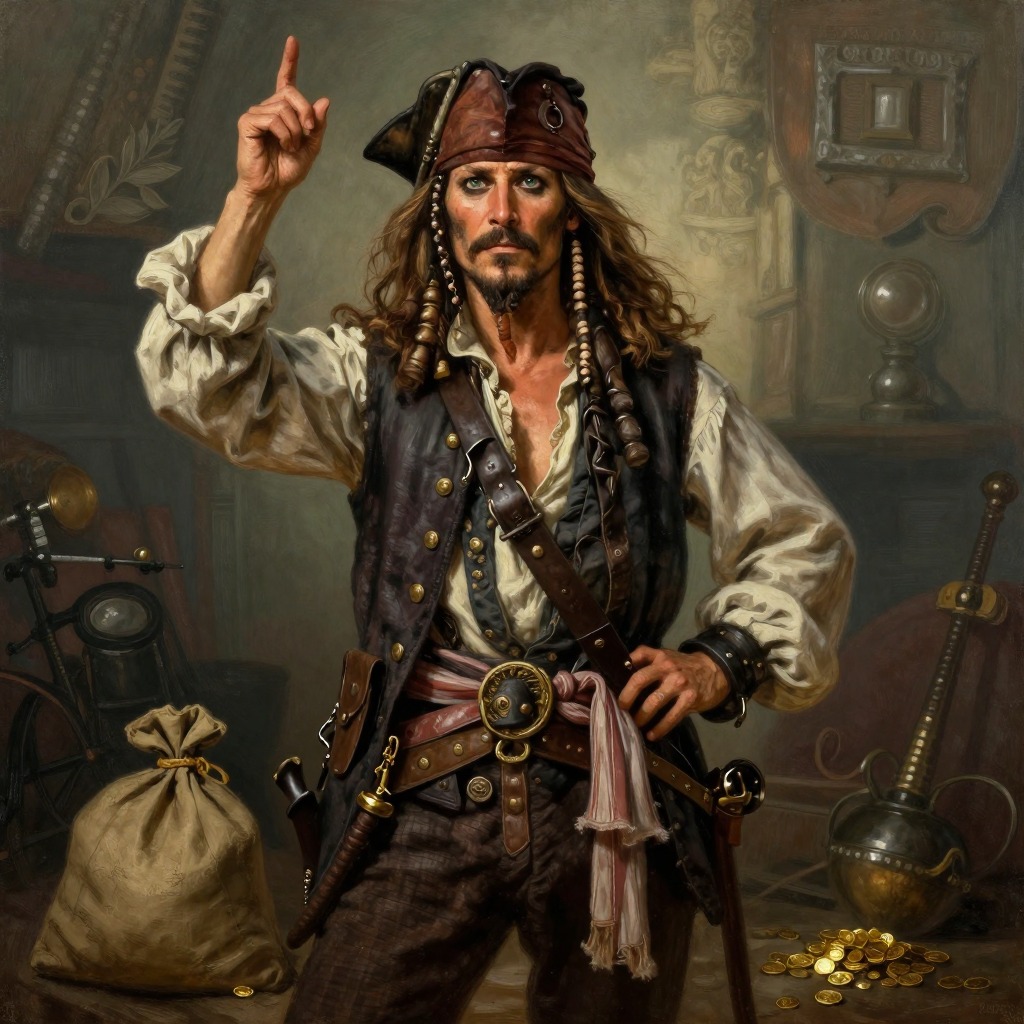
George Merry, the long man with the yellow eyes, presents the crew's grievances: Silver has bungled the cruise, let the enemy escape from the stockade, refused to attack them on the march, and protected the boy. Silver, however, is not a man to be deposed quietly. He answers each point with devastating logic, reminding them that it was Anderson, Hands, and Merry himself who forced his hand by tipping him the Black Spot on the day they landed. "You're the last above board of that same meddling crew," he tells Merry, "and you have the Davy Jones's insolence to up and stand for cap'n over me--you, that sank the lot of us!" He paints a vivid picture of their shared fate: the gibbet at Execution Dock, the chains a-jangle, the birds about them. He reminds them that the boy is a hostage, their last chance, and that a real college doctor has been tending their wounds. Then, with a flourish, he casts down the chart--the very map with the three red crosses that Jim had found in Billy Bones's chest--and the mutineers fall upon it like cats upon a mouse, their greed momentarily eclipsing their mutiny.
The Reclamation of Power
Silver's gambit succeeds. The mutineers, who had been on the verge of violence, are swayed by his rhetoric and the sight of the treasure map. They cry out, "Silver!" and "Barbecue forever! Barbecue for cap'n!" Silver, having resigned in a theatrical gesture, accepts their renewed allegiance, but he does not forget the insult. He puts George Merry up for sentinel, threatening him with death if he proves unfaithful. The Black Spot, he declares, is now worthless, for Dick has spoiled his Bible, and a Bible with a bit cut out "don't bind no more'n a ballad-book." The deposition has been reversed, but the cracks in the pirate alliance are now visible to all, and Silver's hold on his crew is maintained only by fear and the promise of gold.
The Alliance with Jim Hawkins
In the aftermath, Silver reveals his true calculations to Jim. He had been on the verge of being thrown off by his own men, but Jim's bold confession--that he had overheard the plot from the apple barrel, cut the Hispaniola adrift, and killed the men aboard--had changed everything. Silver sees in Jim a kindred spirit, a survivor, and he proposes a bargain: "You stand by Hawkins, John, and Hawkins'll stand by you. You're his last card, and by the living thunder, John, he's yours! Back to back, says I. You save your witness, and he'll save your neck!" Jim, bewildered and desperate, agrees to do what he can. Silver, now openly on the squire's side, asks no questions about the ship's whereabouts, but he is deeply puzzled by the doctor's decision to give him the chart, sensing that "there's something under that, no doubt--something, surely, under that, Jim--bad or good." The deposition, which should have destroyed Silver, instead forges an unlikely alliance between the old pirate and the boy, an alliance that will shape the rest of the adventure.
The Significance of the Deposition
The Deposition of Long John Silver is a microcosm of the novel's larger themes: the instability of pirate democracy, the power of rhetoric over brute force, and the moral ambiguity of its characters. Silver, the one-legged cook who has been the crew's mastermind, survives not by strength but by his wits, his ability to read the room and turn the tables. The event also underscores the fragility of the mutineers' cause, as their greed and superstition make them easy prey for Silver's manipulation. For Jim, it is a lesson in the art of survival, as he watches a man who has just been deposed reclaim his throne with nothing but words and a piece of paper. The deposition, in the end, is not a fall but a reaffirmation of Silver's dominance, and it sets the stage for the final, desperate treasure hunt that will bring the story to its close.