
The Theme of the Dreamer as a Type
White NightsThe novel's analysis of the dreamer as a social and psychological type, a person who lives in a world of fantasy to escape reality.
increasing Bearing strength in each event
 decreasing
Bearing strength in each eventdecreasingThe Dreamer's Self-Description
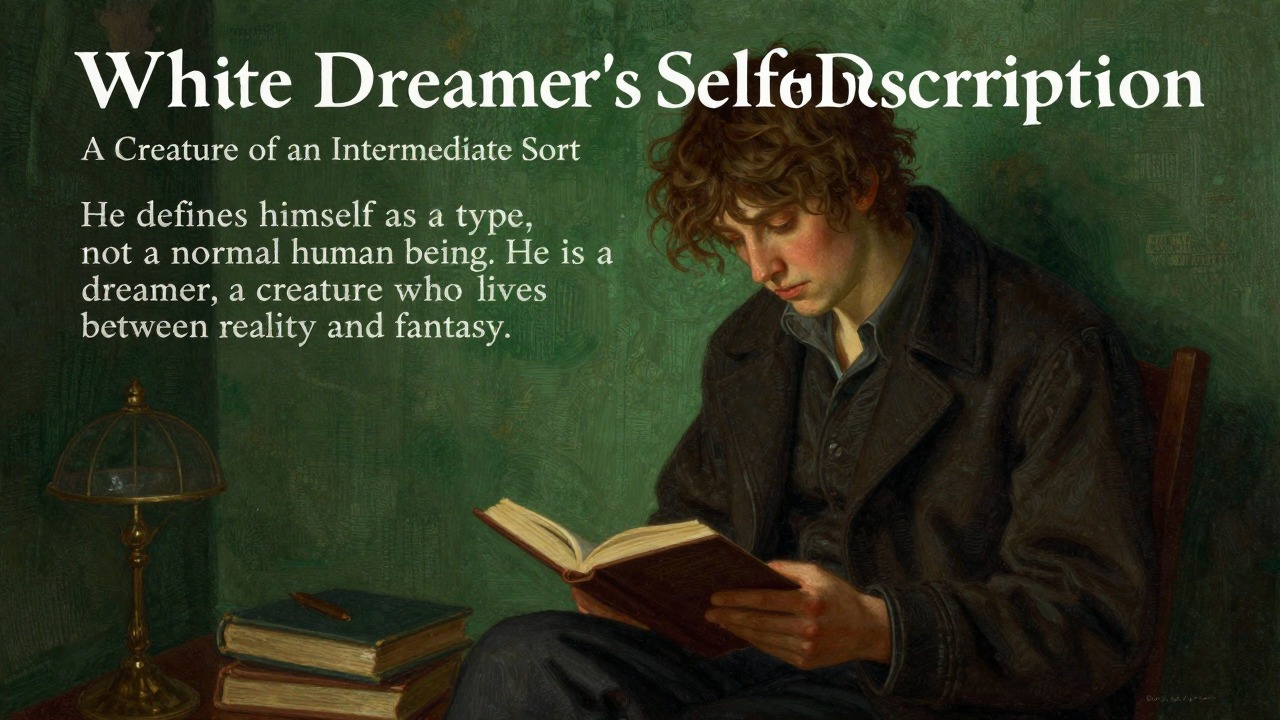
The Dreamer's Self-Description
A Creature of an Intermediate Sort
He defines himself as a type, not a normal human being. He is a dreamer, a creature who lives between reality and fantasy.
The Habits of a Dreamer
He describes his reclusive life, his love of green walls, his awkwardness with visitors. He is like a snail in its shell.
The Pathology of Dreaming
He sees his condition as a disease, a sin. He knows that he is wasting his life, but he cannot stop.
Nastenka's Recognition of the Type
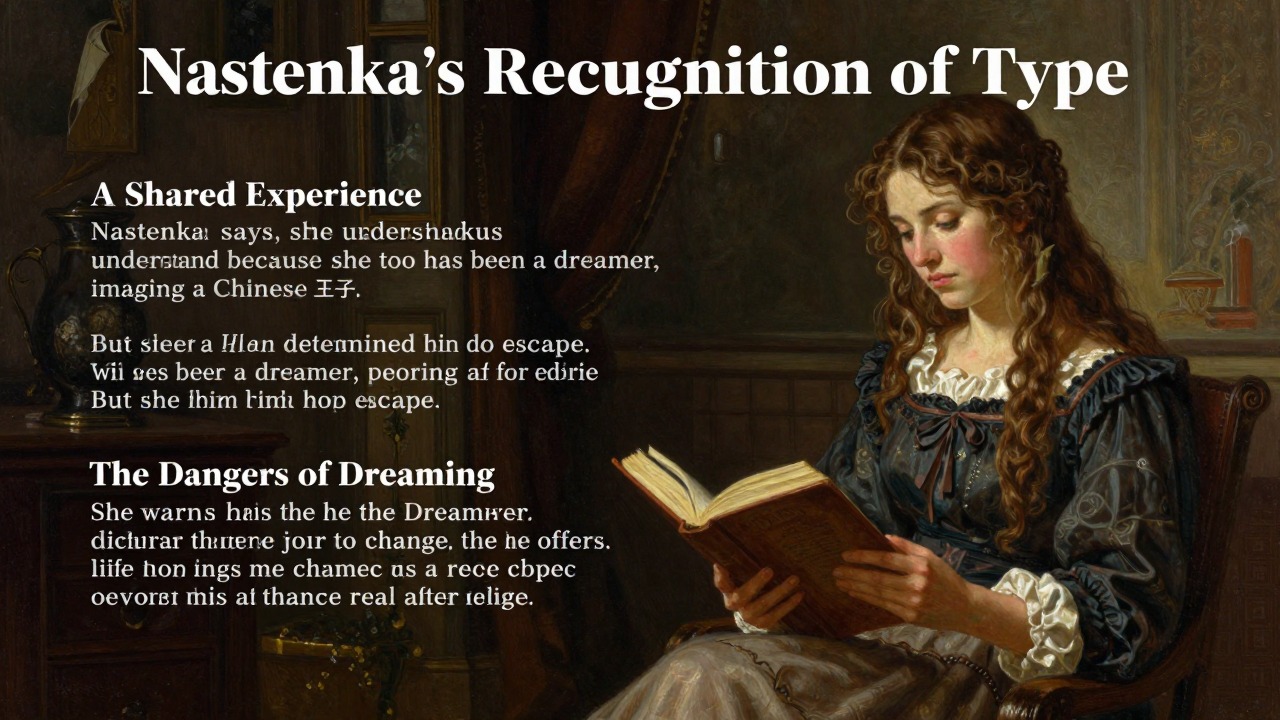
Nastenka's Recognition of the Type
A Shared Experience
Nastenka says she understands because she too has been a dreamer, imagining a Chinese prince. But she is determined to escape.
The Dangers of Dreaming
She warns the Dreamer that he must change. She offers him a chance at real life.
The Hope of Redemption
The Dreamer's meeting with her is a turning point. For a moment, he steps out of his fantasy and into real connection.
The Dreamer's Fate
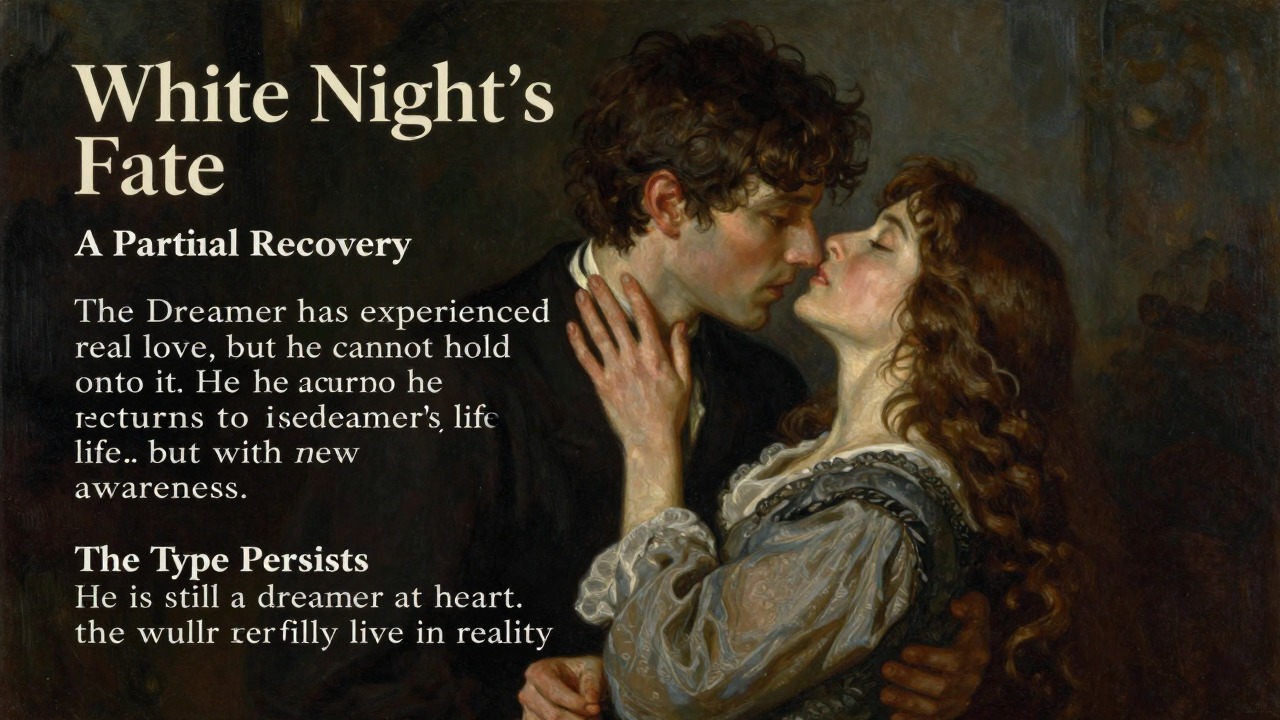
The Dreamer's Fate
A Partial Recovery
The Dreamer has experienced real love, but he cannot hold onto it. He returns to his dreamer's life, but with a new awareness.
The Type Persists
He is still a dreamer at heart. The novel leaves open the question of whether he will ever fully live in reality.
A Cautionary Tale
Dostoevsky uses the Dreamer to explore the dangers of excessive imagination and the necessity of embracing life, even with its pain.
second night, in his monologue
second night, after the monologue
the morning after, and the future
