Peterhof Road
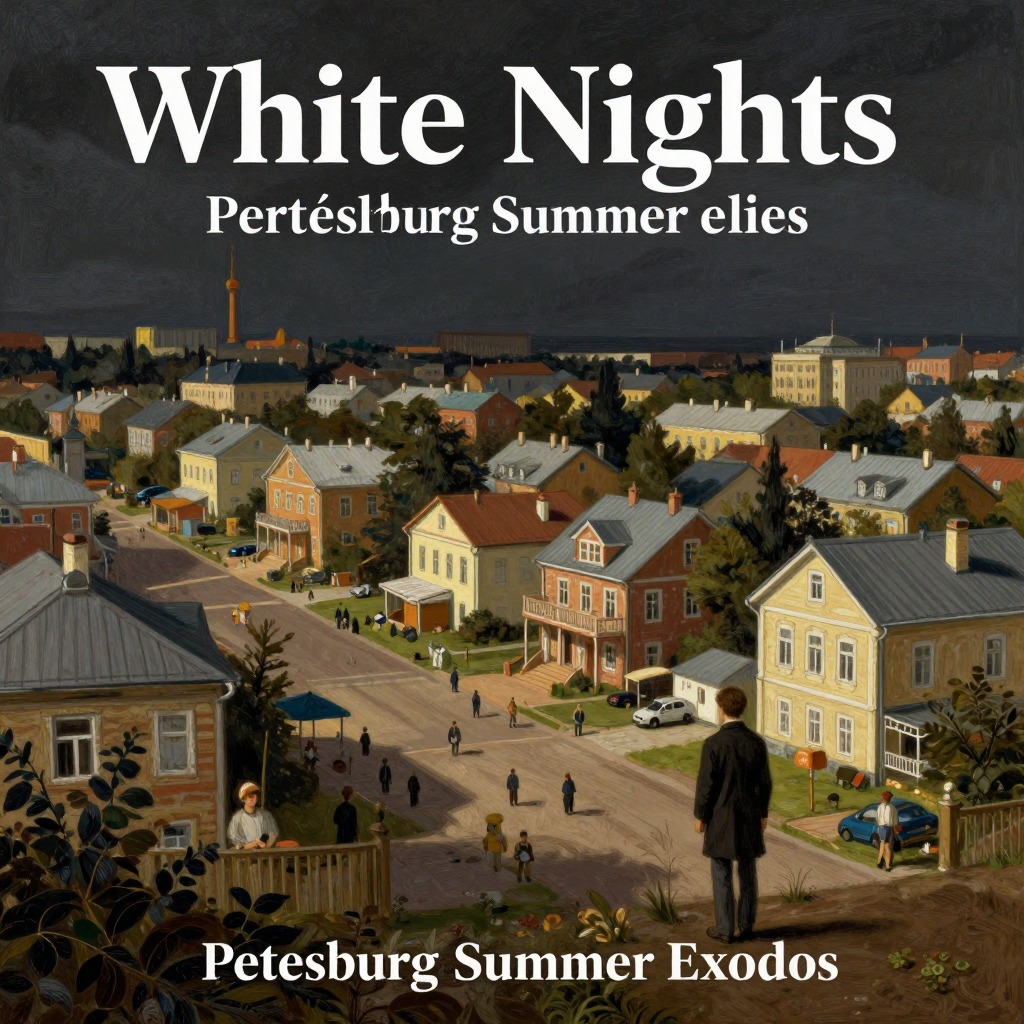
White NightsPeterhof Road is one of the routes leading out of Petersburg toward the summer villas, and in the Dreamer's imagination it becomes a sharply observed index of social distinction. During the annual summer exodus, when the entire city seems to pack up and leave for the countryside, the Dreamer develops a peculiar investigative game: he claims he can tell, from the mere air of each passerby, which summer villa district they belong to. The inhabitants of Kamenny and Aptekarsky Islands or of the Peterhof Road, he notes, are marked by the studied elegance of their manner, their fashionable summer suits, and the fine carriages in which they drive to town. The Peterhof Road thus stands for a world of refined leisure and conspicuous consumption, a world that is visibly, tauntingly closed to the Dreamer himself.
The Dreamer's Exclusion from the Summer Exodus
The Dreamer's acute awareness of the Peterhof Road and its elegant travelers is part of a broader, painful consciousness of his own isolation. For three whole days before he identifies the cause of his unease, he feels oppressed by a strange despondency, as though everyone is forsaking him. He realizes that all of Petersburg is decamping to summer villas, and he is left behind. He watches the waggons loaded with furniture and the boats crawling along the Neva and Fontanka, and in his eyes they are multiplied tenfold, a hundredfold. He feels ashamed, mortified, and sad that he has nowhere to go for the holidays and no reason to go away. He is ready to go with every waggon, to drive off with every gentleman of respectable appearance who takes a cab, but no one invites him; it seems they have forgotten him, as though he were a stranger. The Peterhof Road, in this context, is not merely a geographical location but a symbol of the social belonging and shared happiness that the Dreamer can only observe from the outside.
The Road as a Marker of Social Hierarchy
The Dreamer's classification of summer-villa dwellers is a miniature sociology of Petersburg's summer society. Visitors to Pargolovo and places further away impress one at first sight by their reasonable and dignified air, while the tripper to Krestovsky Island can be recognized by his look of irrepressible gaiety. The inhabitants of the Peterhof Road, however, are distinguished by the studied elegance of their manner, their fashionable summer suits, and the fine carriages in which they drive to town. This hierarchy places the Peterhof Road at the top, associated with wealth, fashion, and a performative grace. The Dreamer's ability to read these signs so precisely underscores his deep, lonely attunement to the city's social codes, even as he remains utterly excluded from them.
Narrative Significance
The Peterhof Road functions as a concrete emblem of the life the Dreamer cannot access. His detailed, almost ethnographic observation of its inhabitants' elegance and carriages is a measure of his own alienation. The road is part of the city's fabric that he knows intimately—he is acquainted with all Petersburg—but this knowledge is that of a spectator, not a participant. The road's association with fashionable summer suits and fine carriages contrasts sharply with the Dreamer's own grimy green walls, the spider's web Matrona has so successfully encouraged, and his solitary, fantasy-filled existence. It is a fixed point in the geography of his exclusion, a place-name that carries the weight of a social world he can only dream about.