
The Hero Without a Companion
Winter in SokchoThis flow follows the narrator’s growing investment in the absent woman in Yan Kerrand’s story and what that imagined figure reveals about her own longing.
increasing Bearing strength in each event
 decreasing
Bearing strength in each eventdecreasingWomen in the Wastebasket
Women in the Wastebasket
Drawn and erased
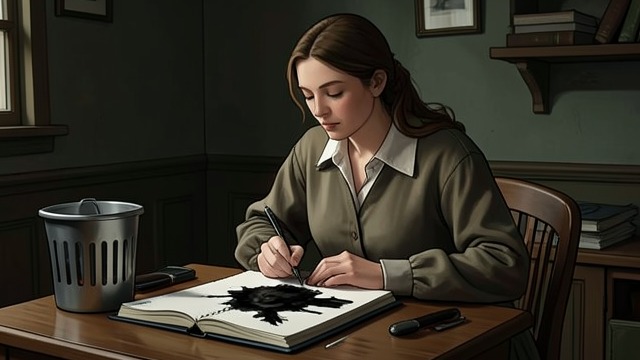
The narrator glimpses Yan Kerrand drawing a woman, then covering her with ink until the image becomes a dark, distorted mass. On another occasion she watches him draw a body whose face disappears beneath spilled ink.
He tears up rejected women and leaves fragments in the wastebasket.
A private fascination
The repeated cycle of invention and erasure holds the narrator’s attention. She begins to see his creative struggle as an intimate drama about who is allowed to remain visible.
Imagining the Figure
Imagining the Figure
A sound through paper
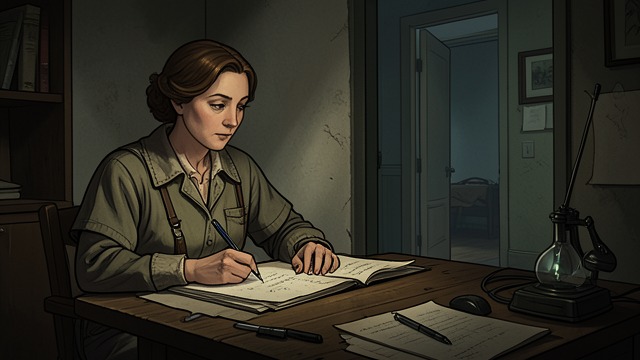
After moving into the adjacent room, the narrator hears Yan Kerrand’s pen scratching through the thin wall. She imagines a confident woman leaning against it and speaking to him.
In her mind, something still frightens him, and he spills ink until the woman vanishes.
A shared creation
The figure exists partly in the narrator’s imagination, not only in the artist’s drawings. The boundary between his work and her inner life begins to blur.
A Woman for the Fable
A Woman for the Fable
The missing companion
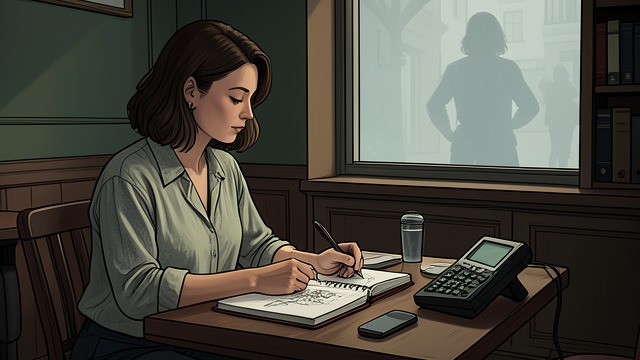
Yan Kerrand says that the woman his hero needs is the only missing element. He imagines a complete fable and says she must be a woman for all time.
The narrator hears the demand for a timeless, perfect figure as a standard she cannot satisfy.
Personal disappointment
She leaves the café hurt by his abstraction and wishes he would go back to France. The exchange turns his unfinished character into a painful rival for her desire to be seen.
The Unfinished Woman
The Unfinished Woman
A discarded outline
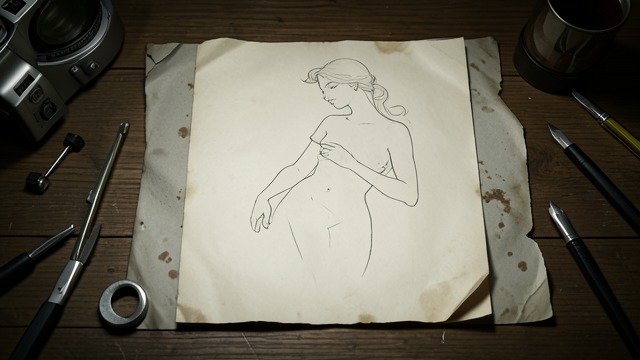
The narrator enters Yan Kerrand’s room and opens a spit-wet ball of paper. Inside, a torn woman is only partly sketched, with enough lines for the narrator to imagine the rest.
She wants him to finish the figure so that she can tear it apart.
Anger and identification
The desire to destroy the drawing shows how much the imagined rival has come to matter. The narrator’s anger is also directed at the artist’s power to create and withdraw the women he draws.
The Final Trace
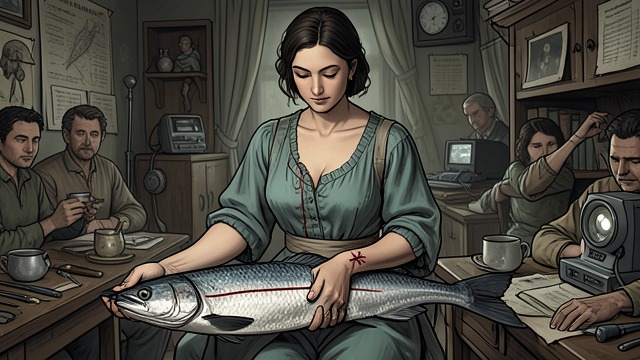
The Final Trace
A body becomes a line
In the final pages of Yan Kerrand’s sketchbook, the narrator sees a woman’s shoulder, belly, breast, and back dissolve into a fine line. The line becomes a scar and then a mark on the scales of a fish.
The image carries the narrator’s scar into the artist’s final sequence.
Ambiguous recognition
The sketch does not establish exactly how Yan Kerrand understood her. It does, however, leave her with evidence that something of her body entered the work she was not allowed to see completed.
During the first two weeks of Yan Kerrand’s stay
The first night in the room beside him
During the café conversation
After Yan Kerrand says he will return to France
Near the ending, while reading the sketchbook
