
The Narrator and Her Mother
Winter in SokchoThis flow follows the narrator and her mother through dependence, bodily closeness, conflict over care, and the distance they begin to negotiate.
increasing Bearing strength in each event
 decreasing
Bearing strength in each eventdecreasingThe Sunday Visits

The Sunday Visits
A shared household history
The narrator visits her mother on Sunday evenings and stays overnight on her day off. Her mother has found it difficult to sleep alone since the narrator moved out.
Their visits preserve a closeness shaped by the narrator’s childhood and the mother’s life at the port.
Dependence and affection
The narrator is no longer a child, but the routines of care remain physical and domestic. The closeness that comforts her mother can also feel constraining to her daughter.
A Crowded Bed

A Crowded Bed
Shared sleep
The narrator lies in bed beneath the weight of her mother’s head, feeling her mother’s chest rise and fall. She is accustomed to sleeping alone at the guest house, and her mother’s snoring keeps her awake.
She counts drops of saliva as they land on her skin.
The cost of closeness
The scene makes affection bodily and uncomfortable at once. Their relationship is intimate enough to cross physical boundaries but not easy enough to feel entirely safe.
Refusing Another Night
Refusing Another Night
A boundary stated
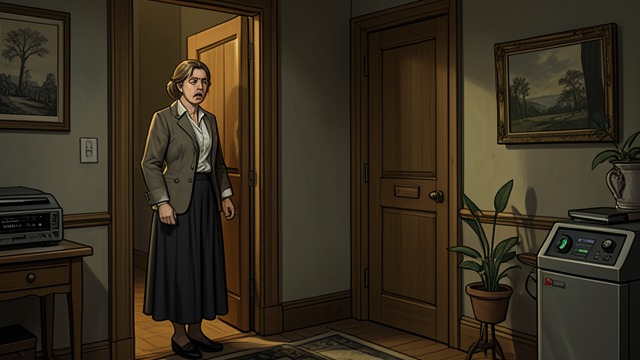
After meeting her mother at the bathhouse, the narrator says she cannot go home with her. She has work to do, but the truth is that she cannot bear sharing a bed with her anymore.
Her mother looks upset, and the narrator feels pain at causing that hurt.
Separation negotiated
The narrator nevertheless holds to her decision. The small refusal is a significant attempt to establish adult space within a relationship shaped by mutual dependence.
The Mother’s Gift
The Mother’s Gift
Food in place of speech
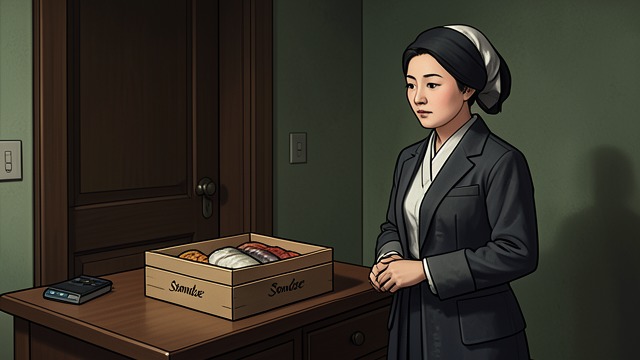
The narrator’s mother leaves a box of Soondae at the guest house without asking to see her. The gesture arrives after their disagreement and carries concern without requiring a conversation.
The narrator receives the food but does not immediately repair the distance between them.
Care with limits
Their bond persists through practical gifts even when words fail. Food is a shared language, but it cannot by itself settle the narrator’s need for independence.
Accepting the Jelly

Accepting the Jelly
A small accommodation
The narrator’s mother brings out persimmon jelly she has saved for her daughter, who says she dislikes its texture. Seeing her mother’s disappointment, the narrator takes the tube and begins to suck the jelly down.
Her mother responds with visible pleasure.
Care without resolution
The gesture does not erase their conflicts over food, appearance, or dependence. It offers a brief, chosen act of closeness in a relationship that cannot be reduced to either tenderness or control.
At the beginning of the story
The first Sunday visit described
During the cold spell
After the narrator’s breakup begins
The evening before Yan Kerrand leaves
