
Animal Images and Vulnerability
Winter in SokchoThis flow traces the animal imagery that connects the narrator’s observations of fragility, care, confinement, and transformation.
increasing Bearing strength in each event
 decreasing
Bearing strength in each eventdecreasingThe Beetle in Reception
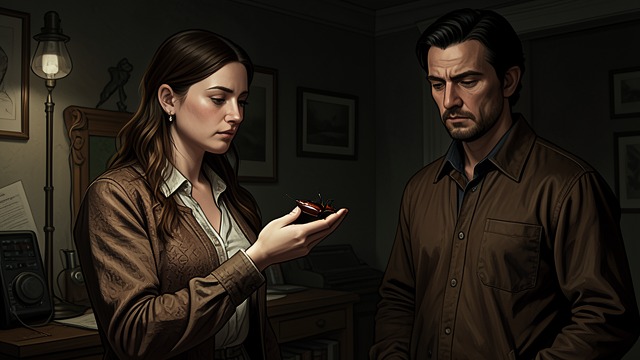
The Beetle in Reception
A creature indoors
The narrator finds a beetle struggling beside her files and turns it over to inspect its smooth belly. Old Park tells her to crush it, but she cannot bring herself to kill it.
She throws such beetles outside, where they will die in their own time.
Care at a distance
Her choice shows a small tenderness toward vulnerable life, even when she cannot protect it from the cold. The beetle’s fate echoes the limits of the care she can offer others.
The Crab in the Tank
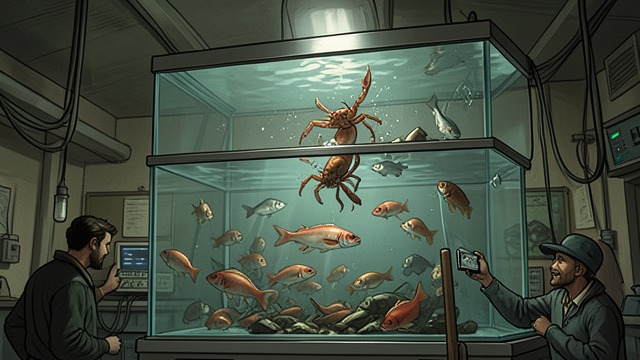
The Crab in the Tank
A damaged enclosure
The narrator watches a crab fall from one crowded fish tank into another. It struggles, injures a fish, and leaves the fish swimming lopsidedly until it sinks.
The contained animals are weak, crowded, and exposed to one another’s harm.
An image of helplessness
The scene condenses the violence of confinement without making the animals villains. It prepares the reader to see the narrator’s later bodily distress as part of a wider world of constrained lives.
The Limping Seagull
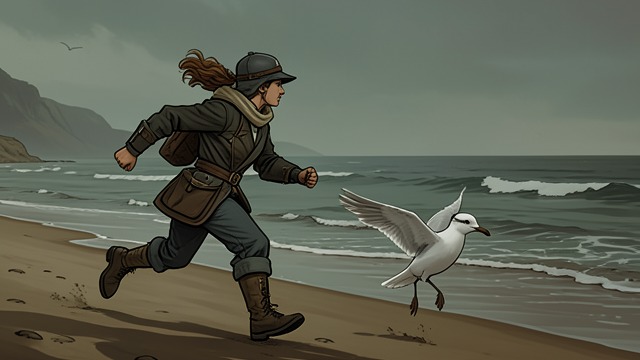
The Limping Seagull
Chasing an awkward bird
On the beach, the narrator chases a limping seagull until it flies away. She thinks that gulls look undignified when they are not in flight.
The observation briefly makes the narrator laugh at the difference between an animal’s familiar image and its vulnerable body.
A private recognition
The bird’s awkwardness mirrors the narrator’s unease with how bodies appear when they are not idealized. Her attention to it offers an oblique form of self-recognition.
The Kitten and the Platter
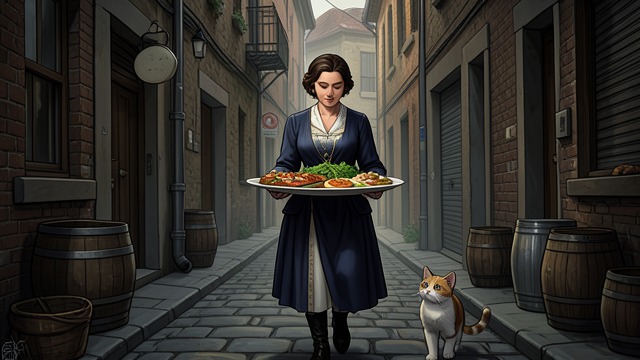
The Kitten and the Platter
A tempting smell
Carrying a platter of Fugu through an alley, the narrator stops to stroke a kitten. The animal follows her, mewling and looking toward the fish.
She continues toward the guest house with the platter in hand.
Care beside danger
The gentle encounter sits beside the risk involved in preparing Fugu. Its ordinary warmth contrasts with the narrator’s careful, anxious effort to make a dish for Yan Kerrand.
The Heron in the Sketchbook
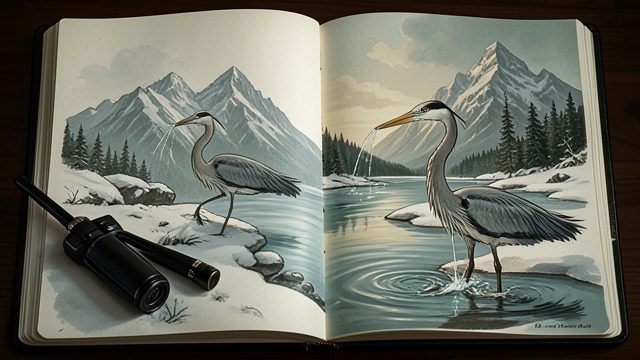
The Heron in the Sketchbook
A bird beside the hero
The narrator opens Yan Kerrand’s sketchbook and finds the hero beside an old, one-legged heron on a winter shore. The bird watches the sea with the mountain rising behind it.
Water from the bird’s beak becomes a river flowing toward the ocean.
A figure of passage
The bird’s damaged body does not prevent it from occupying the image with quiet beauty. Its presence offers the narrator a final emblem of movement through a landscape that otherwise feels still.
During the guest house’s frozen spell
During the narrator’s walk near the clinic
After the narrator visits Jun-oh’s room
The morning Yan Kerrand leaves
Near the ending, after Yan Kerrand leaves
