
Art and the Unfinished
Winter in SokchoThis flow traces the novel’s treatment of artistic incompletion, where rejected images and open endings resist the demand for a perfect, final account.
increasing Bearing strength in each event
 decreasing
Bearing strength in each eventdecreasingA Drawing Before Its First Mark
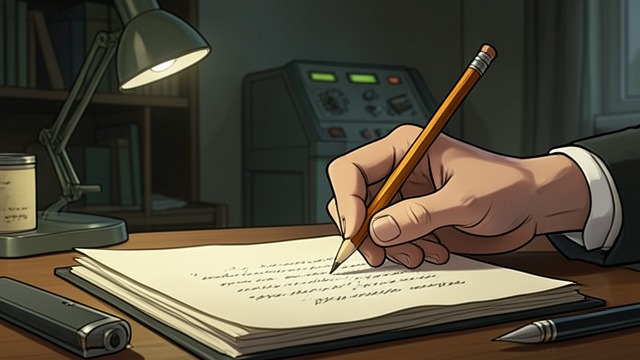
A Drawing Before Its First Mark
Hesitation on the page
The narrator later watches Yan Kerrand position a pencil above the paper, moving it back and forth before the point finally touches down. The image is not immediately legible, emerging through repeated attempts.
The process makes drawing look exploratory rather than fully planned.
Meaning in revision
His hesitation complicates the narrator’s assumption that an artist begins with a complete conception. The work takes shape through uncertainty, correction, and continued attention.
A Sketch He Cannot Use
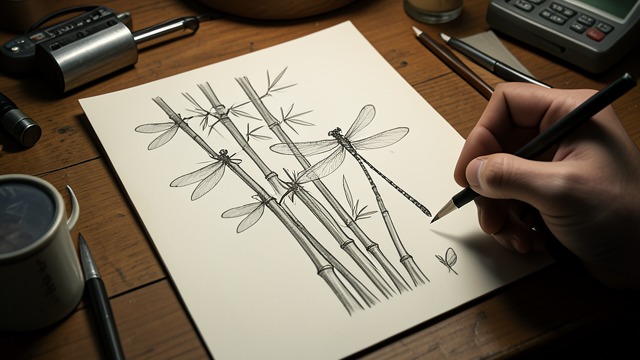
A Sketch He Cannot Use
Dragonfly bamboo
Yan Kerrand draws bamboo while resting on the mountain. The narrator says the stalks look like dragonflies, and he agrees but calls the drawing terrible and unusable.
When she says she likes it, he smiles and considers it again.
A different standard
The exchange gives the artist a brief chance to see his imperfect work through someone else’s eyes. The sketch matters to the narrator even if it cannot satisfy his professional judgment.
The Story Takes Over
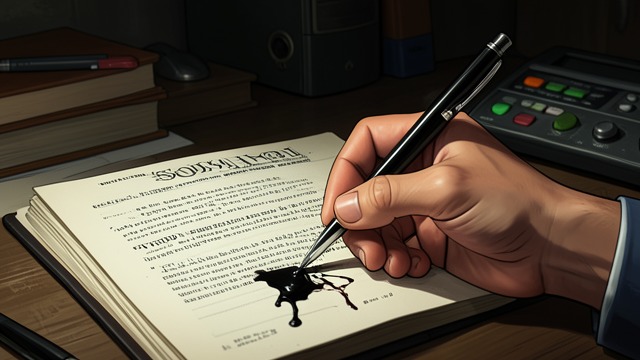
The Story Takes Over
Creation beyond intention
Yan Kerrand describes how a story moves away from him and begins to tell itself. While one narrative continues drawing itself, he starts imagining another, unable to stop the process simply by finishing a volume.
He fears the loss of control that comes with completion.
Art as ongoing labor
The account presents artistic creation as neither mastery nor effortless inspiration. His work continues because the story remains both incomplete and impossible to fully command.
The Ink Flood
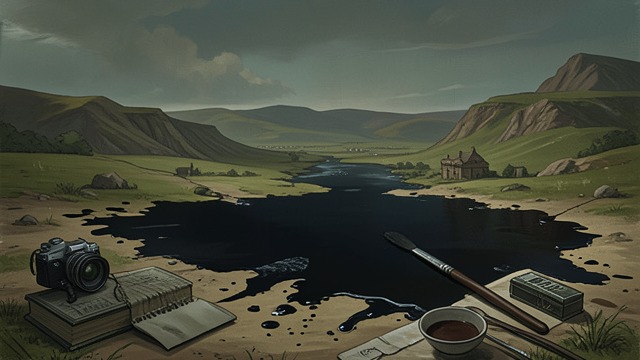
The Ink Flood
Accident and interruption
After the narrator challenges the premise of his story, Yan Kerrand’s brush pauses and ink falls across the landscape. The mark is unintended, spreading beyond the area he meant to control.
The narrator leaves before he can repair it.
An opening in the image
The spill shows how an interruption can alter a work rather than simply ruin it. The novel leaves the mark’s significance unresolved, resisting the artist’s wish to decide everything in advance.
An Ending That Dissolves
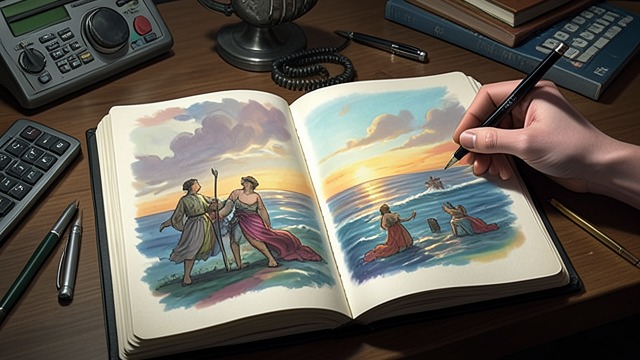
An Ending That Dissolves
Frames give way
The sketchbook’s last sequence lets colors and figures spread beyond clear outlines. The sea moves into the sky, while the hero seems to pass beneath the water and leave only traces of a body behind.
The images form and dissolve as the narrator turns the pages.
Completion without certainty
The final pages do not explain the story or confirm a definitive ending. Their openness becomes a formal answer to the fear of finishing: the work can end while its meanings continue to change.
During the walk to buy paper
During the walk in Seoraksan National Park
During the café conversation
During the argument at Yan Kerrand’s door
In the final pages of the sketchbook
