
Seeing and Misseeing
Winter in SokchoThis flow traces how the novel makes looking an active process shaped by distance, framing, language, and the desire for recognition.
increasing Bearing strength in each event
 decreasing
Bearing strength in each eventdecreasingA Face Looked Through
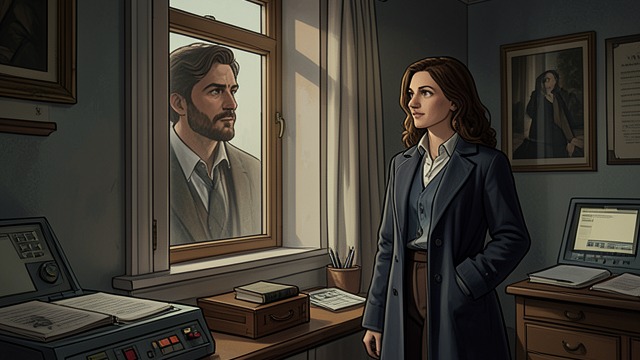
A Face Looked Through
An absent recognition
Yan Kerrand looks through the narrator when he first checks in. She notices his face and manner in detail, while he seems not to register her as an individual.
The asymmetry makes her attentive to his gaze from the start.
Looking as relation
The novel begins by separating seeing from recognizing. The narrator’s later wish to be drawn emerges against this first experience of being present but unseen.
Reflections on the Bus
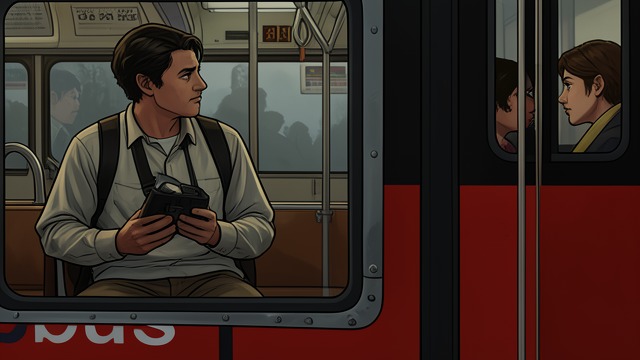
Reflections on the Bus
Two images in glass
On the bus, the narrator watches Yan Kerrand reflected in the window and then realizes he is looking at her reflection too. She looks down when their gazes meet in the glass.
The pane creates a mediated encounter rather than a direct conversation.
Uncertain recognition
Their reflections suggest mutual attention while preserving distance. The narrator cannot tell what Yan Kerrand sees or what his expression means.
Sokcho Through Another Eye
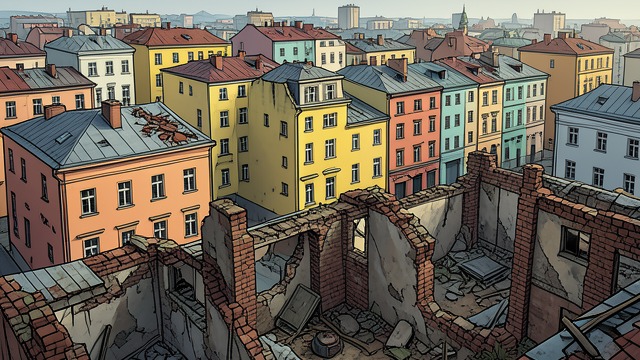
Sokcho Through Another Eye
A changed view
Yan Kerrand compares Sokcho to a brightly colored toy town, prompting the narrator to look at its roofs and ruins beside him. She admits she has never examined the city closely in this way.
His perspective makes familiar scenery strange again.
Seeing without understanding
The new view is valuable but incomplete. The narrator knows Yan Kerrand’s outsider’s gaze cannot contain the history and lived isolation she associates with the town.
Snow in the Drawings

Snow in the Drawings
Light rather than color
Yan Kerrand shows the narrator monochrome drawings of places in Sokcho and says that light shapes what people see. She begins to notice the white space between his ink lines as snow and illumination.
The drawings change what she thinks counts as detail.
Perception revised
Rather than simply recording a landscape, the images direct the eye toward what remains blank. The narrator’s attention shifts from the marks to the space those marks make visible.
The Scar Recognized
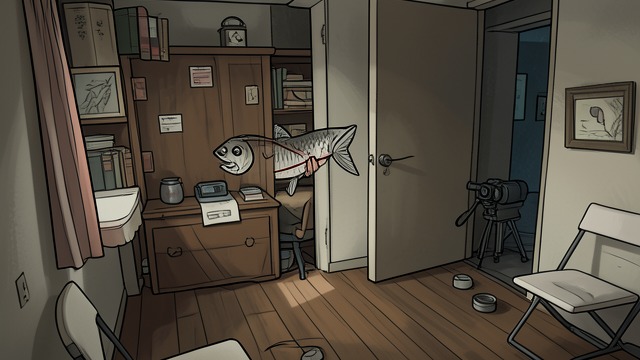
The Scar Recognized
A line from the body
The last image in Yan Kerrand’s sketchbook narrows toward a long, fine scar. The narrator recognizes the mark as the scar on her thigh, now rendered by a brush as a line on a fish.
The drawing makes her body visible through an image she did not create.
Recognition without certainty
She cannot know whether the image means he truly saw her or used her as material. The ambiguity preserves the difference between being represented and being understood.
At Yan Kerrand’s arrival
After the supermarket visit
During the rooftop conversation
On Seollal in Yan Kerrand’s room
In the final pages of the novel
