
The Cold as a Physical Crisis
Winter in SokchoThis flow follows the story’s exceptional cold from discomfort and frozen infrastructure to an atmosphere of isolation and suspended life.
increasing Bearing strength in each event
 decreasing
Bearing strength in each eventdecreasingWinter’s First Barriers
Winter’s First Barriers
A sparse season
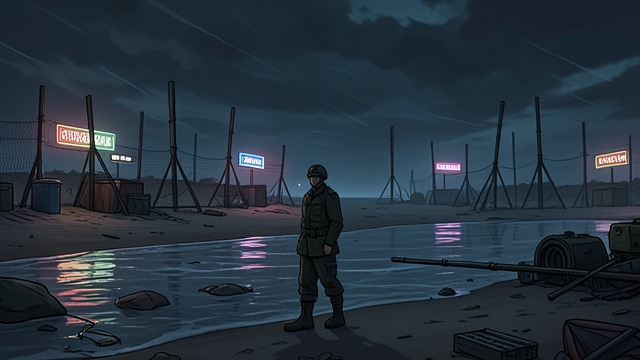
Few guests come to Sokcho in winter, and the narrator warns Yan Kerrand that there is not much to do. The beach and town are marked by cold, wind, dim neon, and nearby military barriers.
Winter reduces both the guest house’s business and the town’s sense of movement.
A social climate
The cold is not merely weather: it intensifies isolation and makes encounters feel temporary. The season forms the material background for the narrator’s waiting life.
Minus Twenty-Seven
Minus Twenty-Seven
A rare low
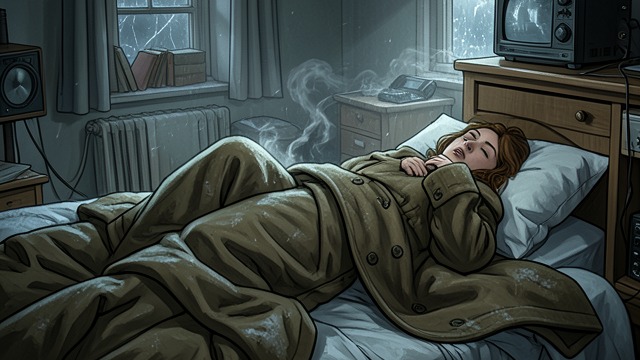
After the temperature falls to minus twenty-seven degrees, the sea seems to move heavily against the ice and waves crack as they collapse on the shore. The narrator struggles to warm herself beneath the covers.
She wraps herself in her overcoat to sleep.
The body under weather
The cold becomes an intimate physical burden rather than a distant view. Her body’s effort to find warmth echoes the larger emotional effort to remain connected.
The Guest House Freezes
The Guest House Freezes
Broken systems
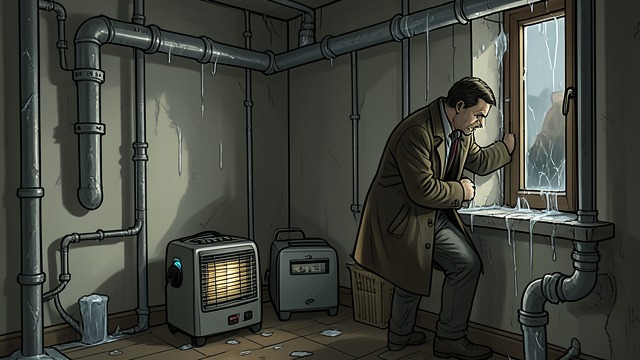
Radiators fail, pipes freeze, and the sewage pipes become blocked. Old Park can offer only a portable heater and a move into a neighboring room.
The narrator relocates beside Yan Kerrand, while nearby vendors also struggle with failing freezers and cookers.
Cold made structural
The freeze exposes how fragile the town’s infrastructure and businesses are. Winter presses into work, hygiene, food storage, and the narrator’s privacy all at once.
A Lost View
A Lost View
Fog at the lookout
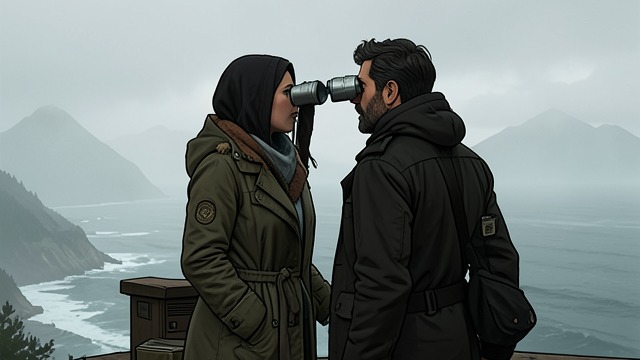
At the border lookout, fog obscures the promised view. The narrator and Yan Kerrand face cold metal binoculars and can see little beyond the sea and mountains.
The landscape resists the act of looking that brought them there.
Visibility withheld
The weather echoes the limits of political and personal understanding. Both the border and the relationship remain only partly visible, even when the characters stand close to them.
The Frozen Footprints
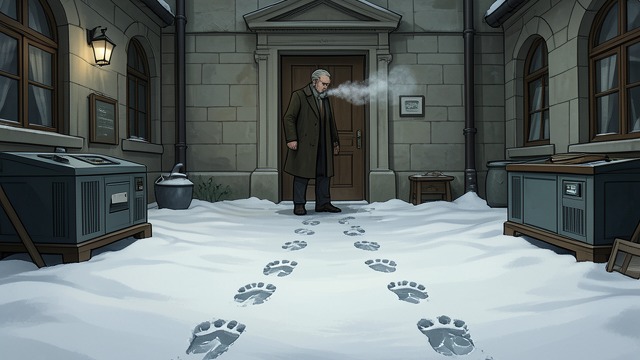
The Frozen Footprints
A path into snow
The narrator finds two lines of footprints crossing the courtyard from Yan Kerrand’s room and disappearing beyond the gate. His carefully folded bedding and lingering breath confirm that he has gone.
The cold preserves the trace of a departure while making it impossible to follow him.
Weather as separation
Snow makes absence visible but does not offer a route back. The winter landscape becomes a final image of the narrator’s inability to keep the departing artist present.
At the beginning of the story
The night of the extreme cold snap
The morning after the extreme cold
Late afternoon at the observation point
The morning Yan Kerrand leaves
