
Bodies Measured and Altered
Winter in SokchoThis flow traces the social pressure to treat faces and bodies as projects for improvement, and the narrator’s uncertain responses to that pressure.
increasing Bearing strength in each event
 decreasing
Bearing strength in each eventdecreasingThe Boyfriend’s Advice
The Boyfriend’s Advice
Improvement as common sense
Jun-oh says that everyone has something to improve and suggests the narrator consider facial surgery if she hopes to work in Seoul. He presents cosmetic procedures as a practical investment.
The narrator asks what he wants her to look like, resisting his assumption that her face needs revision.
Intimacy under a standard
The advice ties professional opportunity and romantic approval to appearance. The narrator experiences the standard as a judgment even when Jun-oh claims she is already perfect.
The Bandaged Guest
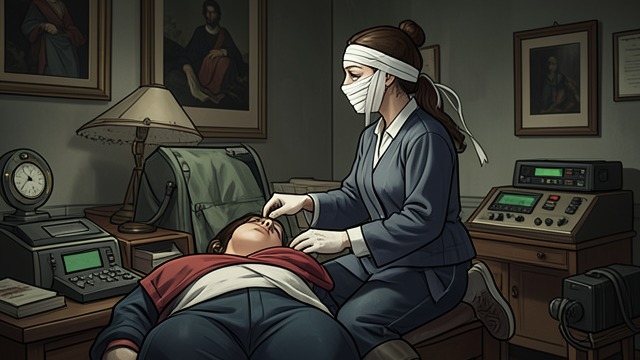
The Bandaged Guest
A face in recovery
A young guest stays at Old Park’s Guest House after facial surgery, with bandages covering the changes. The narrator watches her retreat into her room and wait for her features to emerge.
The procedure is visible as a process, not a completed transformation.
Beauty and vulnerability
The bandages complicate the promise that surgery will produce a better face. They show the pain, isolation, and uncertainty hidden behind the language of improvement.
The Mother’s Offer
The Mother’s Offer
Money for an operation
The narrator’s mother says she has saved money in case her daughter wants an operation. She argues that changing one’s appearance may help secure a better job.
The narrator asks whether her mother considers her ugly.
Care repeating social pressure
Her mother’s suggestion comes from concern, but it repeats the same appearance-based logic as Jun-oh’s advice. The narrator must decide how to hear love when it arrives through an offer to alter her body.
The Aunt’s Proposal

The Aunt’s Proposal
Appearance made public
The aunt criticizes the narrator’s glasses and appearance, then suggests paying for facial surgery in Seoul. The proposal enters a family gathering alongside talk of the narrator’s wedding and clothing.
The mother objects that her daughter is lovely as she is.
Competing definitions
The argument reveals a difference between accepting a body and treating it as a project. The narrator’s own view remains unsettled by years of advice delivered as care.
The Face in Ink

The Face in Ink
A self-made image
The narrator smears ink across her face after finding a discarded drawing of a woman in Yan Kerrand’s room. She traces her features and collarbone with the artist’s material.
The substance burns her eyes and sticks her eyelids shut.
Alteration without approval
Her action is neither a cosmetic procedure nor a finished artwork, but it echoes the pressure to make the body into an image. It exposes the pain beneath the desire to be seen differently.
Before Jun-oh leaves for Seoul
During the first weeks of the story
During the bathhouse conversation
At the Seollal family meal
After Yan Kerrand decides to leave
