
Seasons and Suspended Time
Winter in SokchoThis flow traces the contrast between seasonal change and the emotional and political conditions that make the novel’s winter seem to persist.
increasing Bearing strength in each event
 decreasing
Bearing strength in each eventdecreasingA Winter Resort
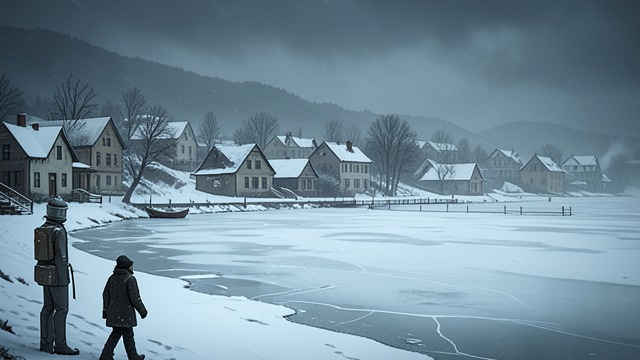
A Winter Resort
The quiet season
The narrator tells Yan Kerrand that Sokcho is a seaside resort but has little to offer in winter. Guests are scarce, businesses are subdued, and the cold limits ordinary movement.
The town waits for visitors and better weather.
Time slowed down
Winter gives the story a pace shaped by pauses and repeated routines. The narrator’s uncertain future appears to have taken on the same season’s stillness.
A Coming Thaw
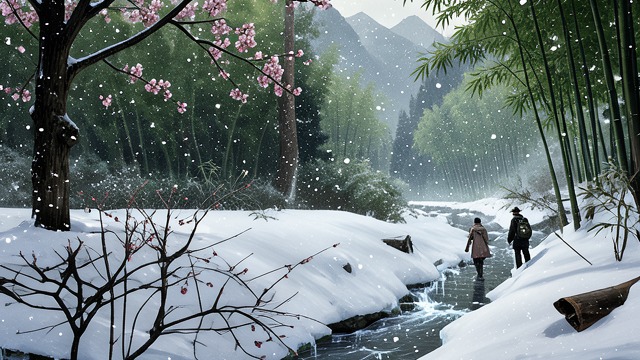
A Coming Thaw
Snow beginning to loosen
Snow crashes from branches and melts into streams while the narrator and Yan Kerrand climb through the mountain landscape. The scene suggests that the season may be changing.
The narrator points toward the coming cherry blossoms and greener bamboo.
Change not yet arrival
Yan Kerrand says he will be gone before spring. The possible thaw therefore belongs to a future he will not share and the narrator has not yet reached.
The Frozen Sea
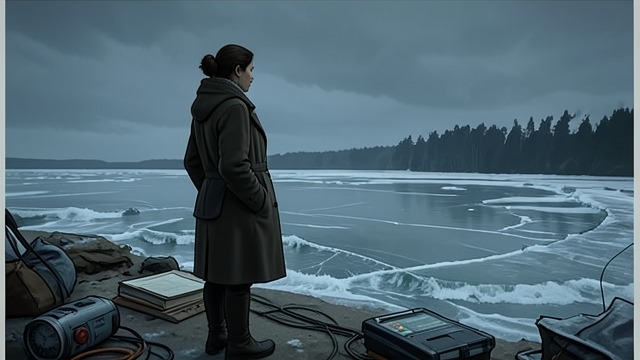
The Frozen Sea
Ice and resistance
At minus twenty-seven degrees, the waves seem to slow and break in defeat against the shore. The narrator wraps herself in an overcoat because the room offers too little warmth.
The unusual cold makes the sea and the body appear equally constrained.
Weather as emotional form
The frozen landscape expresses a wider sense of blockage without reducing every character’s problem to weather. It gives material shape to the narrator’s loneliness and waiting.
The Snake Between Seasons
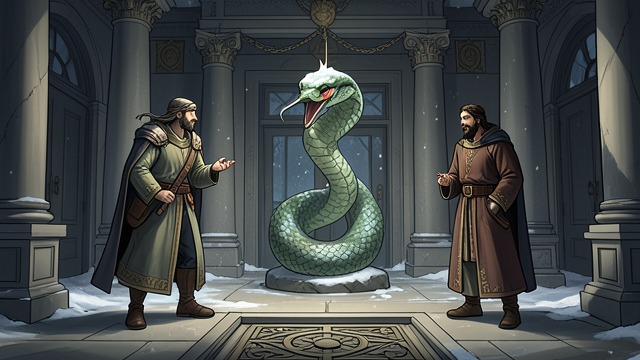
The Snake Between Seasons
A story of transition
At Naksan Temple, the narrator explains that the snake serves as a pivot between seasons, allowing one to become another. The tortoise guards winter, while the dragon must find the snake to pass.
Yan Kerrand studies the figures closely.
A hoped-for passage
The legend offers a model of change that requires a threshold and a meeting. It resonates with the narrator’s desire to move beyond her winter without promising that she can do so easily.
The Last Winter Image
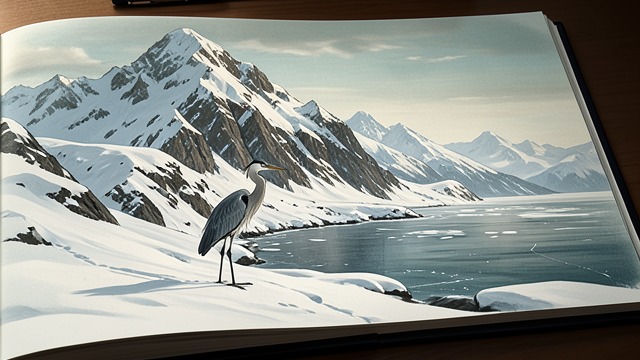
The Last Winter Image
A season kept in art
The narrator’s final view of the sketchbook returns to a winter shore, a snow-covered mountain, and a heron beside the artist’s hero. The scene preserves winter even as the pages begin to change.
Snow and sea meet at the edge of an image that is still forming.
Suspension carried forward
The ending does not show spring arriving. Instead, it leaves the narrator with a world poised between dissolution and renewal, much like the future she has not yet chosen.
Early in the story
During the mountain walk
During the record cold snap
During the rainy visit to Naksan Temple
Near the end, after Yan Kerrand’s departure
