
A Border That Remains
Winter in SokchoThis flow traces the unresolved division of the peninsula as it shapes the landscape, tourism, memory, and the narrator’s sense of suspended time.
increasing Bearing strength in each event
 decreasing
Bearing strength in each eventdecreasingBarbed Wire by the Sea
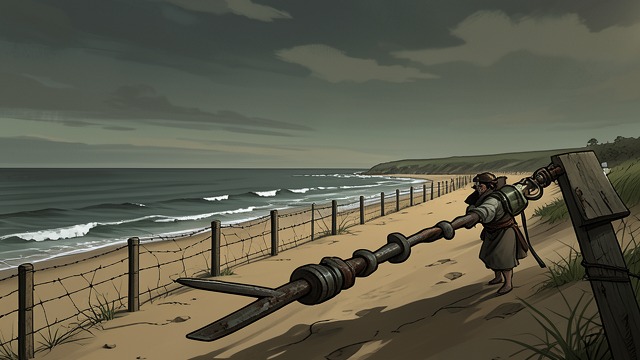
Barbed Wire by the Sea
An ordinary boundary
The narrator walks along a Sokcho beach marked by electrified barbed wire, with North Korea only a short distance away. The barrier is part of the scenery she has known all her life.
For a visitor, the coast might be a resort; for her, the wire makes the sea a guarded edge.
Familiarity and distance
The narrator’s familiarity does not make the division feel resolved. It gives the border a quiet, daily presence that visitors can overlook.
The Armistice on Display
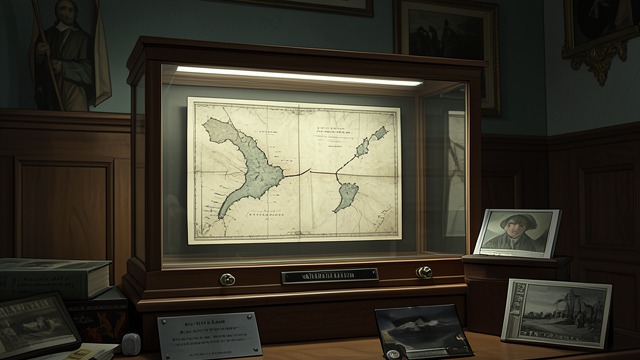
The Armistice on Display
An official chronology
At the museum, the narrator translates a summary of the Korean War, the 1953 armistice, and the militarized frontier. The display presents a conflict halted by agreement but never concluded by a peace treaty.
Yan Kerrand listens as she describes the history in a space designed for visitors.
History as present tense
The facts do not remain confined to the exhibition. They explain why the narrator experiences the border as an unfinished condition rather than a completed past.
Tourists and Solidarity
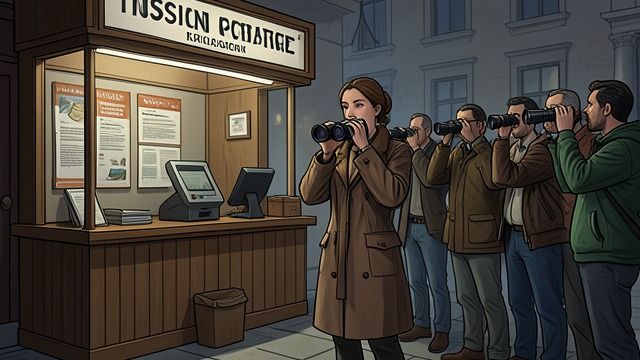
Tourists and Solidarity
A challenge from a visitor
Yan Kerrand asks whether the narrator has visited the border out of solidarity. She rejects the idea that looking through binoculars and shedding tears would amount to solidarity.
She points out that tourists, rather than local people, are the ones who come there to look.
The limits of looking
Their disagreement exposes the difference between witnessing a spectacle and living beside an unresolved division. The narrator refuses to let tourism stand in for political understanding.
A Tourist Killed
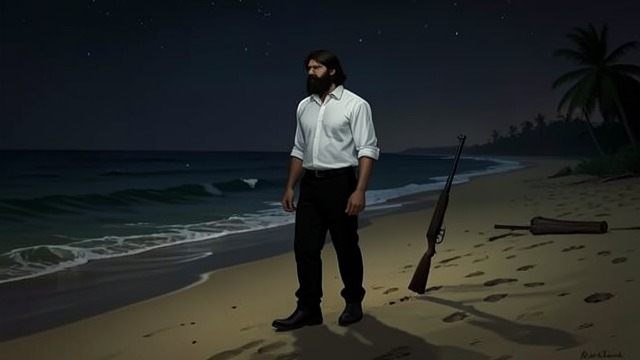
A Tourist Killed
A recent death
At Naksan Temple, the narrator recalls a tourist from Seoul who was shot by a North Korean soldier after swimming across a boundary without realizing it. She uses the death to explain that the border remains dangerous.
Hotels and neon signs cannot make that danger disappear.
Refusing false comfort
She asks Yan Kerrand not to treat the peninsula’s scars as distant history. The scene gives political division a human cost and makes her anger legible as more than local defensiveness.
A Winter Without an End
A Winter Without an End
Naming suspension
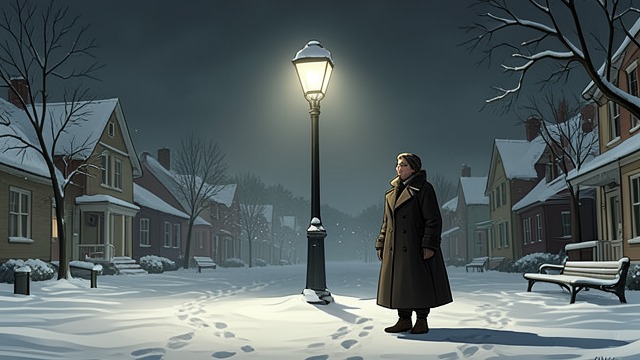
The narrator describes Sokcho as living in limbo, waiting for the end of a war that people have stopped believing is still real. She calls the condition a winter that never ends.
Yan Kerrand apologizes and admits that Sokcho is her home, a place he does not know as she does.
A lasting metaphor
The political stalemate becomes inseparable from the town’s weather and the narrator’s private sense of waiting. The image persists beyond the excursion as an account of life without closure.
Early in the story, on the beach
During the border museum visit
On the drive back from the lookout
During the rainy visit to Naksan Temple
Near the end of the temple visit
