Seollal
Winter in SokchoSeollal is the Lunar New Year holiday around which the novel’s winter routines briefly gather into family observance, public festivity, and shared food. For the narrator, its customs are both obligations and acts of care: she prepares traditional dishes and clothing, even as the people around her judge how she performs them.
Customs and Preparations
The approach of Seollal prompts the narrator’s mother to arrange a shopping trip for a traditional outfit. She believes her daughter should begin dressing like a woman, and the coming visit of her older sister from Seoul gives her an occasion to make the narrator look especially polished. The narrator laughs at the expectation: she has not worn the traditional costume for years. The episode makes the holiday’s inherited customs personal, joining celebration to her mother’s ideas about how a daughter should appear.
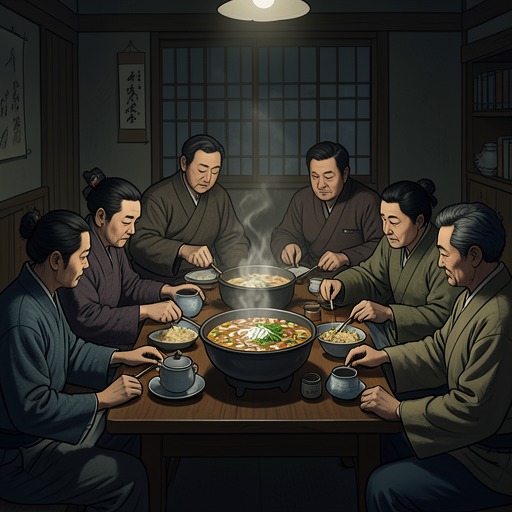
The family’s observance includes a meal of Tteokguk followed by a cemetery visit to place rice balls on ancestors’ graves. Although her mother expects her to attend, the narrator also plans for those who will remain at the guest house. She arranges for Old Park to reheat the soup she has cooked in advance, with portions for him, the bandaged girl, and Yan Kerrand if he chooses to try it. Her preparations extend the holiday’s food and care beyond the family gathering.
The Holiday at the Guest House
When Seollal arrives, the narrator carries Tteokguk to the guest house and tells Yan Kerrand that it is a holiday and everything will be closed. Old Park has already informed him; Yan thanks her, but has stocked up on instant noodles instead. His refusal stings, and she asks why he never tries her cooking. He explains that he does not like spicy food and seems surprised that she wants an explanation. The exchange sets her offering of holiday food against his preference to fend for himself.
The celebration also has a public face. In the days before Seollal, Sokcho is dressed for the holiday: strings of lights run along the main street toward a steel arch decorated with an inflatable dolphin and a Rodeo Street sign. The festive display contrasts with the subdued, practical preparations inside the guest house, where holiday hospitality depends on food being cooked ahead and reheated for those who stay behind.
The Family Gathering
At the meal with her mother and aunt, the narrator’s traditional outfit becomes an object of judgment. Her aunt arrives heavily made-up and wearing a tailored suit, laughs at the sight of the two women in traditional clothes, and questions how anyone could dress that way in the present day. The mother, chastened, forces a laugh. The scene sets her effort to preserve a customary appearance against her sister’s dismissal of it.
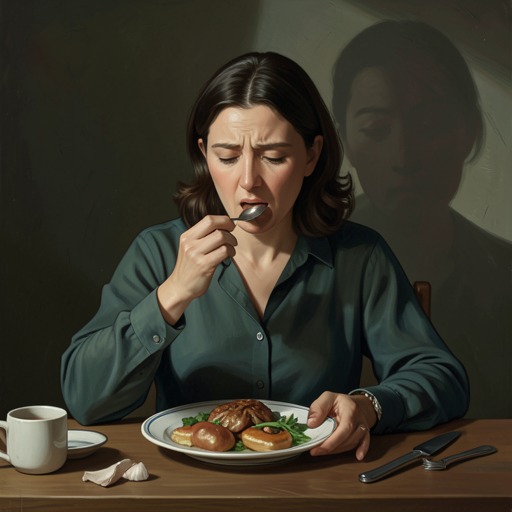
Food brings a different mixture of pleasure and unease. The aunt praises the Pufferfish sashimi, explaining that she does not trust the Japanese chefs who claim to be licensed to prepare it in Seoul. She fears that the toxic flesh could kill someone and imagines those chefs willingly killing Koreans. Her enthusiasm turns abruptly to suspicion when she notices the gray color of the Octopus dish. The mother blames the narrator for piercing its ink sac and says she cannot be trusted with a knife. The holiday table thus becomes a place where the narrator’s cooking is praised, inspected, and faulted in quick succession.
Meaning in the Novel
Seollal gathers several kinds of expectation into one short period: the mother’s wish that her daughter dress in a traditionally feminine way, the family’s customary remembrance of ancestors, and the practical obligation to feed people at the guest house. The narrator participates without simply embracing those expectations; her laughter at the costume, her advance arrangements for others, and her hurt at Yan’s refusal each mark a different response to the holiday.
The scenes also make care tangible but imperfect. Tteokguk can be prepared for people who may not sit at the family table, yet an offering can be declined; a celebratory meal can draw admiration and criticism at once. Seollal offers a pause from ordinary routines, but it does not resolve the frictions among mother, daughter, aunt, and guest. Instead, those frictions become visible around the clothes and dishes through which the holiday is observed.