Seoraksan National Park
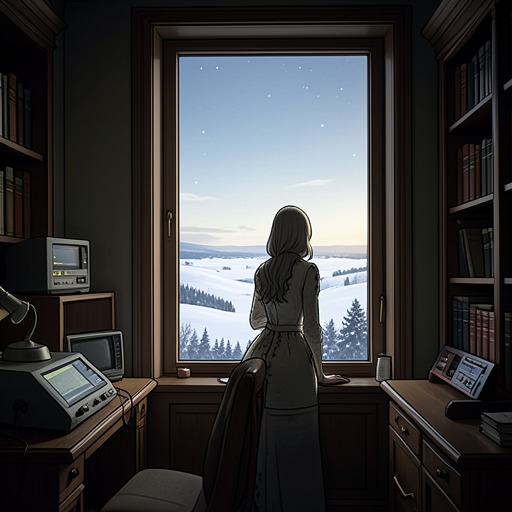
Winter in SokchoSeoraksan National Park is presented as a nearby destination from Sokcho and the setting of a winter walk that brings the narrator and Yan Kerrand together beyond the routines of the guest house. The excursion moves through thawing snow and bamboo to a grotto of Buddhist statues, where the narrator shares a story about Tangun. For Kerrand, the mountain is not merely a scenic attraction: its winter appearance and legends become material for his art, while the walk makes room for an exchange about the narrator’s life and the place she calls home.
Setting and Access
When the narrator explains the guest house’s facilities to Kerrand, she describes Seoraksan National Park as an hour away, open until sunset, and best approached with sturdy boots because of the snow. These practical details establish the park as a destination visitors can reach from Sokcho, but also make the season part of the visit’s conditions. The mountain is not presented through a summer itinerary or a panoramic travel description; winter determines what a visitor should bring and what the landscape will offer.
The advice appears alongside the narrator’s warning that Sokcho is a seaside resort with little to do in winter. Seoraksan offers a possible outing within that otherwise quiet season, though the later walk resists the idea that a destination’s value depends on warmth or decorative scenery. Kerrand, who has been invited to the nature reserve on the narrator’s day off, says he likes the landscape as it is, without adornment. The park thus occupies two roles: a recommended excursion on a visitor’s list and a place whose winter character becomes the subject of sustained attention.
The Winter Excursion
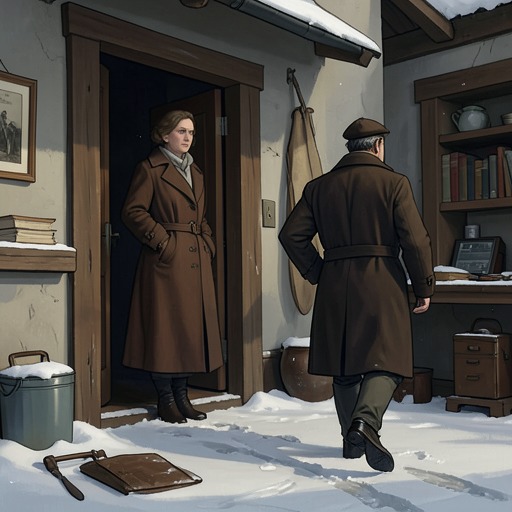
A note in French asks the narrator to accompany Kerrand to the nature reserve the following day. She is struck by the fact that he remembered her day off. On the walk, she goes ahead while Kerrand follows in her footsteps, wearing snowshoes borrowed from Old Park. Snow comes crashing down as the thaw begins, plunging into streams and bending bamboo under its weight. The day is windless, but the snow’s movement gives the mountain a changing, physical presence rather than making it a still winter backdrop.
Kerrand repeatedly stops. He removes his gloves to run his fingers over a tree trunk or an ice-covered rock, pauses to listen, then puts the gloves back on and continues more slowly. The narrator grows impatient and points toward the approaching change of season: cherry blossoms will soon appear, and the bamboo will turn green. Kerrand replies that he will be gone by then. His attention is fixed on what the season currently reveals, not on the spring landscape that the narrator offers as the more attractive prospect. Their contrasting responses make the walk less a conventional sightseeing trip than a meeting between two ways of looking: one anticipates the next season, while the other studies the winter scene as it stands.
The Grotto and Mountain Legends
The pair reach a small cave temple, with statues of Buddha set into alcoves. Kerrand examines them closely and asks about Korean mountain myths and legends for a character he is developing. In response, the narrator recounts the story her mother told her as a child: Tangun, the son of the Lord of Heaven, was sent down to Korea’s highest mountain, took a she-bear as his wife, and became the father of the Korean people. The mountain in that story symbolizes a bridge between heaven and earth.
The conversation makes the grotto more than a pause on the climb. Its Buddhist figures prompt a question about myth, and the narrator answers by passing on a story rooted in her childhood. Kerrand’s interest in the legend connects his creative work to the place’s cultural associations; the narrator, in turn, contributes knowledge that does not come from a guidebook or a display. The exchange is specific to their different positions: he seeks material for a character, while she recalls a story inherited from her mother. The mountain becomes a setting where looking and telling meet.
After climbing for two hours, they stop on a rock. Kerrand tightens his laces, takes out his pen and notepad, and begins sketching bamboo. The action links his earlier, tactile attention to trees and rocks with the work of drawing: he has not simply passed through the landscape but has paused to register one of its forms. When the narrator asks whether he always carries his sketchpad, he answers that he does, and that he likes it. The park’s winter vegetation is therefore present both as encountered scenery and as an immediate subject of his practice.
A Place for Looking and Conversation
On the slow descent, Kerrand walks in front. When the narrator feels herself slipping on the snow, she holds on to him. Their physical arrangement briefly changes the dynamic of the outing: she had been impatient with his stops on the way up, but on the return it is his presence that helps steady her. The mountain’s conditions shape their interaction without turning the walk into a grand adventure; the detail remains a small, practical gesture within an unhurried excursion.
The route also opens a more personal conversation. Kerrand asks whether the narrator has lived in Sokcho all her life, and she tells him that she went to university in Seoul. The question moves attention from the landscape to her history, while her answer complicates the impression that her life has been confined to the town. Their return brings them to the beach in front of the guest house, where a haenyo sorts her catch in the cold air. The narrator explains that these diver women come from Jeju and dive throughout the year for shellfish and sea cucumber. Kerrand crouches on a rock to watch, but the narrator is shivering and heads inside; when she asks whether he will come to dinner, he says he will not.
The excursion gives Seoraksan its significance through a sequence of concrete acts: the borrowed snowshoes, the snow falling into streams, the statues in the grotto, the story of Tangun, and the sketch of bamboo. It is both a nearby attraction advertised to guests and a landscape that asks for patience and close attention. In winter, the park does not promise the blossoms the narrator anticipates. Instead, its unadorned forms become the ground for Kerrand’s drawing and for an exchange in which the narrator’s memories and knowledge help shape what he sees.