Soondae
Winter in SokchoSoondae is a handmade food associated with the narrator’s mother, whose preparation joins exacting skill to forms of care that are not always expressed face to face. The account first shows her stuffing squid with a mixture of fish liver, leeks, and sweet potato noodles; later, she sends octopus soondae to the guest house without asking to see her daughter. Between those scenes, food also carries the pressures of family attention, appetite, and the mother’s authority as a cook.
Preparation and Craft
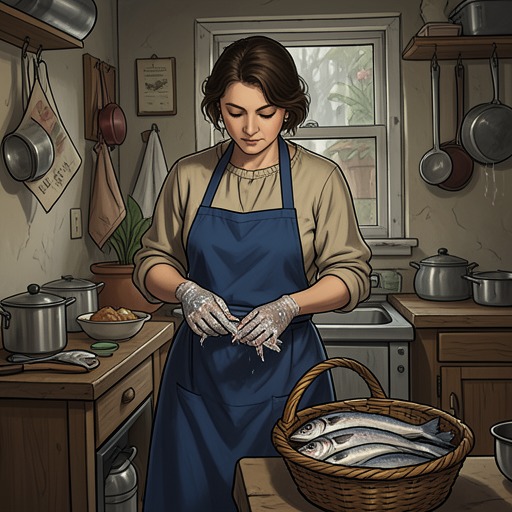
The narrator finds her mother squatting in the kitchen with both arms plunged into a bucket, mixing fish liver, leeks, and sweet potato noodles for the squid stuffing. Liquid spurts from the bucket and pools around their boots before running toward the drain. The work is physical and messy, but the mother directs attention to its precision: she demonstrates how to spread the mixture evenly inside the squid. Her soondae are reputed to be the best in Sokcho, a local standing grounded in practiced technique rather than presentation alone.
The mother’s instruction places the dish within a larger inheritance of culinary knowledge. The narrator visits her on Sunday evenings and stays until Monday, her day off; the mother lives above the port’s loading bays, in housing reserved for fishmongers, and has struggled to sleep alone since her daughter moved out. The kitchen is thus both a workplace and a setting for their continuing contact. Soondae gives the mother something concrete to teach and the daughter something to handle, even when the daughter is not fully attending to the lesson.
Food, Authority, and Family Attention
The narrator’s relationship to food is not simply defined by the work of cooking. Her mother notices that she has lost weight and suspects that Old Park does not give her enough time to eat. The narrator resists this concern, saying that she eats plenty of toast and drinks milky coffee each morning, while also insisting that the kitchen is her domain. Food here can register care as scrutiny: the mother monitors her daughter’s body, while the daughter asserts her competence and independence through her own cooking.
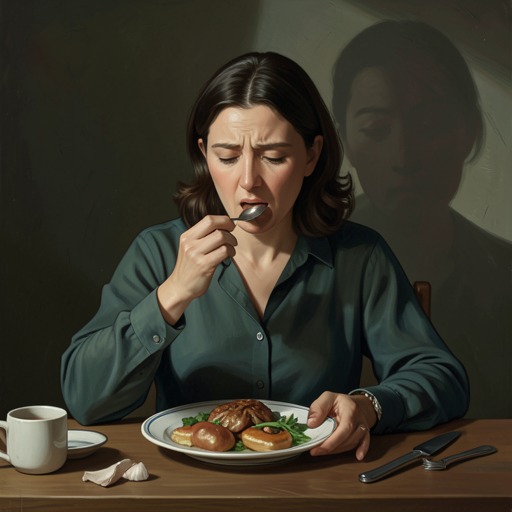
At a meal near the port, the narrator tries to measure each mouthful before eating. Her mother talks about the coming Seollal meal and the difficulty of obtaining Fugu; only octopus is available. The narrator then eats and drinks with increasing speed, describing a loss of control that recurs when she is with her mother. This episode does not identify soondae as part of that meal, but it places the dish’s ingredients and preparation within a household and market world where seafood is seasonal, difficult to source, and handled with specialized knowledge.
That expertise is clearest when the mother prepares Fugu. She alone in Sokcho holds a licence to prepare it, and she removes its poisonous organs without piercing them. The narrator watches but has never been allowed to handle the fish. Set beside the mother’s demonstration of how to stuff squid evenly, this guarded procedure marks different boundaries around her knowledge: some technique is shown, while the most dangerous work remains hers alone.
The Gift at the Guest House
Later, a large box appears at reception. The mother has brought it for the narrator, but she has not asked to see her. Inside is octopus soondae. The account does not explain how this version differs from the earlier squid-stuffed preparation; it does establish that the mother’s food can arrive in more than one form, and that this particular delivery is made without a meeting. The gift makes care tangible while preserving distance between giver and recipient.
Cooking also becomes a possible means of approach beyond the family. In a later exchange, the narrator tells Yan Kerrand that she would like him to taste her cooking. The passage does not say that she serves him the soondae, so the gift and the invitation remain distinct. Together, however, they place food among the narrator’s ways of addressing others: a prepared dish can carry attention where direct conversation is uncertain, just as the mother’s box offers contact without requiring her to appear.