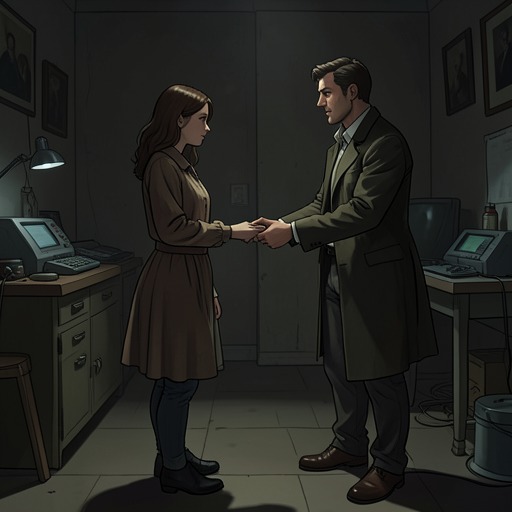
The narrator breaks up with Jun-oh
Winter in SokchoThe narrator breaks up with Jun-oh after their long-distance relationship reaches a choice she cannot accept: moving to Seoul for his new job would mean leaving her mother and the life she has in Sokcho. Their parting unfolds in two stages—an in-person argument followed by a phone call—so the decision is made before the couple has fully spoken through its consequences.
Background and the Choice
Jun-oh returns to the guest house two days after their previous contact, arriving near midnight after snow delays his bus. The narrator has made ginger calamari for him, but he declines it because he has already eaten and is watching what he eats. As they walk toward her room, she raises a different kind of neglect: in their phone conversations, he has never asked for her news. He replies that she has never called him, and says he is tired of the distance between them.
Jun-oh proposes a practical solution: she should move to Seoul, where his salary can support them until she finds work. The narrator has already considered the move and refuses. She cannot abandon her mother; although Jun-oh suggests that her mother could come too, the narrator does not want her mother living with them and believes she would have no job there. The disagreement is not simply over where to live. Jun-oh presents the move as an opportunity he cannot refuse, while the narrator declines the shared future his opportunity would require.
The In-Person Parting
The narrator imagines Seoul as a city of drinking, parties, blinding lights, noise, and conspicuous young women and men. She tells Jun-oh that she will stay in Sokcho and that he need not give up his job for her. He calls her foolish and tells her how much he loves her, but his declaration does not resolve their incompatible decisions.
They lie silently together in bed, looking at the ceiling. Jun-oh eventually says he will take the bus back to Seoul in the morning. The narrator’s feet are cold, and she presses herself against him. When she protests that someone is in the next room, Jun-oh continues to touch her; she protests again, then lets him continue because she wants to feel desired. Their physical closeness follows the failed negotiation, but it does not reverse the choice each has made about where to live.
The Phone Call and Its Aftermath
Later, the narrator calls Jun-oh, asks how he is, and tells him that she is breaking up with him. His silence is long enough that she thinks the call may have ended. When he asks why, she stands and opens the curtains: wet snow is falling, and a person hurries past under a newspaper before vanishing into an alley. The passing figure offers no answer to the question between them; the scene holds on the pause before Jun-oh responds.
Jun-oh eventually says in a faint voice that he is tired and will let her go, adding that they can talk about it again later. His response accepts the breakup without supplying the fuller conversation the narrator has initiated. She removes her jumper, presses her body against the window until the cold makes her numb, and then goes to bed. The relationship ends in an exchange that is both decisive and unfinished: the narrator names the separation, while Jun-oh postpones further discussion.