
Nature Versus Civilization
Wuthering HeightsFollows the novel's thematic opposition between the wild, natural world of the Heights and the refined, artificial world of the Grange, and its resolution.
increasing Bearing strength in each event
 decreasing
Bearing strength in each eventdecreasingThe Storm and the Drawing-Room
Two Poles of Life
Savagery and Civility
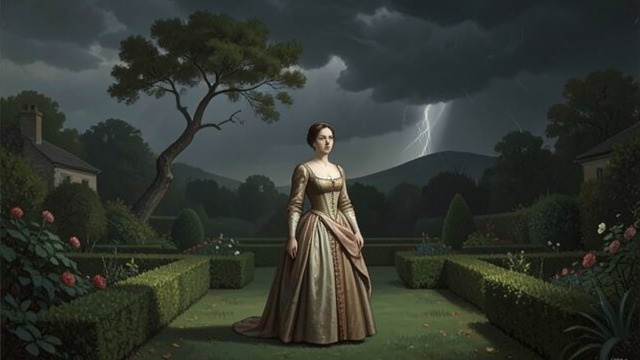
Catherine's visit to Thrushcross Grange exposes her to a life of carpets, chandeliers, and quiet manners, opposite to the stormy freedom of the Heights. She is improved, polished, civilized — and she is separated from Heathcliff by the new standard she has acquired.
A Longing That Will Not Lie
Though the Grange's comforts attract her, her deepest self still runs wild on the moors. She tells Nelly she would be herself again if once among the heather, foreshadowing the novel's judgement that civilization can refine but cannot root out nature.
The Moonbeam and the Lightning

Two Loves, Two Elements
Frost and Fire
Catherine compares Linton's love to foliage and Heathcliff's to the eternal rocks, with Linton himself as different from Heathcliff as a moonbeam from lightning. The imagery organizes the novel's theory of human passion.
A Civilized Choice
She chooses the moonbeam for her life and pays for it with her soul. The theme of nature versus civilization is thus embodied in a single woman's divided heart.
The Moors as a Territory of the Soul
A Geography of Feeling
The Heights and the Hollows
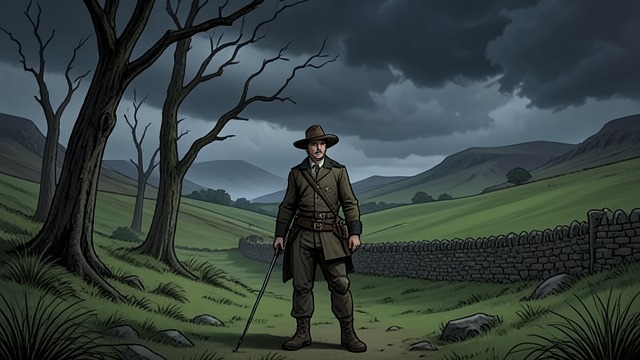
Emily Brontë's moors are not scenery but moral substance: the Heights stands in wind and storm, the Grange in a sheltered valley. Lockwood's first description of the wuthering exposure, the stunted firs, and the gaunt thorns sets the book's terms.
A Landscape of Truth
The characters reveal themselves in weather: Catherine catching the full rain, Heathcliff wandering the heath at night, Edgar staying inside by the fire. The nature that surrounds the houses is the novel's commentary on the lives within them.
The Garden of Reclamation
Cultivation Without Emasculation
A Synthesis of the Two Worlds
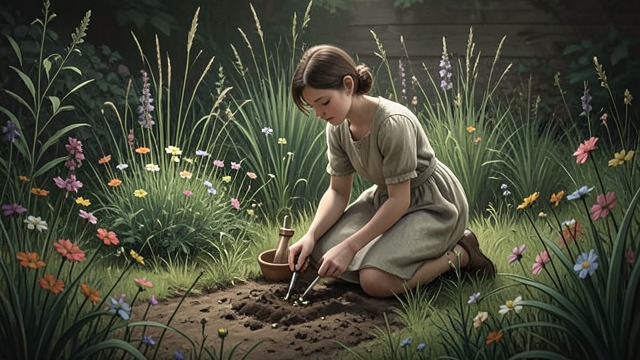
Hareton, digging up Joseph's currants to make a flowerbed, joins the strength of the Heights with the tenderness of the Grange. Cathy's seeds are her civilization, but they are planted in Earnshaw soil.
The Best of Both Houses
Their garden is the physical emblem of the novel's resolution: nature not suppressed but cultivated, civilization not rejected but rooted. The marriage of the two families is a marriage of the two principles.
Catherine's five weeks at Thrushcross Grange, Christmas-time
Catherine's confession to Nelly
the landscape descriptions throughout the middle of the novel
spring 1802, when Cathy and Hareton plant flowers
