Catherine's Marriage to Edgar Linton
Wuthering HeightsCatherine's Marriage to Edgar Linton is the pivotal social and emotional event of the first generation in Wuthering Heights, marking Catherine Earnshaw's choice of wealth and respectability over her profound, soul-level bond with Heathcliff. This decision, made against her own conviction that she is wrong, sets in motion the novel's central tragedy: Heathcliff's disappearance, his vengeful return, and the systematic destruction of both the Earnshaw and Linton families. The marriage is not merely a union but a rupture—a betrayal that Catherine herself articulates as a violation of her own soul, and one that transforms her from the wild child of Wuthering Heights into the mistress of Thrushcross Grange, a role she can never fully inhabit.
The Decision and Its Inner Conflict
Catherine's path to Edgar Linton is shadowed by her own profound self-awareness of its wrongness. In a confession to Ellen Dean, she strikes one hand on her forehead and the other on her breast, declaring that in whichever place the soul lives, in her soul and in her heart, she is convinced she is wrong. This is not a naive girl entering marriage blindly; it is a woman who knows she is committing a spiritual betrayal. Her justification is pragmatic and, in her own mind, noble: she argues that if she and Heathcliff married, they would be beggars, whereas by marrying Linton she can aid Heathcliff to rise and place him out of her brother's power. She insists that this is the best motive of all, for it is for the sake of one who comprehends in his person her feelings to Edgar and herself. Yet even as she articulates this plan, she reveals its impossibility, exclaiming that no mortal creature can separate her from Heathcliff, and that every Linton on the face of the earth might melt into nothing before she could consent to forsake him. The marriage is thus founded on a contradiction: she marries Edgar to help Heathcliff, while swearing she will never truly leave Heathcliff.
The Wedding and Its Immediate Aftermath
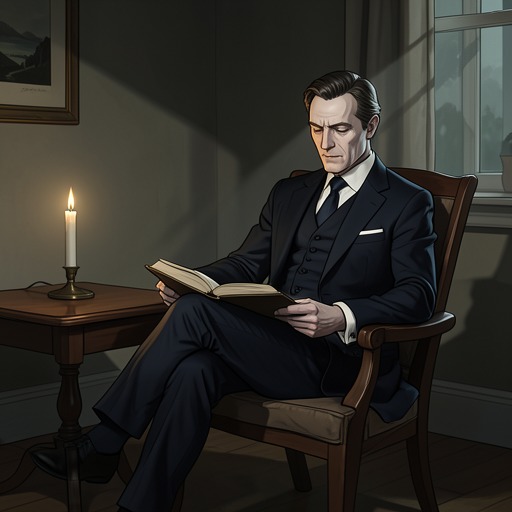
Edgar Linton, infatuated as multitudes have been before and will be after him, believed himself the happiest man alive on the day he led Catherine to Gimmerton Chapel, three years subsequent to his father's death. The wedding itself is a triumph of social form over emotional truth, a ceremony that legitimizes a union Catherine has already declared to be a violation of her soul. The aftermath, however, reveals the hollowness of this triumph. Catherine returns to Wuthering Heights saucier, more passionate, and haughtier than ever, her illness having given her a claim to be treated with consideration. She keeps aloof from Mr. Earnshaw and his companions, and her brother, tutored by Kenneth and serious threats of a fit that often attended her rages, allows her whatever she pleases to demand. Edgar's infatuation blinds him to the reality that he has married a woman whose heart belongs elsewhere, and the household at Thrushcross Grange becomes a stage for Catherine's restless, unfulfilled spirit.
The Cost of the Union
Catherine's marriage exacts a terrible price on those she leaves behind. Ellen Dean, much against her inclination, is persuaded to leave Wuthering Heights and accompany Catherine to Thrushcross Grange, parting from little Hareton, who is nearly five years old and whom she had just begun to teach his letters. The parting is sad, but Catherine's tears are more powerful than theirs; when Ellen refuses to go, Catherine goes lamenting to her husband and brother, and Ellen is left with but one choice: to do as she is ordered. The marriage also seals Heathcliff's fate as an outcast. Ellen warns Catherine that as soon as she becomes Mrs. Linton, Heathcliff loses friend, love, and all, and asks whether she has considered how she will bear the separation and how he will bear to be quite deserted in the world. Catherine's indignant response—that Heathcliff will be as much to her as he has been all his lifetime—proves hollow, for the marriage creates a social chasm that even her will cannot bridge. The union with Edgar, which was meant to elevate Heathcliff, instead becomes the instrument of his utter abandonment.
The Marriage's Legacy of Ruin
The consequences of Catherine's choice reverberate through the entire novel, shaping the fates of the second generation. The marriage produces Catherine Linton (younger), a child who becomes the most winning thing that ever brought sunshine into a desolate house, with the Earnshaws' handsome dark eyes but the Lintons' fair skin and small features, and yellow curling hair. Yet this child is also the product of a fractured union, and her own story becomes a repetition of her mother's entrapment. The marriage also sets the stage for Heathcliff's revenge, which targets not only Edgar but the very institution of the family. When Heathcliff takes over Wuthering Heights, he reduces Hareton, who should now be the first gentleman in the neighbourhood, to a state of complete dependence on his father's inveterate enemy, living in his own house as a servant. The marriage's legacy is one of dispossession and degradation, as the children of both families are caught in the web of resentment that Catherine's choice spun.
The Marriage as a Legal and Economic Trap
The marriage also exposes the brutal legal and economic realities that constrain women in this world. Catherine's fortune, which she brings to the marriage, becomes a tool in the power struggles between the men. When Edgar Linton, on his deathbed, divines that one of his enemy's purposes is to secure the personal property as well as the estate to his son, he feels that his will had better be altered: instead of leaving Catherine's fortune at her own disposal, he determines to put it in the hands of trustees for her use during life, and for her children after her. By that means, it could not fall to Heathcliff should Linton die. This legal maneuvering reveals that Catherine's marriage has made her a pawn in a game of property and inheritance, her own wishes and agency subsumed by the interests of the men who control her. The marriage, which Catherine entered to gain power and freedom, ultimately delivers her into a system where her fortune, her body, and her future are all subject to male authority.
The Unraveling of the Union
In the end, Catherine's marriage to Edgar Linton unravels not through divorce or scandal but through the slow erosion of her spirit. Her great miseries in this world have been Heathcliff's miseries, and she watched and felt each from the beginning; her great thought in living is himself. She confesses that if all else perished and he remained, she should still continue to be, and if all else remained and he were annihilated, the universe would turn to a mighty stranger. This declaration, made before her marriage, becomes the epitaph of her married life. The union with Edgar, which she hoped would allow her to aid Heathcliff, instead becomes the prison from which she cannot escape. Her death, which follows her brain fever, is the final consequence of a marriage that was wrong from the start—a wrongness she knew in her soul and in her heart, and which no social ceremony could ever make right.