Catherine's name inscriptions
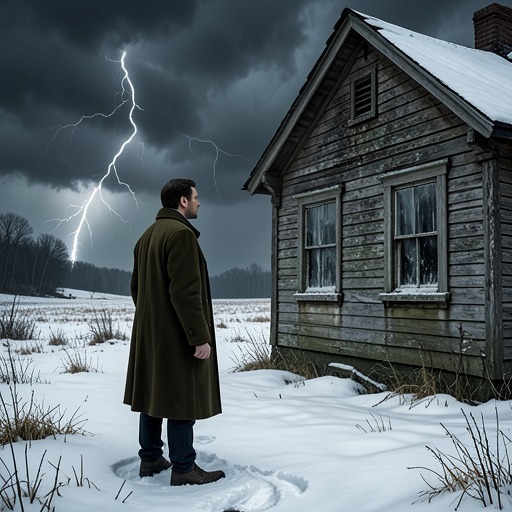
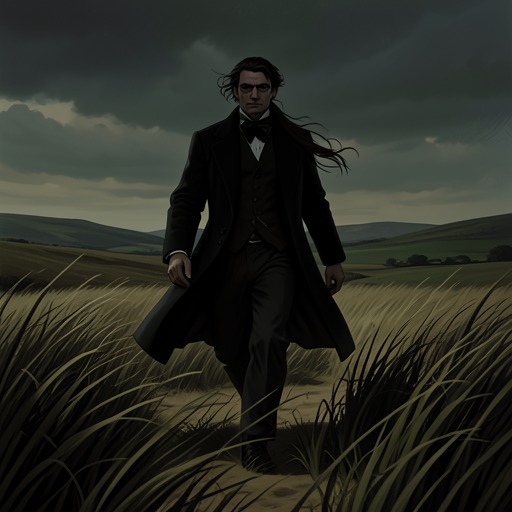
Wuthering HeightsCatherine's name inscriptions are the scratched signatures that Mr. Lockwood discovers on the window ledge of the oak-panelled bed at Wuthering Heights, and they function as the novel's most concentrated symbol of Catherine Earnshaw's fractured identity, her impossible desires, and her haunting presence that persists beyond death. The three names—Catherine Earnshaw, Catherine Heathcliff, and Catherine Linton—are not merely a record of the surnames she might bear, but a map of the competing claims on her soul: the family of her birth, the man she insists she is, and the husband she chooses for social advancement. When Lockwood first encounters them, he is too stupefied to be curious, yet the names work on him nonetheless, swarming before his closed eyes as "vivid as spectres" until the air seems full of Catherines. The inscriptions thus serve as the reader's first introduction to the novel's central figure, a woman already dead for two decades, and they establish from the outset that her identity is not singular but multiple, contested, and unresolved.
The Discovery of the Inscriptions
The inscriptions are found in the singular old-fashioned couch that forms a little closet within the oak-panelled bed, a structure Lockwood describes as designed to obviate the necessity for every member of the family having a room to himself. The ledge of the enclosed window serves as a table, and it is there, beside a few mildewed books piled in one corner, that the writing appears: a name repeated in all kinds of characters, large and small, scratched directly onto the paint. The variations run through all three of Catherine's possible identities—Earnshaw, Heathcliff, Linton—and Lockwood, in vapid listlessness, leans his head against the window and spells them over until his eyes close. The names invade his dreams, and when he wakes to find his candle-wick reclining on one of the antique volumes, perfuming the place with an odour of roasted calf-skin, he opens the injured tome to discover it is a Testament bearing the inscription "Catherine Earnshaw, her book," with a date some quarter of a century back. The library proves to be select but dilapidated, every morsel of blank space covered with a pen-and-ink commentary, some in detached sentences and others in the form of a regular diary scrawled in an unformed, childish hand, including an excellent caricature of Joseph. The discovery kindles within Lockwood an immediate interest for the unknown Catherine, and he begins to decipher her faded hieroglyphics, reading her childhood account of an awful Sunday when Hindley was a detestable substitute for her absent father and she and Heathcliff resolved to rebel.
The Three Names as Identity
The three names inscribed on the ledge correspond precisely to the three identities Catherine occupies or imagines across her life, and the novel returns to them as a kind of refrain. Catherine Earnshaw is the girl of the moors, the wild child of Wuthering Heights who runs free with Heathcliff and declares that he is more herself than she is. Catherine Linton is the lady of Thrushcross Grange, the wife of Edgar Linton who marries for social position and the means to aid Heathcliff's rise. Catherine Heathcliff is the name she never actually takes in life, yet it is the one she claims most profoundly as her own being. When she tells Ellen Dean that she is Heathcliff, she articulates a unity that transcends the legal and social categories of marriage: "He's always, always in my mind: not as a pleasure, any more than I am always a pleasure to myself, but as my own being." Her love for Heathcliff, she explains, resembles the eternal rocks beneath—a source of little visible delight, but necessary—whereas her love for Linton is like the foliage in the woods, subject to the changes of time and winter. The inscriptions thus encode the central paradox of her existence: she is legally and socially Catherine Linton, but she insists that her true identity is fused with Heathcliff, a man whose name she can never properly bear. The scratching of all three names onto the paint is an unconscious acknowledgment of this fragmentation, a repeated attempt to fix an identity that will not hold still.
The Nightmare and the Ghost
The inscriptions take on their full supernatural weight in Lockwood's nightmare, when the name he has been spelling over becomes a voice demanding entry. Having fallen asleep in the oak closet, he dreams that he rises to silence the fir bough that taps against the lattice, and in his dream he knocks his knuckles through the glass and stretches out his arm to seize the branch. Instead, his fingers close on the fingers of a little, ice-cold hand, and a melancholy voice sobs, "Let me in—let me in!" When he asks who is there, the voice replies, "Catherine Linton," and adds, "I'm come home: I'd lost my way on the moor!" Lockwood notes the oddity of the name: he had read Earnshaw twenty times for Linton, yet the ghost identifies herself by her married name. The terror makes him cruel; he pulls the wrist onto the broken pane and rubs it to and fro till the blood runs down and soaks the bedclothes, yet the voice continues to wail and maintains its tenacious grip. When he finally demands to know how he can let her in, the fingers relax, and he snatches his hand through the hole, piling the books up in a pyramid against it. The voice cries that it has been a waif for twenty years, and the scratching continues until Lockwood yells aloud in a frenzy of fright, waking Heathcliff, who comes to the door in response to the noise. The nightmare transforms the inscriptions from a static record into a dynamic haunting: the name Catherine Linton, scratched on the ledge, becomes the identity of a ghost who cannot find rest, who has lost her way on the moor, and who demands entry to the house she once called home.
The Inscriptions and Heathcliff's Haunting
The names on the ledge are the first manifestation of a haunting that will consume Heathcliff for the eighteen years he survives Catherine, and his torment is expressed in the same vocabulary of identity and presence. When he learns of her death, he cries out that she is a liar to the end, and he prays that she may not rest as long as he is living, demanding that she haunt him: "Be with me always—take any form—drive me mad! only do not leave me in this abyss, where I cannot find you!" He declares that he cannot live without his life, cannot live without his soul, and he dashes his head against a knotted trunk, howling like a savage beast. In the years that follow, he is haunted not by a visible spectre but by the sense of her presence everywhere: when he sits in the house with Hareton, he feels that on going out he should meet her; when he walks on the moors, he feels she should be coming in. When he sleeps in her chamber, he is beaten out of it, for the moment he closes his eyes she is either outside the window, or sliding back the panels, or entering the room, or resting her darling head on the same pillow as she did when a child. He opens and closes his lids a hundred times a night, always to be disappointed, and he describes the torment as a strange way of killing—not by inches, but by fractions of hairbreadths, beguiling him with the spectre of a hope through eighteen years. The inscriptions on the ledge, with their three names, are the textual origin of this haunting: they are the point where Catherine's identity becomes visible as a set of possibilities, and the ghost who comes to the window in Lockwood's dream is the same Catherine who cannot rest because her identity was never resolved.
The Inscriptions and the Second Generation
The legacy of the inscriptions extends into the second generation, as the names and the identities they encode are inherited and transformed by Catherine's daughter and by Hareton Earnshaw. The younger Catherine Linton, who bears her mother's name and her Earnshaw dark eyes but the Lintons' fair skin and yellow curling hair, is described by Ellen Dean as the most winning thing that ever brought sunshine into a desolate house, with a spirit high though not rough, and a heart sensitive and lively to excess in its affections. Her capacity for intense attachments reminds Ellen of her mother, yet she does not resemble her: she can be soft and mild as a dove, her anger is never furious, her love never fierce but deep and tender. The daughter thus represents a reconciliation of the three names that the mother could never achieve: she is Catherine Linton by birth, and she will become Catherine Heathcliff by her forced marriage to Linton Heathcliff, but she ultimately finds her happiness with Hareton Earnshaw, restoring the Earnshaw name to the Heights. When Heathcliff, in his final decline, looks at Hareton and sees a personification of his own youth, he is struck by the young man's startling likeness to Catherine, which connects him fearfully with her. He confesses that he cannot look down to the floor without seeing her features shaped in the flags, that every cloud and every tree recalls her, that the entire world is a dreadful collection of memoranda that she did exist and that he has lost her. The inscriptions on the ledge thus prefigure the entire arc of the novel: the three names are the possibilities that Catherine Earnshaw could not reconcile, and the second generation's story is the working out of those possibilities toward a resolution the mother never found.
The Inscriptions as Narrative Frame
The discovery of the inscriptions is also the moment that initiates the novel's complex narrative structure, for it is Lockwood's encounter with Catherine's name that leads him to demand the story from Ellen Dean. Having been compelled to strike his colours after maintaining till dusk a struggle with low spirits and solitude, he desires Mrs. Dean to sit down while he eats his supper, hoping she will prove a regular gossip and either rouse him to animation or lull him to sleep by her talk. He learns that she has lived at Thrushcross Grange for eighteen years, having come when the mistress was married, and that she has read more than he would fancy, having looked into every book in the library. Ellen Dean proves to be a very fair narrator, and Lockwood continues her story in her own words, only a little condensed. The inscriptions thus stand at the threshold of the entire tale: they are the first evidence of Catherine's existence that Lockwood encounters, and they provoke the curiosity that leads to Ellen's retrospective narration. The name scratched on the ledge is the seed from which the whole history grows, and the three names—Earnshaw, Heathcliff, Linton—are the three families whose interwoven fates constitute the novel's plot. The inscriptions are therefore not merely a symbolic detail but a structural one: they are the point of entry into the story, the mystery that the narrative exists to explain, and the emblem of the identity that the novel's two generations struggle to define and resolve.