Edgar Linton's Death
Wuthering HeightsEdgar Linton's Death marks the quiet, almost imperceptible end of the Thrushcross Grange patriarch, a death that unfolds as a direct consequence of Heathcliff's machinations and that, in its final moments, becomes a scene of serene, even blissful, reunion with his lost wife Catherine Earnshaw. His passing is the culmination of his long, passive suffering and the moment when Heathcliff's legal and economic stranglehold on the Linton family is fully realized, leaving his daughter Catherine Linton (younger) utterly vulnerable and setting the stage for the novel's final, redemptive turn. It is a death that is both a personal tragedy and a legal catastrophe, a moment of profound stillness that nonetheless reshapes the entire balance of power in the novel's world.
The Weakening Master and the Prelude to Death
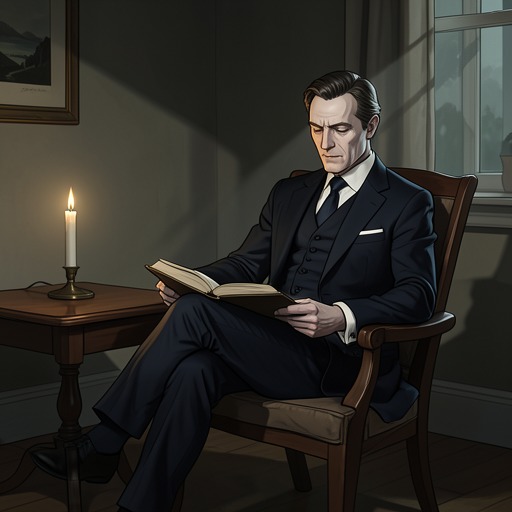
By the time of his final illness, Edgar Linton is a man already diminished by grief and anxiety. When Ellen Dean returns to Thrushcross Grange after her forced visit to Wuthering Heights, she finds him transformed, an "image of sadness and resignation awaiting his death." Though his actual age is thirty-nine, he looks at least ten years younger, his physical decline accelerated by the emotional toll of his daughter's captivity and his helplessness against Heathcliff. He lies murmuring Catherine's name, his thoughts fixed on his deceased wife even as his living daughter is in peril. This state of physical and spiritual exhaustion makes him unable to act decisively, and his final days are spent in a haze of sorrow, his mind turning toward the past rather than the present crisis.
The immediate cause of his final collapse is the news of his daughter's safety. When Ellen Dean whispers that Catherine is alive and well and will be home that night, the shock of relief is too much for his fragile frame. He half rises, looks eagerly around the room, and then sinks back in a swoon. This moment of overwhelming emotion, coming after days of desperate worry, proves to be the final blow to his already failing health. His joy at his daughter's return is thus paradoxically the very thing that hastens his end, a cruel irony that underscores the extent to which his life has been governed by the emotional extremes inflicted upon him by others.
The Final Meeting and a Blissful Death
Edgar Linton's death is marked by a profound and touching serenity. When his daughter finally arrives, breathless and desperate to see him, Ellen Dean compels her to compose herself, urging her to promise she will be happy with young Linton Heathcliff, a falsehood Catherine Linton (younger) readily agrees to utter to spare her father any further pain. The meeting itself is one of silent, overwhelming emotion. Catherine's despair is as silent as her father's joy; she supports him calmly while he fixes his raised eyes on her features, his gaze seeming to dilate with ecstasy.
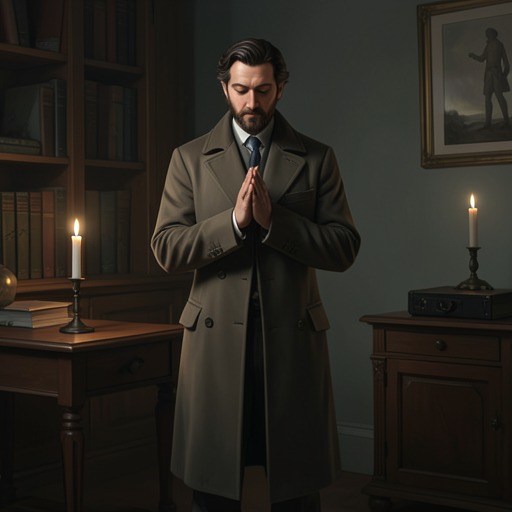
His final words are a testament to his enduring love for his first wife. Kissing his daughter's cheek, he murmurs, "I am going to her; and you, darling child, shall come to us!" and then never stirs or speaks again. He dies blissfully, his gaze remaining rapt and radiant until his pulse imperceptibly stops. The death is so entirely without a struggle that none could notice the exact minute of his passing. This peaceful end stands in stark contrast to the violent and tormented deaths that punctuate the novel, offering Edgar Linton a final, gentle release into the arms of the woman he loved, a reunion he has yearned for throughout his years of quiet suffering.
The Legal Aftermath and Heathcliff's Triumph
Edgar Linton's death is not merely a personal loss but a legal and economic disaster for his daughter. In his final days, he had divined that one of Heathcliff's purposes was to secure the personal property, as well as the estate, to his son, Linton Heathcliff, or rather to himself. Ignorant of how nearly his nephew would quit the world with him, Edgar felt his will had better be altered. Instead of leaving Catherine's fortune at her own disposal, he determined to put it in the hands of trustees for her use during life, and for her children after her, a measure designed to prevent the fortune from falling to Heathcliff should Linton die.
This legal precaution, however, proves futile. The lawyer, Mr. Green, has already sold himself to Heathcliff, which is the cause of his delay in obeying Edgar's summons. He arrives only after Edgar's death, having called at Wuthering Heights to get his instructions on how to behave. Mr. Green then takes it upon himself to order everything and everybody about the place, giving all the servants but Ellen Dean notice to quit. He even attempts to insist that Edgar Linton should not be buried beside his wife, but in the chapel with his family, a plan thwarted only by the explicit directions of the will and Ellen Dean's loud protests. The funeral is hurried over, and Catherine, now Mrs. Linton Heathcliff, is suffered to stay at the Grange only until her father's corpse has quitted it. The legal machinery that Edgar had tried to erect as a bulwark against Heathcliff is thus immediately dismantled by the very man he had trusted to enforce it.
The Legacy of a Life of Quiet Suffering
Edgar Linton's death is the final act of a life defined by a passive endurance of Heathcliff's revenge. From the moment Heathcliff returned to the neighborhood, Edgar was subjected to a slow, grinding campaign of psychological and economic warfare. He was forced to watch his wife's descent into madness and death, a decline that began with the quarrel at Thrushcross Grange and culminated in her brain fever. The doctor's warning that the threatening danger was not so much death as permanent alienation of intellect proved tragically prescient, and Edgar spent his wife's final days as a sleepless guardian, watching over her every shade and change of her painfully expressive features.
His life after Catherine Earnshaw's death was one of quiet devotion to his daughter, a period Ellen Dean describes as the happiest of her own life, though it was shadowed by the constant threat of Heathcliff. He was a man who, in the face of his enemy's relentless machinations, could only retreat further into his own domestic world. His death, therefore, is not a dramatic confrontation but a quiet extinguishing, a final surrender to the forces that had been arrayed against him for years. It is a death that leaves his daughter utterly alone, a destitute widow in all but name, with no cash and no friends to disturb Heathcliff's possession of her inheritance. The serene, blissful manner of his passing is thus deeply ironic, for it ushers in the darkest period of his daughter's life, leaving her to face the full, unmediated force of Heathcliff's cruelty without any protector.