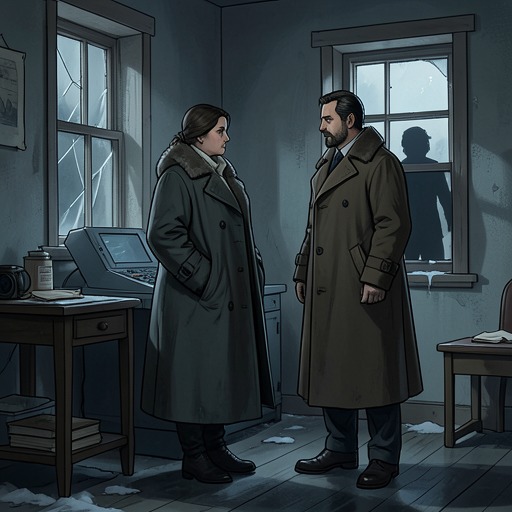
Isabella's letter to Nelly
Wuthering HeightsIsabella's letter to Nelly is a crucial piece of embedded testimony within the layered narrative of Wuthering Heights, a document that arrives roughly six weeks after Isabella Linton's elopement with Heathcliff and serves as the first unmediated account of her life as his wife. Preceded by a short, dry note to her brother Edgar announcing the marriage, the letter is addressed to Ellen Dean, the housekeeper at Thrushcross Grange, and is remarkable for its raw, unfiltered depiction of the brutality and psychological torment that define her new existence. It is a relic of a living person in despair, preserved by Ellen as a testament to a truth that the polite world of the Grange could scarcely imagine.
The Letter's Arrival and Context
The letter reaches Ellen Dean after a period of silence following Isabella's departure. Isabella had sent her brother a brief note announcing her marriage to Heathcliff, which appeared "dry and cold" but contained a penciled apology and an entreaty for reconciliation, asserting she "could not help it then." Edgar Linton did not reply, and it is in this vacuum of familial communication that Isabella's longer, more desperate letter arrives, addressed to Ellen. Ellen herself finds it "odd, coming from the pen of a bride just out of the honeymoon," a telling observation that frames the letter's contents as a shocking departure from any expectation of marital bliss. The letter's very existence is a cry for connection, as Isabella states she "must write to somebody, and the only choice left me is you," underscoring her complete isolation from her former life.
Isabella's Testimony of Cruelty and Confession
The core of the letter is a damning indictment of Heathcliff's character, delivered with the authority of lived experience. Isabella describes her arrival at Wuthering Heights and her discovery that Catherine is gravely ill, a fact she is forbidden to communicate directly. More devastatingly, she reveals Heathcliff's own confession: he tells her he married her "on purpose to obtain power over" her brother Edgar. This admission transforms the elopement from a romantic rebellion into a calculated act of revenge, exposing the true nature of his motives. Isabella's language becomes increasingly frantic and despairing, as she describes her husband as a "lying fiend! a monster, and not a human being!" She confesses she has attempted to leave him but dare not repeat the attempt, and she expresses a wish that he might forget his "diabolical prudence" and kill her, declaring that her only imagined pleasure is "to die, or to see him dead." This testimony is a direct counterpoint to any lingering sympathy for Heathcliff, revealing the full, sadistic extent of his cruelty.
The Letter as a Catalyst for Action
Isabella's letter is not merely a passive record of suffering; it is a catalyst that propels Ellen Dean into action. Upon reading it, Ellen immediately goes to the master, Edgar Linton, and informs him of his sister's arrival at the Heights and her expressed sorrow and desire to see him. Edgar's response is one of cold finality: he has nothing to forgive her, but he is "sorry to have lost her," and declares they are "eternally divided." He suggests that if Isabella truly wishes to oblige him, she should persuade "the villain she has married to leave the country." This exchange, prompted by the letter, solidifies the permanent rift between the siblings and confirms Edgar's passive, ineffectual response to his sister's plight. Ellen's subsequent visit to Wuthering Heights, driven by the letter's revelations, leads to her own harrowing encounter with Heathcliff, where he reiterates his lack of pity and his determination to see Catherine, further exposing his monomaniacal obsession.
The Letter's Narrative and Thematic Significance
Within the novel's complex structure, Isabella's letter functions as a crucial piece of primary evidence, a moment where the narrative briefly shifts from Ellen Dean's retrospective account to a first-person, present-tense document. This shift lends an immediacy and authenticity to the horrors described, bypassing Ellen's mediating perspective and allowing the reader to hear Isabella's voice directly. Thematically, the letter is a powerful articulation of the novel's exploration of revenge and its human cost. It demonstrates how Heathcliff's grand, almost mythic quest for vengeance translates into the very real, daily suffering of an innocent individual. Isabella's plight, as detailed in the letter, humanizes the abstract concept of revenge, showing its brutal, grinding effect on a person caught in its machinery. The letter also serves as a stark contrast to the passionate, spiritual bond between Catherine and Heathcliff, presenting a marriage built not on unity but on calculated cruelty and power, a perversion of the very idea of union that the novel elsewhere explores with such intensity.