Linton Heathcliff's invalidism
Wuthering HeightsLinton Heathcliff's invalidism is the chronic, defining condition of his short life, a state of perpetual sickness that marks him from birth as a creature of frailty and peevishness. Unlike the robust, almost savage vitality of his father, Heathcliff, or the wild energy of his aunt, Catherine Earnshaw, Linton is introduced into the world as an ailing, peevish creature, a report that sets the tone for his entire existence. His illness is not a single dramatic event but a pervasive, grinding state that shapes his personality, his relationships, and ultimately the tragic machinery of the novel's second generation, making him a tool in his father's revenge and a source of profound misery for his cousin and wife, Catherine Linton.
Origins and Early Reports of Sickliness
Linton's invalidism is established even before he appears in the main narrative, through the report of his mother, Isabella Linton, after her escape from Wuthering Heights. She describes him as an ailing, peevish creature from the first, a characterization that immediately frames his identity in terms of physical weakness and irritable temperament. This early report is crucial, as it suggests his sickliness is innate, a constitutional frailty that predates the neglect and harsh treatment he later endures at Wuthering Heights. The description of his birth as a few months subsequent to her escape, and his christening with the name Linton, ties his fragile existence directly to the disastrous marriage of his parents, as if his very body is a product of that union's toxicity. His mother's report of his constant ailments—coughs, colds, aches, and pains of some sort—establishes a pattern of chronic, non-specific illness that will define his life, a litany of complaints that makes him a tiresome inmate for any household.
Life as a Confirmed Invalid at Wuthering Heights
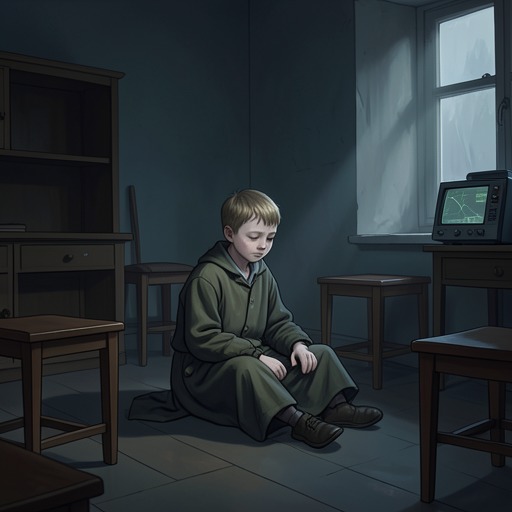
Upon being reclaimed by his father, Linton's invalidism becomes the central fact of his existence at Wuthering Heights, where he lives almost as secluded as Catherine herself. The housekeeper's reports to Ellen Dean paint a picture of a boy whose life is entirely circumscribed by his illness and his own self-absorption. He is described as a fainthearted creature, one so careful of himself that he will complain if a window is left open a bit late in the evening, declaring that a breath of night air is killing. He demands a fire in the middle of summer, finds Joseph's tobacco pipe to be poison, and insists on sweets, dainties, and milk, heeding naught how the rest of the household is pinched in winter. This portrait reveals an invalidism that is not merely physical but deeply psychological, a self-centeredness that repels consolation and regards the good-humored mirth of others as an insult. His father, Heathcliff, seems to dislike him ever longer and worse, having an antipathy to the sound of his voice and being unable to tolerate his presence in the same room for many minutes together. Linton's life is thus one of isolation, spent in a small apartment they called the parlour, or lying in bed all day, wrapped in his furred cloak by the fire, sipping toast and water or some other slop, a figure of utter passivity and dependence.
The Invalidism as a Tool of Manipulation
Linton's chronic illness is not merely a personal tragedy; it is a weapon in the hands of his father, Heathcliff. The boy's frailty is exploited to lure Catherine Linton to Wuthering Heights and to trap her there. When Catherine and Ellen Dean encounter Linton on the heath, scarcely a quarter of a mile from his own door, he is found without a horse, lying on the heath awaiting their approach, and walking so feebly and looking so pale that Ellen immediately exclaims that he is not fit for enjoying a ramble. This staged weakness is part of Heathcliff's plan, using his son's invalidism as bait. Linton's own behavior during these encounters is a study in manipulative invalidism. He complains of being covered in ashes, of the cold, and of the detestable creatures who won't bring coals to the fire, demanding that Catherine shut the door and fetch a scuttleful herself. He tells her that writing long letters tired him dreadfully, and that he would far rather have talked to her, a claim that contrasts sharply with his later listless apathy and his evident difficulty in sustaining any kind of conversation. His illness becomes a performance, a way to command attention and sympathy, even as it repels genuine connection. The pettishness that might be caressed into fondness yields to a listless apathy, and he holds the company of Catherine and Ellen as a punishment rather than a gratification, yet when Catherine proposes to depart, he is roused from his lethargy into a strange state of agitation, glancing fearfully towards the Heights and begging her to remain another half-hour. This fear, born of his father's coercion, reveals that his invalidism is both a genuine condition and a cage from which he cannot escape.
The Final Stages and Death
The culmination of Linton's invalidism is his death, a process that is as passive and manipulated as his life. In his final days, he is a mere shell, and his death is hastened by his father's neglect and his own inability to sustain life. After the death of his uncle, Edgar Linton, and the forced marriage to Catherine, Linton's condition deteriorates rapidly. He is described as being in a state where he feels and sees only death, a confession that reveals the depth of his despair and the totality of his physical and spiritual collapse. His death is not a dramatic struggle but a quiet fading, a consequence of his strange illness rather than a purposeful act of self-starvation, as Ellen Dean later reflects. She conceals the fact that he swallowed nothing for four days, persuaded that he did not abstain on purpose, but that it was the consequence of his strange illness. This final detail underscores the passive nature of his invalidism: even his death is something that happens to him, not something he does. His body is removed to his chamber by Joseph, and Catherine is left to struggle against death alone, a final act of abandonment that completes his tragic arc. The illness that defined his life also defines his end, a slow, inexorable decline that serves his father's purposes even in death, as his will, coerced during his final week, bequeaths all his property to Heathcliff.
Thematic Significance: Frailty as a Narrative Prosthesis
Linton Heathcliff's invalidism functions as a powerful narrative prosthesis in the novel, a device used to advance the plot and to illuminate the moral and psychological states of other characters. His physical frailty is the direct opposite of the savage health of Heathcliff and Catherine Earnshaw, a contrast that highlights the brutal, elemental nature of their passion. While they are forces of nature, Linton is a creature of artifice and weakness, a product of the civilized but corrupt world of the Lintons and the brutal neglect of the Heights. His illness is used to generate sympathy, but it is also used to expose the cruelty of his father, who sees him only as a tool, and the desperation of Catherine, who is trapped by her pity and her sense of duty. The text uses Linton's invalidism not as a complex lived experience but as a symbolic and instrumental condition, a marker of his otherness and a mechanism for the transfer of property and power. His sickliness is the means by which Heathcliff completes his usurpation of Wuthering Heights and the Grange, making the frail, ailing boy the unwitting agent of his father's revenge. In the end, Linton's invalidism is not just a personal affliction but a corrosive force that shapes the destiny of the second generation, a testament to how the sins of the fathers are visited upon the children, and how the weakest among them can be the most thoroughly broken.