Lockwood's nightmare encounter with Catherine's ghost
Wuthering HeightsLockwood's nightmare encounter with Catherine's ghost is the pivotal Gothic scene that opens the supernatural dimension of Wuthering Heights. Occurring during his first night as a tenant at the remote farmhouse, the dream sequence shatters the boundaries between the living and the dead, introducing the novel's central haunting. The episode not only terrifies Lockwood but also reveals the profound, unresolved grief of his landlord, Heathcliff, whose anguished reaction to the nightmare sets the stage for the entire tragic history that Ellen Dean subsequently narrates. This moment establishes the ghost of Catherine Earnshaw as a persistent, tormenting presence whose reach extends beyond the grave, shaping the fates of all who remain at Wuthering Heights.
The Nightmare in the Oak-Panelled Bed
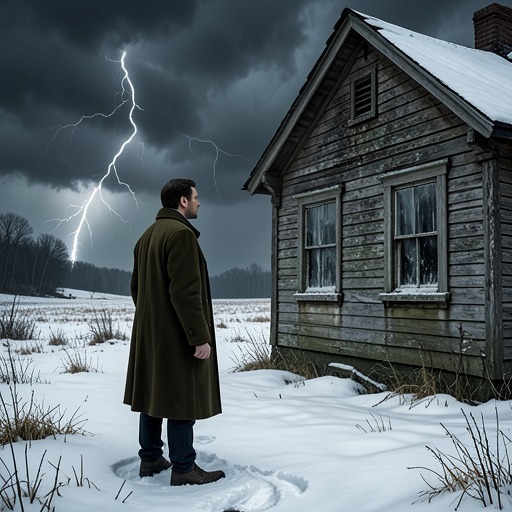
Lockwood, having retired to the oak-panelled bed, is first disturbed by a dream of a religious service led by Jabez Branderham, which culminates in a violent, chaotic tumult. He wakes to find the source of the noise is merely a fir-tree branch rattling its dry cones against the window lattice. As he dozes off again, he dreams a second, far more disturbing dream. Now aware he is in the oak closet, he hears the gusty wind and driving snow, and the fir bough's teasing sound annoys him so much that he resolves to silence it. In his dream, he rises to unhasp the casement, but the hook is soldered into the staple. Muttering that he must stop it, he knocks his knuckles through the glass and stretches out his arm to seize the importunate branch. Instead of the branch, his fingers close on the fingers of a little, ice-cold hand. The intense horror of nightmare overcomes him as a melancholy voice sobs, 'Let me in—let me in!' When he asks who is there, the voice replies, 'Catherine Linton,' adding, 'I'm come home: I'd lost my way on the moor!' Lockwood discerns a child's face through the window, and terror makes him cruel. Finding it useless to shake the creature off, he pulls its wrist onto the broken pane and rubs it to and fro till the blood runs down and soaks the bedclothes, yet the ghost maintains its tenacious grip and continues to wail, 'Let me in!' Finally, he demands to be let go, and when the fingers relax, he snatches his hand back, piles the books up in a pyramid against the window, and stops his ears to exclude the lamentable prayer. The cry continues, and he shouts, 'Begone! I'll never let you in, not if you beg for twenty years.' The voice mourns, 'It is twenty years... I've been a waif for twenty years!' A feeble scratching begins outside, and the pile of books moves as if thrust forward. Lockwood tries to jump up but cannot stir a limb, and he yells aloud in a frenzy of fright.
Heathcliff's Reaction and the Supernatural Plea
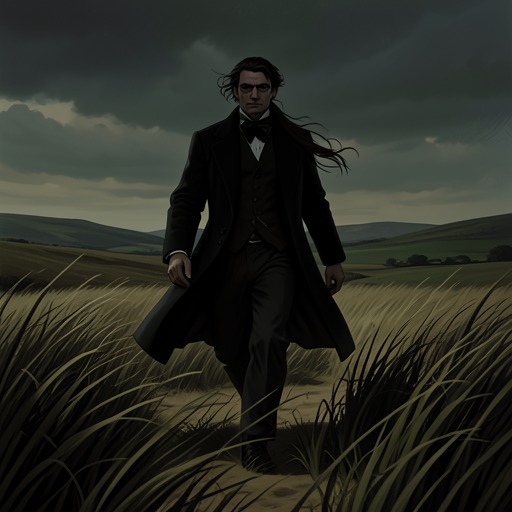
Lockwood's yell is not merely ideal; it summons Heathcliff, who pushes open the chamber door with a vigorous hand, a light glimmering through the squares at the top of the bed. Lockwood, recognizing Heathcliff's accents and fearing he might search further, opens the panels of the bed. The effect on Heathcliff is immediate and extreme: he stands near the entrance in his shirt and trousers, a candle dripping over his fingers, his face as white as the wall behind him. The first creak of the oak startles him like an electric shock, and the light leaps from his hold to a distance of some feet, his agitation so extreme that he can hardly pick it up. After Lockwood quits the chamber, he involuntarily witnesses a piece of superstition on the part of his landlord that belies his apparent sense. Heathcliff gets onto the bed and wrenches open the lattice, bursting into an uncontrollable passion of tears. 'Come in! come in!' he sobs. 'Cathy, do come. Oh, do—once more! Oh! my heart's darling! hear me this time, Catherine, at last!' The spectre gives no sign of being, but the snow and wind whirl wildly through, even reaching Lockwood's station and blowing out the light. The anguish in Heathcliff's gush of grief is so profound that Lockwood's compassion makes him overlook its folly, though he is vexed at having related his ridiculous nightmare since it produced that agony.
The Ghost's Identity and the Echo of Catherine's Words
The nightmare's significance is amplified by its connection to Catherine Earnshaw's own declarations of unity with Heathcliff. The ghost identifies herself as 'Catherine Linton,' yet Lockwood notes he had read 'Earnshaw' twenty times for 'Linton,' a slip that underscores the character's multiple identities across her life. This spectral visitation is the supernatural fulfillment of Catherine's earlier, fervent assertion to Ellen Dean that 'I am Heathcliff!' and her belief that 'If all else perished, and he remained, I should still continue to be; and if all else remained, and he were annihilated, the universe would turn to a mighty stranger.' The ghost's plea to be let in, and her claim of being a waif for twenty years, directly echoes the twenty years that have passed since her death, during which Heathcliff has been haunted by her memory. The scene prefigures Heathcliff's own later confession of his torment, where he describes being 'the sport of that intolerable torture' for eighteen years, seeing her image in every cloud, every tree, and even in his own features. The nightmare thus becomes the first tangible manifestation of a haunting that is both psychological and supernatural, rooted in Catherine's own words about their inseparable souls.
The Nightmare as a Catalyst for the Narrative
The nightmare encounter serves as a crucial narrative catalyst, prompting Lockwood to question Heathcliff and, more importantly, leading Ellen Dean to recount the entire history of Wuthering Heights. Lockwood's curiosity, piqued by the strange events of the night, drives him to seek an explanation from Ellen, who then unfolds the tragic tale of Catherine, Heathcliff, and the Earnshaw and Linton families. The scene also establishes the novel's Gothic atmosphere, with its remote, decaying setting, the supernatural intrusion, and the tyrannical, tormented male figure. The ghost's appearance is not an isolated event but a prelude to the novel's deeper exploration of unresolved passion and the consequences of thwarted love. It foreshadows Heathcliff's own death and his desperate desire to be reunited with Catherine, a desire he expresses when he says, 'I'll have her in my arms again!' The nightmare, therefore, is not merely a frightening dream but a structural device that introduces the novel's central themes of haunting, memory, and the indissoluble bond between Catherine and Heathcliff, a bond that transcends even death itself.
The Legacy of the Haunting
The nightmare's impact extends beyond the immediate scene, resonating through the novel's conclusion. After Heathcliff's death, the country folk swear on the Bible that he walks, with some claiming to have met him near the church, on the moor, and even within the house. The old man by the kitchen fire affirms he has seen two figures looking out of the chamber window on every rainy night since his death. This persistent belief in the supernatural, initiated by Lockwood's dream, reinforces the idea that Catherine and Heathcliff's restless spirits continue to haunt Wuthering Heights. The nightmare, therefore, is not just a singular event but the origin of a haunting legacy that defines the novel's atmosphere and its meditation on love, loss, and the inability of death to sever the deepest human connections. It is the moment when the novel's Gothic machinery is set in motion, ensuring that the story of Catherine and Heathcliff remains alive, even after both are buried in the kirkyard.