Mr. Lockwood
Wuthering HeightsMr. Lockwood is the urbane, self-consciously misanthropic London gentleman whose arrival at Thrushcross Grange in 1801 opens Emily Brontë's Wuthering Heights and whose curiosity about his reclusive landlord, Heathcliff, sets the novel's intricate frame narrative in motion. As the initial narrator and the audience for Ellen Dean's long retrospective account, Lockwood is both a comic figure of misplaced sociability and a crucial structural device, his reactions and judgments shaping how the reader first encounters the savage world of Wuthering Heights. His narrative frames the entire story, and his own experiences at the Heights—culminating in a terrifying nightmare—provide the catalyst for the tale of passion and revenge that follows.
Identity and Introduction
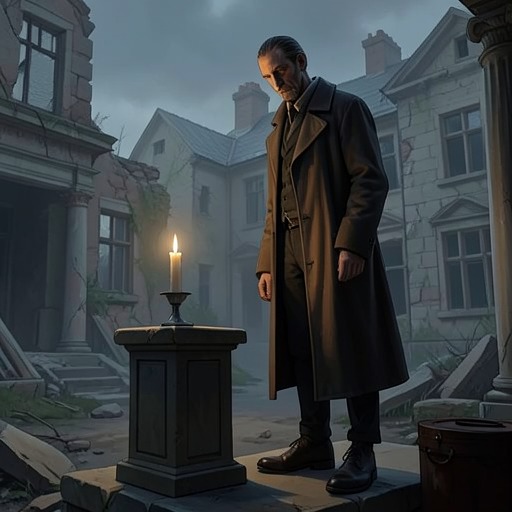
Lockwood introduces himself in the opening pages of the novel as a self-proclaimed misanthropist who has retreated to the Yorkshire moors seeking a life completely removed from the stir of society. He describes the landscape as "a perfect misanthropist's heaven" and declares that he and his new landlord, Heathcliff, are "such a suitable pair to divide the desolation between us." This self-image is immediately undercut by his behavior. He presents himself at Wuthering Heights as "Mr. Lockwood, your new tenant, sir," expressing the hope that he has not inconvenienced Heathcliff by his perseverance in soliciting the occupation of Thrushcross Grange. Despite Heathcliff's barely concealed hostility—his "black eyes withdraw so suspiciously under their brows" and his fingers sheltering "with a jealous resolution" in his waistcoat—Lockwood finds himself interested in a man who seemed "more exaggeratedly reserved" than himself. He is a man of leisure and education, a Londoner who finds the moors both beautiful and desolate, and his decision to rent Thrushcross Grange is presented as an idle whim, a retreat from the world he claims to despise.
The Visitor at Wuthering Heights
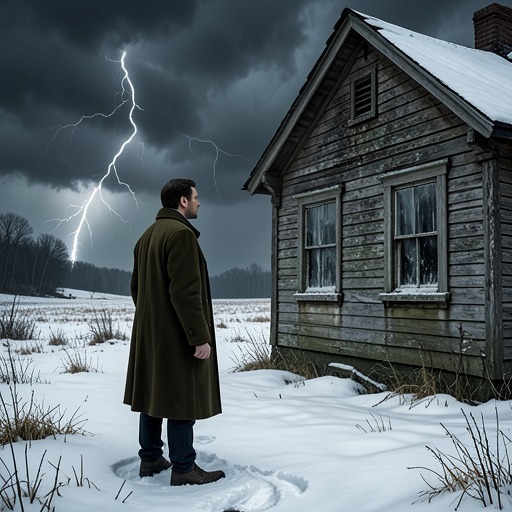
Lockwood's visits to Wuthering Heights reveal a man who is both socially inept and persistently curious. On his first visit, after a pack of dogs attacks him, Heathcliff offers him wine, noting that "guests are so exceedingly rare in this house that I and my dogs, I am willing to own, hardly know how to receive them." Lockwood, rather than taking offense, finds himself loth to yield the fellow further amusement at his expense. He volunteers another visit for the next day, despite Heathcliff's evident wish for no repetition of his intrusion, and reflects with astonishment on how sociable he feels compared with his host. His second visit is a disaster. Caught in a snowstorm, he is forced to stay the night, and his host's gruff hospitality only deepens the awkwardness. Heathcliff tells him, "you may go into my room: you'll only be in the way, coming down-stairs so early: and your childish outcry has sent sleep to the devil for me," a remark that reveals both Lockwood's disruptive presence and the depth of Heathcliff's agitation. Lockwood, for his part, declares himself "now quite cured of seeking pleasure in society," a claim that rings hollow given his subsequent eagerness to hear the entire history of the household from Ellen Dean.
The Nightmare and Its Consequences
Lockwood's most significant action in the novel is his nightmarish experience in the oak-panelled bed at Wuthering Heights. Forced to spend the night, he reads the names "Catherine Earnshaw, Catherine Heathcliff, Catherine Linton" scratched into the window ledge, along with Catherine's diary, and then dreams. In his dream, he is confronted by the ghost of Catherine Earnshaw, who begs to be let in, crying, "Let me in—let me in!" Lockwood, terrified, screams out, and his "childish outcry" brings Heathcliff to the room. The effect on Heathcliff is devastating. He is described as struggling to vanquish an excess of violent emotion, and Lockwood, guessing at the conflict, pretends not to notice. This single event—Lockwood's nightmare—is the direct catalyst for the entire narrative. It reveals to him the depth of Heathcliff's torment and his connection to the ghost, and it prompts his desperate curiosity. When he returns to Thrushcross Grange, he is so shaken that he falls ill, and it is during his convalescence that he persuades Ellen Dean, the housekeeper, to tell him the full story of the Earnshaw and Linton families.
The Audience for Ellen Dean's Story
Lockwood's role as the audience for Ellen Dean's narrative is central to the novel's structure. He is a curious and somewhat condescending listener, who admits that he had determined to hold himself independent of all social intercourse but was finally compelled to strike his colours and ask Mrs. Dean to sit and talk with him. He hopes she will prove "a regular gossip," and he is not disappointed. He is impressed by her intelligence, telling her that she has "no marks of the manners" he is habituated to consider peculiar to her class, and that she has "thought a great deal more than the generality of servants think." Mrs. Dean, in turn, is a willing narrator, though she is careful to present herself as a "steady, reasonable kind of body" who has undergone "sharp discipline" and read widely. Lockwood's framing of her story—he tells the reader he will continue it "in her own words, only a little condensed"—establishes the layered, mediated nature of the tale. He is not a passive listener; his reactions, his questions, and his judgments color the narrative, and his own experiences at the Heights provide a frame of reference for the reader. His presence as an outsider, a man of the world who finds the moors and their inhabitants both fascinating and repellent, creates a crucial distance between the reader and the passionate, violent events of the story.
The Reluctant Tenant and Departure
Lockwood's time at Thrushcross Grange is marked by a growing disillusionment. He finds the solitude he sought less appealing than he imagined, and his curiosity about his landlord's family, particularly the "pretty girl-widow" Catherine, is tinged with a warning to himself to beware of the fascination that lurks in her brilliant eyes. He reflects that he would be "in a curious taking" if he surrendered his heart to that young person, and the daughter turned out a second edition of the mother. By the end of the novel, he is eager to leave. He tells Heathcliff that he feels no disposition to retain Thrushcross Grange beyond the twelve months he agreed to rent it, and that he believes he shall not live there any more. He plans to spend the next six months in London, and he declares that he would not pass another winter in the desolate place "for much." His departure is a retreat from a world that has proven too intense, too savage, and too disturbing for his urban sensibilities. He is a man who sought to escape society only to find that the isolation of the moors is more terrifying than the company he left behind.
Narrative Role and Significance
Lockwood's significance lies not in his own actions but in his function as the novel's frame narrator. He is the first-person voice that opens and closes the story, and his perspective shapes the reader's initial understanding of the world of Wuthering Heights. His misanthropy, his social awkwardness, and his curiosity make him an imperfect but compelling guide. He is a man who misreads the world around him—he mistakes Heathcliff's hostility for reserve, and he is shocked by the violence and passion he witnesses. His nightmare, in particular, serves as a threshold, drawing the reader into the supernatural and psychological depths of the story. Through Lockwood, Brontë creates a complex narrative structure that layers Ellen Dean's retrospective account within his own immediate experiences. This framing device allows for multiple perspectives, shifts in time, and a constant tension between the civilized world of the Grange and the wild, passionate world of the Heights. Lockwood is the lens through which the reader sees the story, and his limitations as a narrator—his biases, his misunderstandings, his ultimate retreat—are as important as the story he tells. He is the outsider who can never fully comprehend the forces he has unleashed, and his departure leaves the reader to grapple with the novel's enduring questions about love, revenge, and the nature of the human soul.