Laura's childhood encounter with a vampire
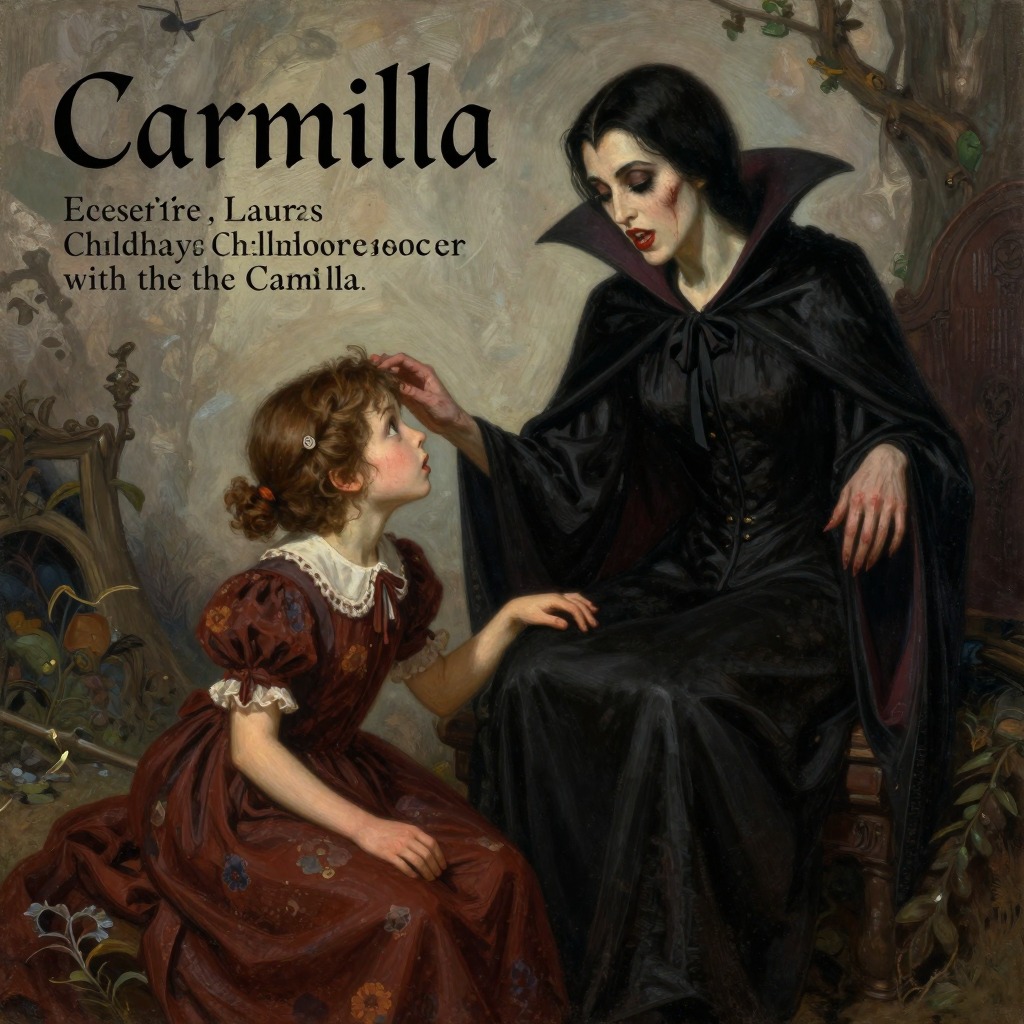
Laura's childhood encounter with a vampire is the foundational traumatic event of the narrative, a nocturnal visitation that imprints upon her memory the face of Carmilla and establishes the pattern of supernatural predation that will recur years later. Occurring when Laura was no more than six years old, the incident is the first occurrence in her existence to produce a terrible impression upon her mind, one that never has been effaced. It introduces the central mystery of the story—the vampire's ability to enter a locked room, the puncture wounds that leave no visible mark, and the ambiguous boundary between dream and reality—while also planting the seed of the uncanny recognition that will later bind Laura to Carmilla.
The Visitation and the Wound
One night, Laura awoke in the nursery, a large room in the upper story of the castle with a steep oak roof, and found herself alone, the nursery maid and nurse both absent. Instead of crying out, she was surprised to see a solemn, very pretty face looking at her from the side of the bed: a young lady kneeling with her hands under the coverlet. The girl caressed Laura, lay down beside her, and drew her close, smiling; Laura felt delightfully soothed and fell asleep. She was wakened by a sensation as if two needles ran into her breast very deep at the same moment, and she cried loudly. The lady started back, her eyes fixed on Laura, then slipped down upon the floor and, as Laura thought, hid herself under the bed. Laura, now frightened for the first time, yelled with all her might. The nurse, nursery maid, and housekeeper came running in; though they made light of the story, their faces were pale with an unwonted look of anxiety. The housekeeper whispered to the nurse that someone did lie there, for the place was still warm. They examined Laura's chest where she felt the puncture, but pronounced that there was no sign visible that any such thing had happened.
Aftermath and the Failure of Comfort
The housekeeper and the two other servants remained sitting up all night, and from that time a servant always sat up in the nursery until Laura was about fourteen. A doctor was called in—a pallid, elderly man with a long saturnine face slightly pitted with smallpox and a chestnut wig—who came every second day and gave Laura medicine she hated. The morning after the apparition, Laura was in a state of terror and could not bear to be left alone even in daylight. Her father came up, stood at the bedside, talked cheerfully, asked the nurse questions, laughed heartily, and patted Laura on the shoulder, kissing her and telling her not to be frightened, that it was nothing but a dream and could not hurt her. But Laura was not comforted, for she knew the visit of the strange woman was not a dream, and she was awfully frightened. The nursery maid tried to reassure her by claiming it was she who had lain down beside her, but this, though supported by the nurse, did not quite satisfy Laura.
The Priest's Prayer and the Enduring Memory
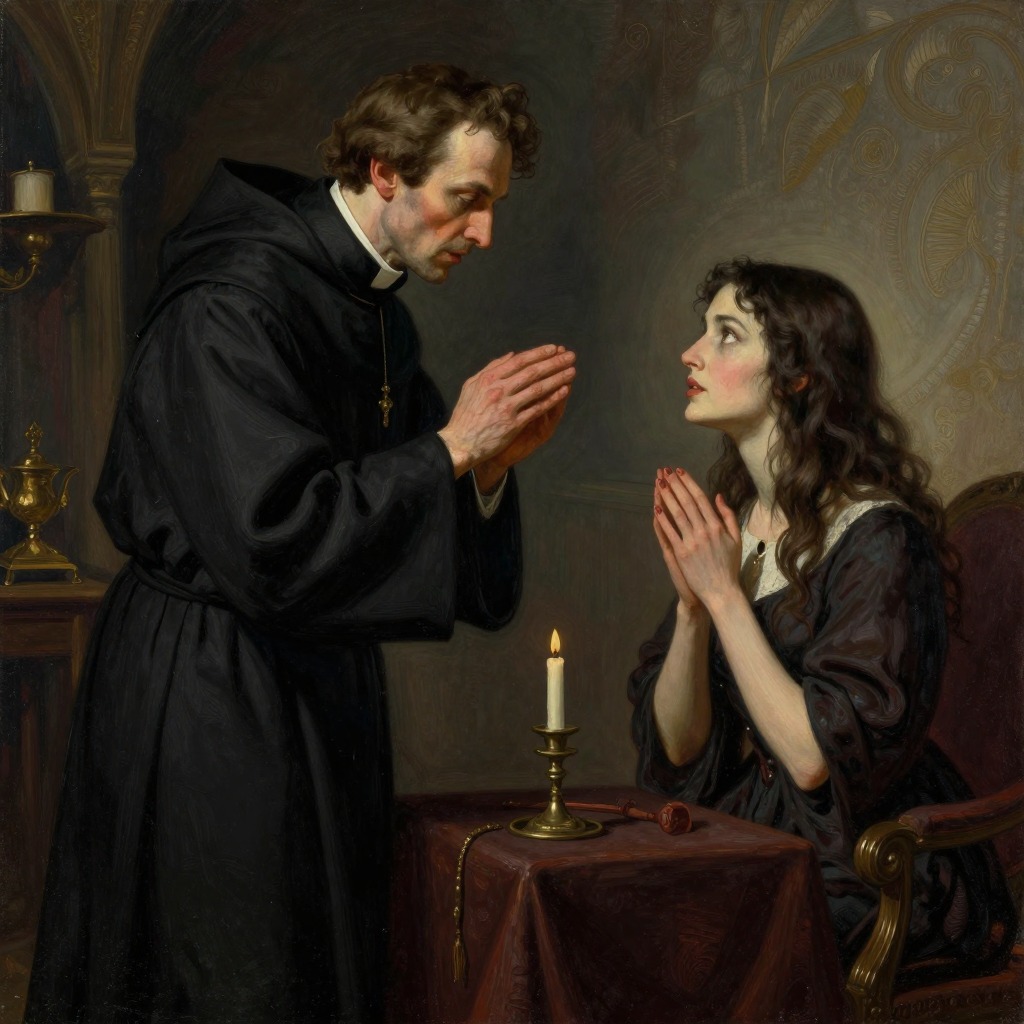
Later that day, a venerable old man in a black cassock entered the room with the nurse and housekeeper. He spoke very kindly to Laura, his face sweet and gentle, and told her they were going to pray. He joined her hands together and desired her to say softly, while they were praying, "Lord hear all good prayers for us, for Jesus' sake." Laura remembered these very words, for she often repeated them to herself, and her nurse used for years to make her say them in her prayers. She recalled the thoughtful sweet face of the white-haired old man in his black cassock as he stood in that rude, lofty, brown room with clumsy furniture three hundred years old and scanty light entering through the small lattice. He kneeled, the three women with him, and prayed aloud with an earnest quavering voice for what seemed a long time. Laura forgets all her life preceding that event, and for some time after it is all obscure, but the scenes of that night stand out vivid as isolated pictures of a phantasmagoria surrounded by darkness. The face of the young lady remained fixed in her memory, and she ruminated on it with horror for many years, no one suspecting what she was thinking.
Thematic Significance: The Unhealed Wound
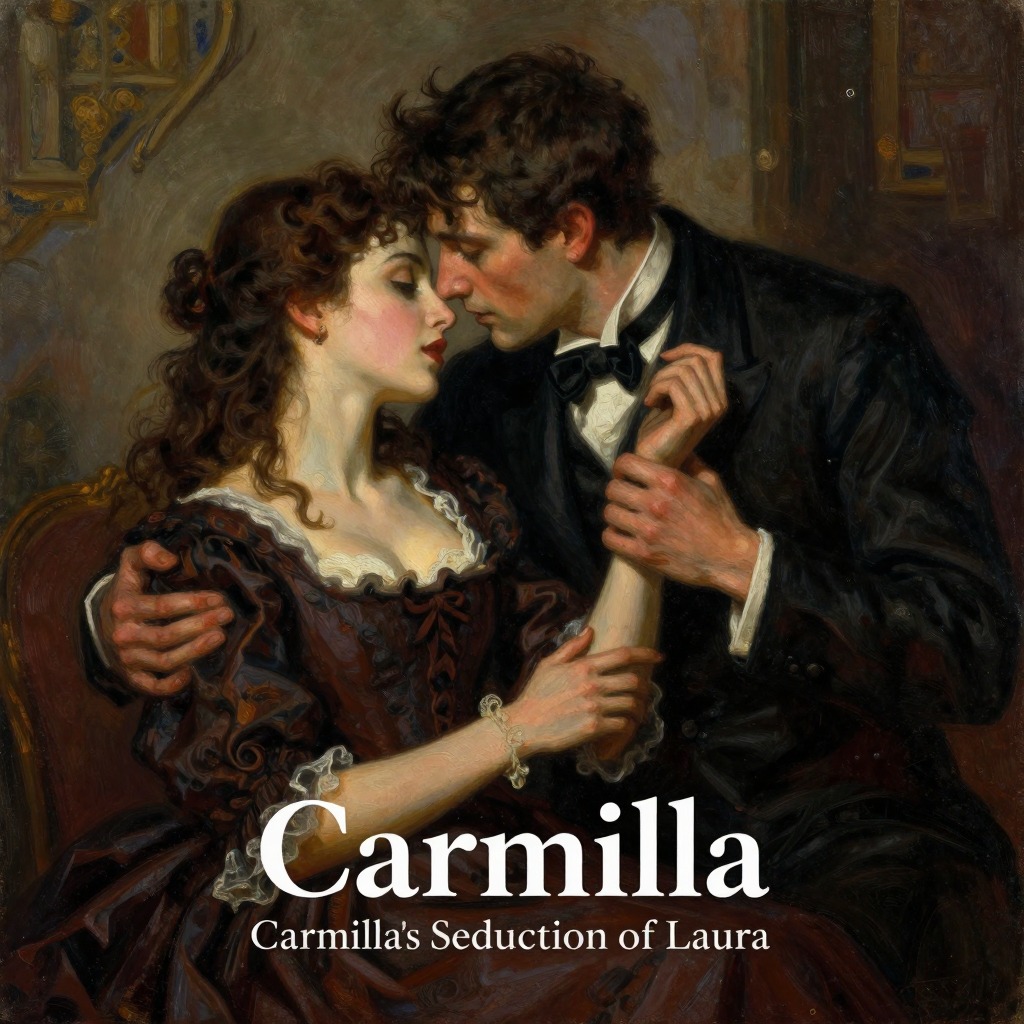
The childhood encounter functions as a classic trauma narrative: the event is belatedly understood, its full horror only emerging when Laura meets Carmilla again twelve years later and recognizes the very face that visited her in the nursery. The puncture that left no visible mark prefigures the invisible, insidious nature of vampiric attack, while the failure of adult reassurances—the father's dismissal as a dream, the nurse's false confession—establishes a pattern of isolation and unbelief that will recur throughout Laura's ordeal. The priest's prayer, though comforting, does not erase the memory; instead, the scene becomes a permanent, vivid image that Laura carries into adulthood, a phantasmagoric picture that the rest of her life cannot overwrite.