Beardsley School
Beardsley School is the private day school for girls in the college town of Beardsley where Dolores Haze is enrolled during the second year of Humbert Humbert's custody. It represents the most sustained attempt to insert Lolita into a routine of conventional adolescent life, and it becomes the primary institutional setting for Humbert's anxieties about exposure, his struggle to maintain control, and the gradual unraveling of his secret arrangement.
Institutional Philosophy and Curriculum
Beardsley School, an expensive day school with a glamorous gymnasium and lunch provided, operates under a progressive educational philosophy that headmistress Miss Pratt articulates to Humbert during their first interview. The school is "not so much concerned with having our students become bookworms" as with "the adjustment of the child to group life," stressing what Pratt calls the "four D's: Dramatics, Dance, Debating and Dating." The curriculum emphasizes "communication rather than composition," aiming to prepare girls for managing their lives and their future husbands' lives rather than for academic mastery. Humbert is initially appalled by this program, but two intelligent ladies connected with the school assure him that the girls do "quite a bit of sound reading" and that the "communication" line is largely ballyhoo aimed at giving the old-fashioned school a financially remunerative modern touch, while it remains "as prim as a prawn." The school's approach reflects the mid-century American educational trends that Humbert, as a European intellectual, finds both alien and threatening.
Humbert's Surveillance and Anxieties
Humbert chooses Beardsley School partly because its location across from his rented house on Thayer Street allows him to observe the playground through binoculars from his study, hoping to distinguish "the statistically inevitable percentage of nymphets among the other girl children." This plan is thwarted when workmen erect a fence that blocks his view. Throughout the school year, Humbert maintains a constant state of anxiety, monitoring Lolita's movements, intercepting her mail, and scrutinizing her behavior for signs of betrayal. He develops a routine of cruising around the school area, visiting drugstores, peering into lanes, and listening for "receding girl laughter." The school becomes the locus of his most acute fears: that Lolita will reveal their secret, that she will form relationships with boys, or that the authorities will investigate his guardianship.
Lolita's Performance and Conflicts
Lolita's performance at Beardsley School is consistently poor. Her report cards show declining marks, and teachers describe her as defiant, rude, and inattentive. Miss Pratt summons Humbert for a conference in December, presenting a detailed report from various teachers: Miss Redcock finds Lolita impossible, Miss Cormorant reports impudence, and the general assessment is that she is "antagonistic, dissatisfied, cagey." The school's researchers note that Lolita "remains morbidly uninterested in sexual matters" and recommend that Humbert allow her to participate in normal social activities, including the dramatic group. The central conflict between Humbert's restrictions and the school's philosophy comes to a head over Lolita's participation in the play "The Enchanted Hunters," which Humbert initially forbids but eventually permits under pressure from Miss Pratt. This permission proves fateful, as the play becomes the vehicle through which Clare Quilty re-enters Lolita's life.
The Play and Its Consequences
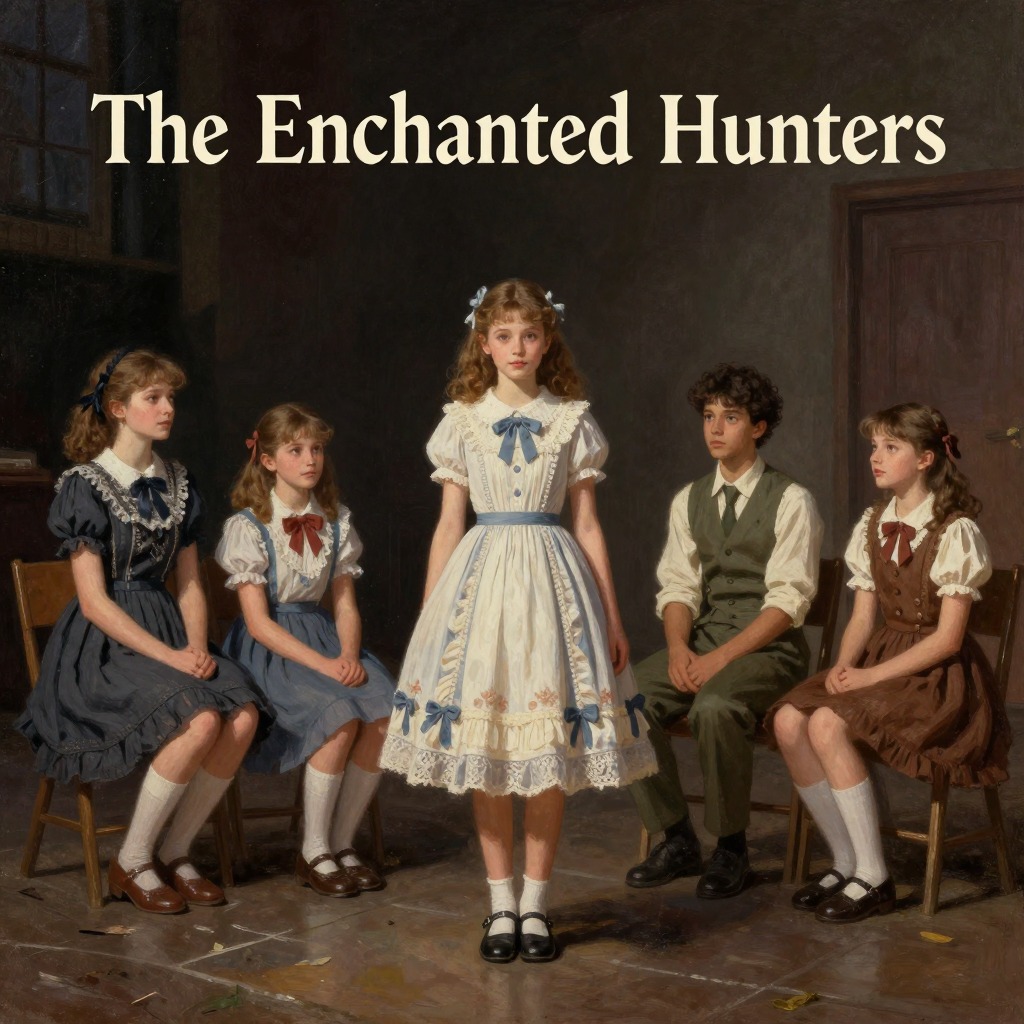
The school's dramatic production of "The Enchanted Hunters" serves as the crucial link between Lolita's institutional life and her eventual escape. The play, written by Clare Quilty, is rehearsed at Beardsley School, and Quilty himself attends rehearsals. Lolita is assigned the part of a farmer's daughter who imagines herself a woodland witch, and she throws herself into the role with an enthusiasm that Humbert misreads as healthy engagement. The play's title echoes the name of the hotel where Humbert first had sex with Lolita, a coincidence that Humbert notes wearily but does not investigate. It is during these rehearsals that Lolita re-establishes contact with Quilty, who had first encountered her years earlier at the Enchanted Hunters hotel. The school thus unwittingly facilitates the very relationship that will end Humbert's custody and lead to Lolita's disappearance.
Narrative Significance
Beardsley School functions in the narrative as the primary arena where Humbert's attempt to create a normal, stable life for Lolita collides with the impossibility of that project. The school's progressive, social-oriented philosophy directly opposes Humbert's need for secrecy and control, and its institutional gaze represents the constant threat of exposure. The school year at Beardsley marks the longest period of settled residence during Humbert's custody, and its failure to integrate Lolita into conventional adolescent life underscores the fundamental corruption of their relationship. The school's unwitting role in reuniting Lolita with Quilty makes it the final stage before the collapse of Humbert's world.