McFate
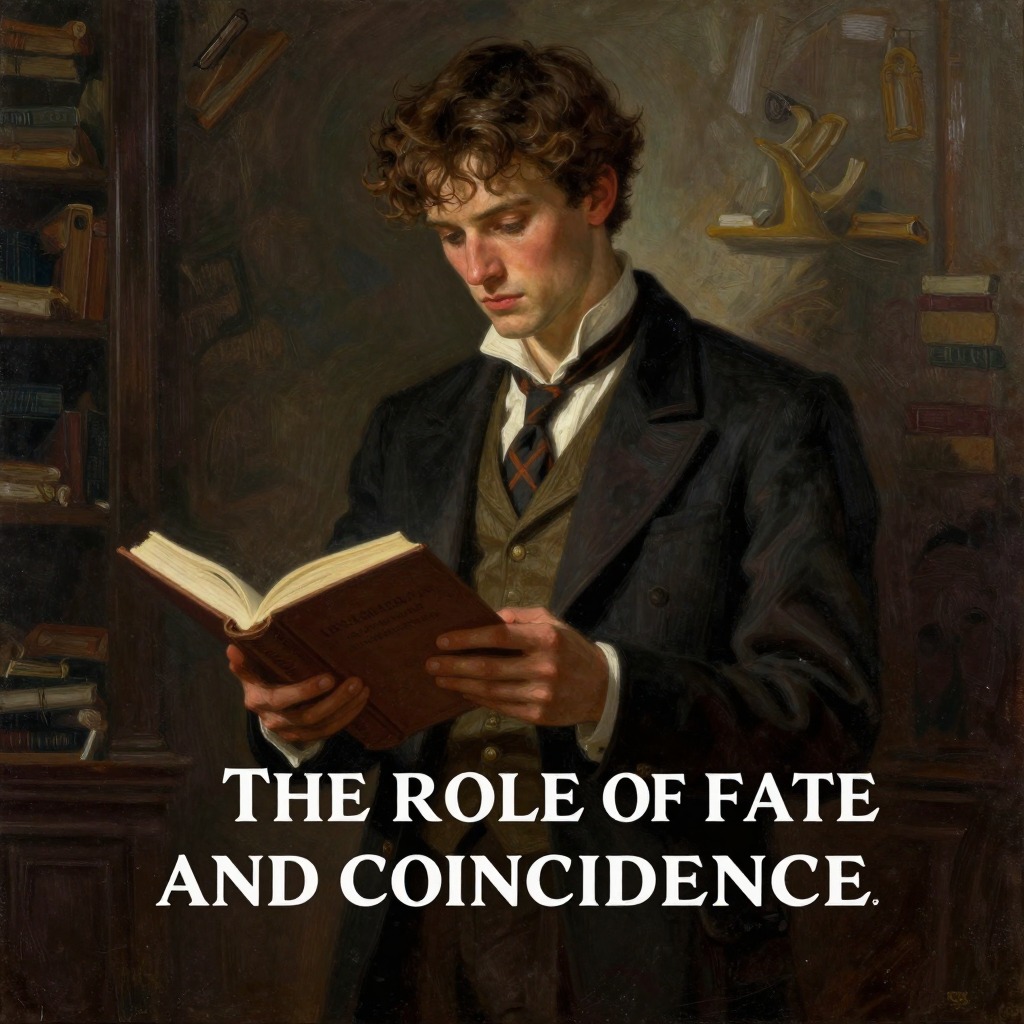
McFate is the personified force of destiny that Humbert Humbert invokes to explain the uncanny coincidences, thwarted plans, and ironic reversals that shape his pursuit of Lolita. Part classical fate, part malicious trickster, McFate operates as a narrative device that both frustrates and enables Humbert's desires, ultimately orchestrating the tragic outcome he claims to resist.
Identity and Origin
Humbert first names McFate explicitly when reflecting on the "curious Mirage of the Lake" — the repeated failure of his plan to be alone with Lolita at Hourglass Lake. He calls this devil "Aubrey McFate," a punning portmanteau that blends "Macbeth" (the play about ambition and fate), "fate" itself, and the name Aubrey (perhaps a nod to Aubrey Beardsley, the decadent illustrator). The name suggests a literary, almost theatrical, force that arranges events with a sense of dark humor. McFate emerges from Humbert's need to rationalize the gap between his obsessive scheming and the actual outcomes that repeatedly elude his control. He treats McFate as a personal antagonist, a "devil" who toys with him, granting small relief only to ensure his continued suffering.
Operation and Method
McFate works through coincidence, timing, and the interference of minor characters. When Humbert finally maneuvers Lolita onto his lap on the davenport, it is McFate who sends Charlotte to church and leaves the house empty — but also McFate who arranges the telephone call that interrupts his ecstasy. When Charlotte plans to send Lolita to Camp Q, it is McFate who breaks Miss Phalen's hip, forcing Charlotte to cancel her own employment scheme and keep Humbert in the house. When Humbert dreams of drowning Charlotte in Hourglass Lake, it is McFate who places the Farlows and the workmen at just the right distance to witness an accident but not a crime — and then, when Humbert cannot bring himself to act, McFate sends the Beale car to kill Charlotte in a "freak accident" that achieves Humbert's goal without his hand. McFate's method is not to impose events directly but to arrange the conditions under which Humbert's own desires and weaknesses produce the outcome.
Key Manifestations
McFate's most striking interventions include: the destruction of the McCoo house by fire, which forces Humbert into the Haze home; the broken hip of Miss Phalen, which prevents Charlotte from leaving Ramsdale; the repeated rain that cancels the picnic at Hourglass Lake; the telephone call that interrupts Humbert's first physical climax with Lolita; the car accident that kills Charlotte at the precise moment Humbert has resolved not to murder her; and the series of coincidences that allow Lolita to escape from the hospital with Clare Quilty. Each of these events appears to Humbert as either a frustration or a gift, but all serve McFate's larger design: to bind Humbert to Lolita, to destroy him through his own passion, and to deliver him to the legal captivity in which he writes his confession.
Narrative Significance
McFate functions as Humbert's alibi and his accuser. By attributing events to a malevolent fate, Humbert deflects responsibility for his choices — he did not kill Charlotte, McFate did; he did not lose Lolita, McFate arranged her escape. Yet McFate is also the name Humbert gives to the pattern of his own self-destruction. The concept allows him to frame his story as a tragedy in which he is the victim of forces beyond his control, even as the reader sees that McFate's "machinations" are merely the natural consequences of Humbert's own actions colliding with an indifferent world. McFate is thus both a literary conceit and a psychological defense mechanism, a way for Humbert to transform his guilt into the grandeur of a doomed hero struggling against destiny.