Je Reviens
Je Reviens is the name of Rebecca de Winter's sailing boat, a converted French fishing vessel that she kept moored in the cove at Manderley. The boat's name, French for 'I come back,' becomes a grimly ironic prophecy: after Rebecca's death, the boat is scuttled and sunk in the bay, only to be discovered a year later by a diver inspecting a stranded ship, bringing Rebecca's body—and the truth about her death—back to the surface.
Appearance and Name
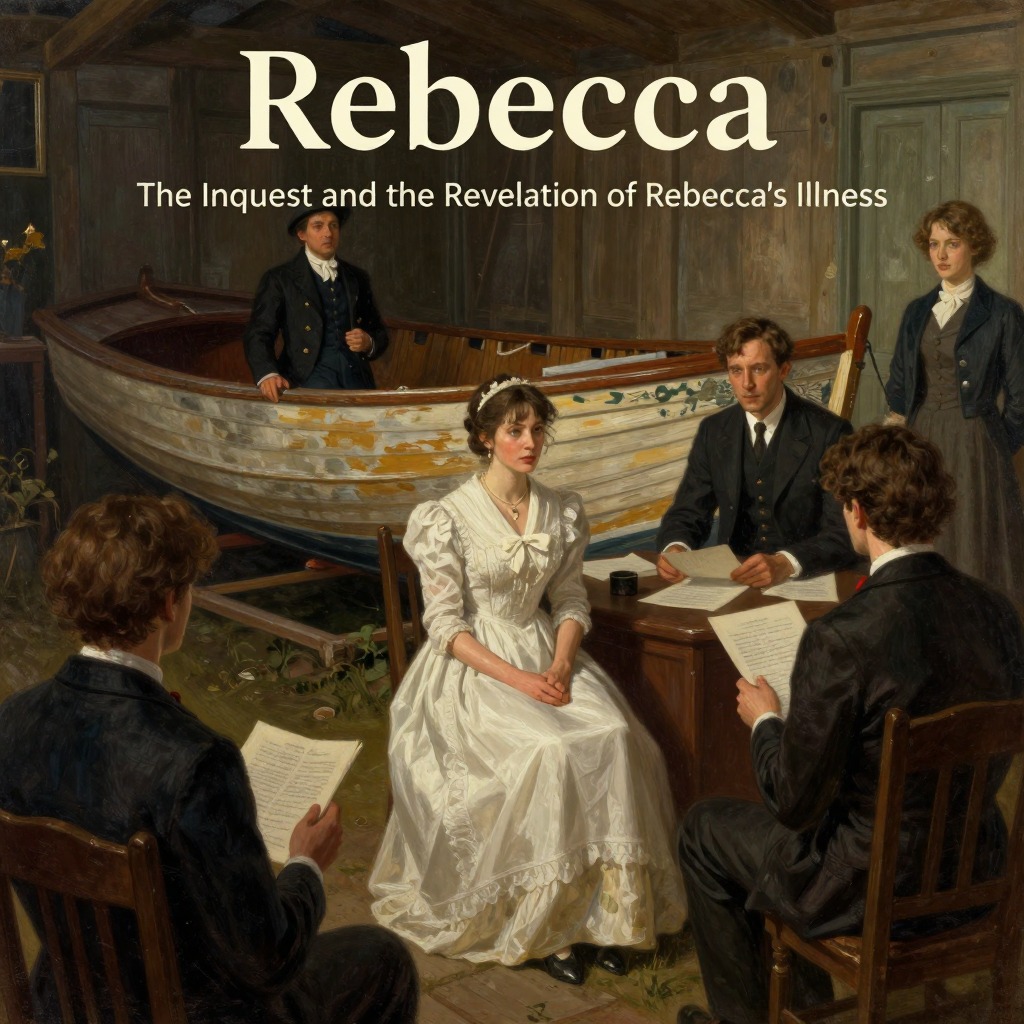
The boat was a small sailing vessel of about three tons, with a little cabin. It was originally a French fishing boat that Rebecca bought for next to nothing in Brittany and had shipped over to England, where the boat-builder James Tabb converted it into a yacht. The boat was moored in the tiny natural harbour formed by a breakwater in the cove below Manderley, where a buoy painted white and green was anchored. The buoy bore the boat's name: 'Je Reviens'—'I come back.' The name is first noticed by the second Mrs de Winter when she visits the cove alone and reads the lettering on the buoy, craning her neck sideways to make it out. She reflects that it was 'quite a good name for a boat,' but that 'it had not been right for that particular boat which would never come back again.'
Rebecca's Use of the Boat
Rebecca used the boat extensively, often sailing alone and returning at any time of night. She would sometimes sleep at the cottage on the beach rather than come back to the house. The boat was central to her independent, reckless lifestyle: she would take it out in all weathers, and it was the vessel she used for the moonlight picnics and entertainments she held at the cottage. The boat-builder Tabb testified that Rebecca had sailed the boat for four seasons and was delighted with it, and that it was a stout, seaworthy craft capable of standing a lot of wind. He could not understand how it could have been lost on a night when it was only blowing in fits and starts.
The Sinking and Discovery
On the night of her death, Rebecca sailed the boat out into the bay. Maxim de Winter, after shooting her in the cottage, carried her body to the cabin, then took the boat out beyond the beacon. He opened the seacocks and drove a spike through the bottom planking, sinking the boat with Rebecca's body inside. The boat sank too close in, as Maxim later lamented—he had meant to take it right out into the deep water where it would never be found. For over a year, the boat lay on the sandy bottom of the bay, the cabin door tightly closed, the portlights shut, the body preserved in the cold, dark water. The boat was discovered when a diver, sent down to inspect the bottom of a stranded steamer, came across the hull of the little sailing boat lying on its side, quite intact. The diver recognised it at once as Rebecca's boat. When he broke a portlight and looked into the cabin, he found a body lying on the cabin floor.
The Boat's Evidence
When the boat was raised and examined, it provided the crucial physical evidence that contradicted the accident theory. James Tabb, the boat-builder, examined the boat on the lighter where it had been placed and found three holes driven through the planking below the waterline—holes made with a spike, not by rocks. The ballast had been shifted and was lying loose, and the seacocks had been turned full on. Tabb concluded that the boat had never capsized at all; it had been deliberately scuttled. This evidence forced the inquest to consider suicide or murder, and ultimately led to Maxim's confession to the second Mrs de Winter that he had killed Rebecca and sunk the boat.
Thematic Significance
The name 'Je Reviens' encapsulates the novel's central theme of the inescapable return of the past. Rebecca, though dead, 'comes back' through the discovery of her boat, through the persistent presence of her belongings and her influence at Manderley, and through the psychological haunting of both Maxim and the second Mrs de Winter. The boat's return from the depths of the bay forces the truth to the surface, shattering the fragile peace the second Mrs de Winter had tried to build. The boat is not merely a piece of evidence; it is the material embodiment of Rebecca's power to reach from beyond the grave and disrupt the present. The irony of the name—that the boat which was supposed to 'come back' never did, until it was too late—underscores the novel's meditation on the futility of trying to bury the past.