the fancy dress ball
The Manderley fancy dress ball is the central social and psychological crisis of the novel, a carefully orchestrated event that collapses into a moment of devastating recognition. Planned as a celebration to introduce the new bride to the county, it instead becomes the stage for the narrator's most profound humiliation and the catalyst for Maxim's confession of murder. The ball represents the culmination of the narrator's struggle against Rebecca's lingering presence, a struggle she loses in a single, catastrophic moment on the staircase.
Origins and Planning
The idea for the ball originates not from the de Winters but from Lady Crowan, a tiresome local woman who raises the subject during a Sunday tea party. She appeals to the assembled guests, claiming the county misses the Manderley gaiety and that the ball should be given in the bride's honor. The narrator, eager to prove herself and to avoid disappointing Maxim, agrees, saying "I think it would be rather fun." Maxim reluctantly consents, delegating the organization to Frank Crawley and Mrs Danvers, who "will remember the form." The narrator is deliberately excluded from the planning, a fact that underscores her marginal role in her own home. She becomes anxious about her costume, unable to think of anything suitable, and her desperation leads her to consult the books Beatrice gave her as a wedding present. She makes rough sketches but discards them in disgust. It is Mrs Danvers who, finding one of these sketches in the waste-paper basket, suggests she copy a portrait in the gallery—specifically the one of Caroline de Winter, a young woman in a white dress with a hat in her hand. Mrs Danvers advises her to have the dress made in London, at Voce in Bond Street, and promises not to give away the secret. The narrator, relieved and excited, follows this advice, unaware that she is being led into a trap.
The Night of the Ball
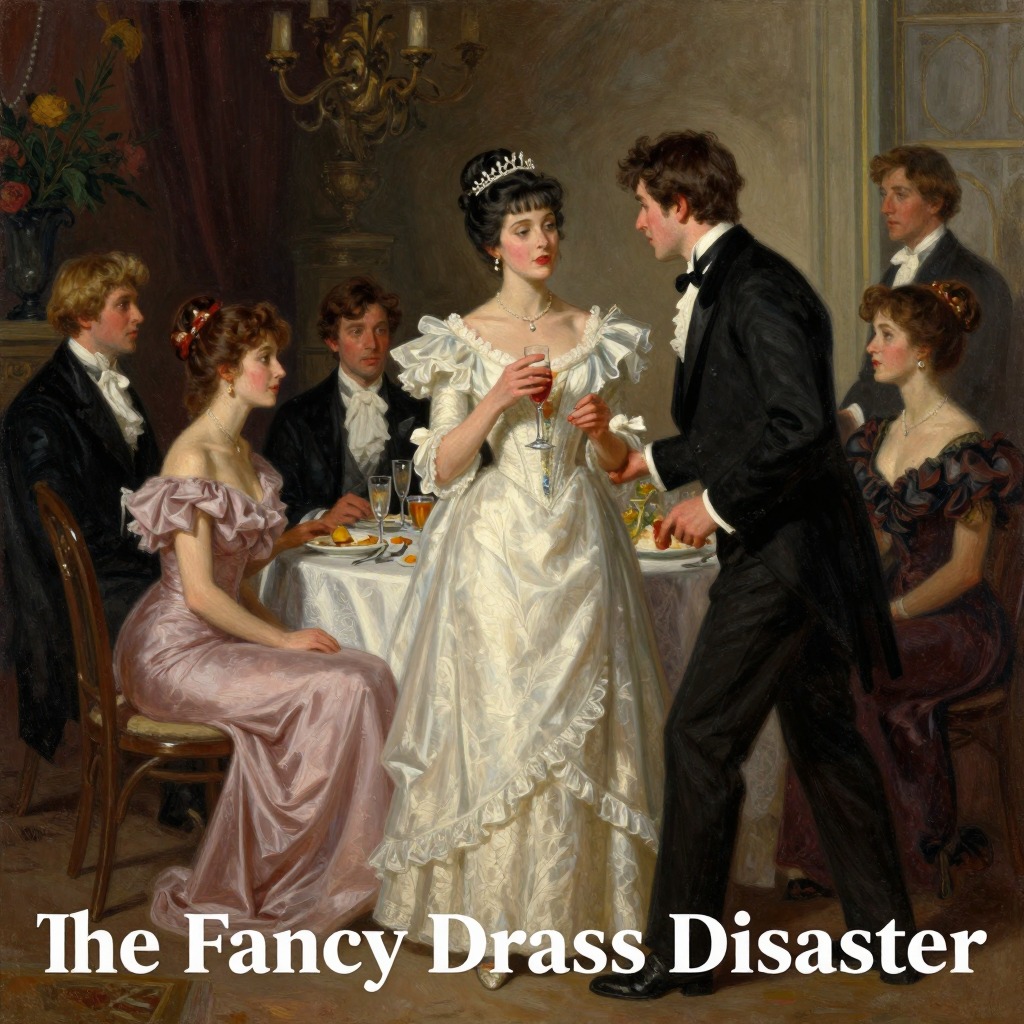
The ball itself is a magnificent affair. The house is transformed: the great hall is laid with a floor for dancing, the drawing-room is set with buffet tables, and the terrace and rose-garden are lit with fairy lights. The band is installed in the minstrels' gallery. The narrator, dressed in her costume—a perfect copy of the Caroline de Winter portrait, complete with a curled wig—feels a sense of triumph and transformation. She arranges for the drummer to announce her as "Miss Caroline de Winter" and descends the stairs, expecting applause. Instead, she is met with a stunned silence. Beatrice utters a little cry and puts her hand to her mouth. Maxim, his face ashen white, stares up at her in fury. He demands, "What the hell do you think you are doing?" The narrator, terrified, explains, "It's the picture, the one in the gallery." Maxim, his voice icy and unrecognizable, orders her to go and change, to find an ordinary evening frock, before anyone arrives. The narrator runs blindly back to her room, where she sees Mrs Danvers standing in the doorway of the west wing, her face "loathsome, triumphant."
Aftermath and Revelation
Beatrice follows the narrator to her room and explains the catastrophe: the costume the narrator copied was identical to the one Rebecca wore at the last Manderley fancy dress ball. The narrator, stunned, repeats, "I ought to have known." She refuses to go back downstairs, despite Beatrice's pleas, and instead irons a blue dress and joins the party late, standing beside Maxim as a wooden hostess. The evening becomes a blur of forced smiles and meaningless conversation. The true significance of the ball, however, extends far beyond the narrator's humiliation. The following morning, the discovery of Rebecca's boat in the bay, with her body in the cabin, sets in motion the inquest and the eventual revelation that Maxim murdered Rebecca. The ball, intended as a celebration of the new marriage, instead becomes the event that shatters the narrator's illusions and forces Maxim to confront his past. The costume, a symbol of the narrator's desire to belong, becomes the instrument of her deepest shame and the trigger for the final unraveling of the de Winters' secrets.