Narodnaya Volya
Narodnaya Volya (People's Will) is the revolutionary organization that, in Leo Tolstoy's Resurrection, represents the most radical and violent response to the injustices of Tsarist Russia. The novel does not merely depict the organization as a political faction; it uses the lives of its members—Vera Doukhova, Mary Pavlovna Schetinina, Anatole Kryltzoff, and others—to explore the profound moral and spiritual questions raised by the use of terror against a state that itself operates through systematic cruelty. The organization's presence in the narrative forces both the protagonist, Dmitri Ivanovitch Nekhludoff, and the reader to confront the limits of personal repentance and the tragic consequences of a struggle where the line between victim and perpetrator becomes tragically blurred.
Origins and Aims
The revolutionary movement known as Narodnaya Volya, or "People's Freedom," arose from a conviction that the existing social order was fundamentally unjust and could not be reformed from within. Vera Doukhova, a former schoolteacher who becomes a committed revolutionary, explains to Nekhludoff that she joined a group of adherents to the Nardovolstvo after finishing a course in midwifery, making up her mind to agitate in the revolutionary movement . Her activities—writing proclamations and conducting propaganda in factories—were aimed at awakening the masses to their oppression. The organization's ultimate goal, as articulated by its members, was the destruction of the autocratic state and the establishment of a new social order based on justice and equality. This aim was pursued through a combination of propaganda, organization, and, most controversially, acts of terror directed at high-ranking officials, including the assassination of Tsar Alexander II on March 1, 1881.
Key Members and Their Fates
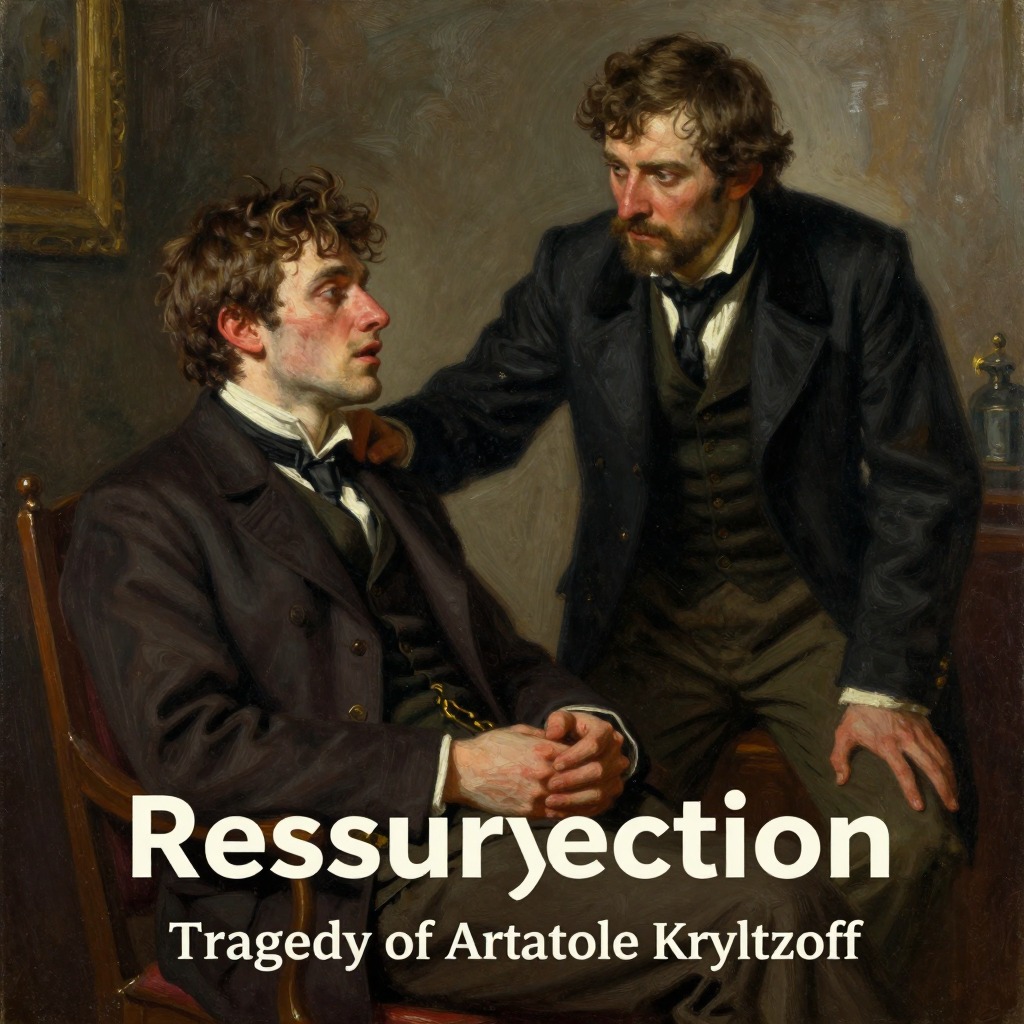
The novel presents a spectrum of personalities within Narodnaya Volya, each embodying different facets of the revolutionary spirit. Vera Doukhova is a figure of pure, almost naive, idealism. She tells Nekhludoff that she feels "perfectly happy" despite her arrest and impending exile, and her conversation is filled with the jargon of the movement—"propaganda, disorganisation, social groups, sections and sub-sections"—which she assumes everyone understands . Her commitment is absolute, yet her story is one of confusion and self-sacrifice; she is pitiable not because of her suffering, but because of the mental fog in which she lives, considering herself a heroine ready to give her life for a cause she can barely articulate. Mary Pavlovna Schetinina, the daughter of a general, represents a different kind of revolutionary. She is driven by a profound, almost instinctive, altruism. She left her wealthy home at nineteen to work as a factory hand, and her entire life is devoted to serving others, a trait one companion calls "philanthropic amusements" . Her heroism is quiet and practical; she pleads guilty to a shooting she did not commit to protect a comrade, and she cares for the sick and the weak with a natural, unassuming grace. Anatole Kryltzoff, a young man of exceptional sensitivity, is the most tragic figure. His conversion to revolution was catalyzed by the execution of two fellow prisoners, Lozinsky and Rozovsky, whom he saw being led to the gallows. The horror of that event—the sight of the young Rozovsky struggling as the noose was forced over his head—transformed him into a revolutionary dedicated to destroying the system that could produce such cruelty . He is consumed by a burning hatred for the state and its agents, and he dies of consumption in a Siberian prison, his body a testament to the physical and spiritual toll of the struggle.
The Moral Dilemma of Terror
Narodnaya Volya's use of terror is a central moral problem in the novel. The organization's members, including Kryltzoff, argue that violence is a necessary and justifiable response to the far greater violence of the state. Kryltzoff, in his final days, expresses a desire to "sprinkle bombs down on them as if they were bugs, until they are all exterminated" . This radical position is contrasted with the more moderate views of other political prisoners, such as Nabatoff, who believes in gradual reform and the enlightenment of the people. Nekhludoff, who comes to know these revolutionaries intimately during his journey to Siberia, is forced to grapple with this dilemma. He sees that the government's own brutality—the arbitrary arrests, the long imprisonments, the floggings, the executions—creates the very conditions that produce revolutionaries. The members of Narodnaya Volya, he realizes, are not monsters, but ordinary people who have been driven to extreme measures by an extreme system. The novel does not offer a simple judgment on their actions; instead, it presents their stories as a tragic consequence of a society that has abandoned the fundamental law of human life: love and compassion for one's fellow beings.
Significance in the Novel
Narodnaya Volya serves as a crucial counterpoint to Nekhludoff's own journey of moral awakening. While Nekhludoff seeks personal redemption through acts of charity and by following the teachings of the Gospels, the revolutionaries seek collective salvation through political action. The organization's presence in the narrative forces Nekhludoff—and the reader—to recognize that individual repentance, however sincere, is insufficient in the face of systemic evil. The revolutionaries, for all their flaws and the moral ambiguity of their methods, are the ones who have sacrificed everything—their freedom, their health, their lives—in a direct confrontation with that evil. Their stories, particularly Kryltzoff's agonizing death, leave an indelible mark on Nekhludoff, deepening his understanding of the world's suffering and his own responsibility within it. Ultimately, Narodnaya Volya is not just a political organization in the novel; it is a mirror held up to the conscience of the ruling class, reflecting back the violence and injustice upon which their world is built.