Social Statics
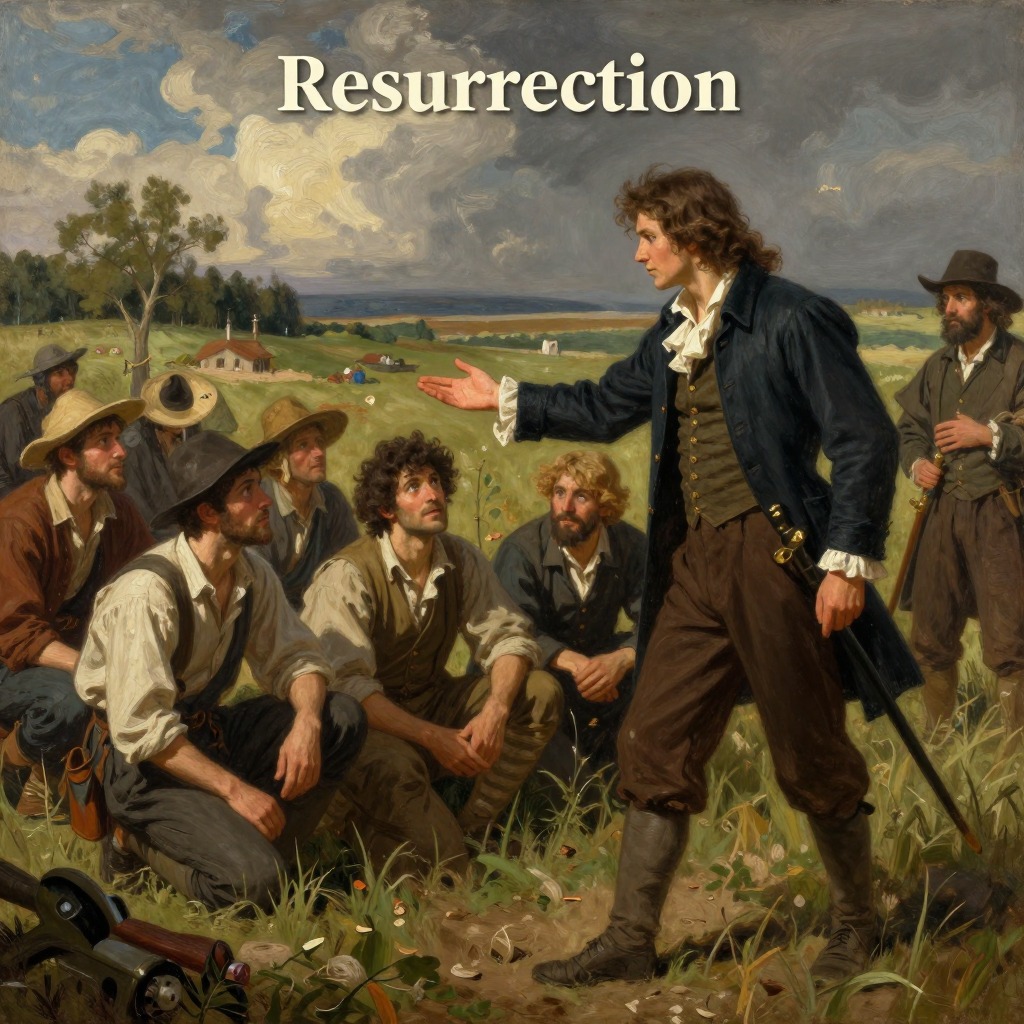
Herbert Spencer's Social Statics is the philosophical cornerstone of Prince Dmitri Nekhludoff's moral awakening in Tolstoy's Resurrection. The book's radical argument—that justice forbids private landholding—first seizes Nekhludoff as an idealistic university student, then lies dormant for years, and finally erupts again to shatter his complacent adult life, driving him to renounce his inherited wealth and seek atonement. More than a mere intellectual reference, Social Statics functions as a persistent moral compass whose authority Nekhludoff can neither escape nor betray without betraying himself.
First Encounter: The Idealistic Student
Nekhludoff first encounters Social Statics during his third year at university, when he is spending the summer at his aunts' estate preparing an essay on land tenure. At this stage, he is a pure, earnest young man who "realises all the beauty and significance of life, and the importance of the task allotted in it to man." Spencer's views on landholding strike him with particular force because he is himself heir to large estates: his mother has received 10,000 acres of land for her dowry. The book's argument that private property in land is unjust and cruel aligns perfectly with Nekhludoff's youthful conviction that sacrifice to the demands of conscience brings "the highest spiritual enjoyment." Acting on this conviction, he gives the small piece of land he has inherited from his father to the peasants, and writes his university essay on this very land question. This period represents Nekhludoff's first "cleansing of the soul," the most vital and rapturous awakening of his early life, and Social Statics is its intellectual engine.
The Long Sleep: Betrayal and Forgetting
After Nekhludoff enters the army and plunges into the depraved, luxurious life of the Guards, the influence of Social Statics fades. The "animal man" in him crushes the "spiritual man," and he ceases to believe himself, instead believing the opinions of those around him. He seduces and abandons Katusha Maslova, and the memory of his former ideals becomes a source of pain he actively suppresses. When he inherits his mother's large estates, he faces a stark choice: either give up the property, as he had given up his father's land ten years before, or silently confess that all his former ideas were mistaken and false. He cannot choose the former because he has formed luxurious habits he cannot easily give up, and he no longer has the strong convictions or resoluteness of youth. Yet the second course—denying the "clear and unanswerable proofs of the injustice of landholding, which he had drawn from Spencer's Social Statics"—is equally impossible to him. This intellectual paralysis keeps him trapped in a life of comfortable hypocrisy for years, the book's arguments a buried reproach he refuses to face.
The Awakening: Spencer's Return
The trial of Maslova, whom Nekhludoff had betrayed, shatters his moral torpor. In the anguished night that follows, as he paces his room and confronts the "shameful and horrid" totality of his life, the arguments of Social Statics surge back with renewed force. He remembers how proud he had once been of his straightforwardness, how he had made a rule of always speaking the truth, and how he is now sunk deep in lies. The question of land ownership becomes inseparable from the question of his sin against Katusha: both demand that he act on the truth he has always known. The book's teaching provides the intellectual framework for his resolution to "dispose of the inheritance in such a way as to acknowledge the truth." He prays, asking God to "enter within me and purify me of all this abomination," and the God who awakens within him is the same God whose moral law Spencer's arguments had once made vivid to him.
The Land Reforms: Acting on Principle
Nekhludoff's subsequent journey to his estates is a direct application of Spencer's principles. At Kousminski, he decides to let the land to the peasants at a low rent, depriving himself of a large part of his income. The steward argues that this will be ruinous, but Nekhludoff is strengthened by the memory of his former convictions. At Panovo, his aunts' estate where he first met Katusha, the encounter with the peasants' desperate poverty makes the injustice of land ownership even more stark. He sees that "the chief cause of the people's great want was one that they themselves knew and always pointed out, i.e., that the land which alone could feed them had been taken from them by the landlords." Henry George's fundamental position, which he had first encountered through Spencer, recurs vividly to his mind: "The earth cannot be any one's property; it cannot be bought or sold any more than water, air, or sunshine." He forms a project to let the land to the peasants and to acknowledge the rent they pay as their own communal property, a step toward the single-tax system that is "as near an approach to it as could be had under existing circumstances."
The Final Resolution: A Servant, Not a Master
In the garden at Panovo, under the thunderstorm, Nekhludoff reaches his final clarity. The regret he had felt at Kousminski over losing his property now seems strange to him. He realizes that the work of life, its meaning, is not intelligible to him, but to do the Master's will as written in his conscience is within his power. "To feel one's self not the master but a servant," he thinks, and rejoices at the thought. This is the ultimate fruit of Spencer's teaching: not a political program but a spiritual posture of humility and service. The book that had first taught him that land cannot be owned has led him to the deeper truth that a man cannot own his own life either—he can only serve. Social Statics thus traces the arc of Nekhludoff's entire moral journey, from the first flush of idealistic action, through the long years of betrayal and forgetting, to the final, costly awakening that sends him to Siberia not as a master but as a servant.