Ben Mears returns to Jerusalem’s Lot
'Salem's Lot: A NovelBen Mears returns to Jerusalem’s Lot after abandoning the attempt to erase the town from his and the boy’s lives. The journey begins as a response to grief and recurring trauma, but it becomes a decisive crossing back into the place that shaped his childhood, destroyed his sense of home, and now stands at the center of the novel’s supernatural danger.
The Decision to Leave California
Ben and the boy had been living in a beach cottage off the highway, where they swam in the Pacific and maintained a materially secure life. Ben tutored the boy, who was bright and comfortable with books, and the two had enough money for regular meals and a solid roof. Yet security did not produce peace. The boy remained withdrawn, nervous, and watchful, refusing to discuss Jerusalem’s Lot or even to look at the Portland newspapers Ben left in his path. At night he sometimes screamed in his sleep and thrashed the blankets onto the floor.
Ben gradually understood that their life depended on concealment rather than recovery. Blotting Jerusalem’s Lot out had not freed the boy from what had happened there; it had left the trauma without language or acknowledgment. Ben himself had begun to feel depressed and doubtful about the life they were living, and the boy’s nightmares made the cost of silence unmistakable. The return therefore begins not as a confident homecoming but as an admission that distance has failed.
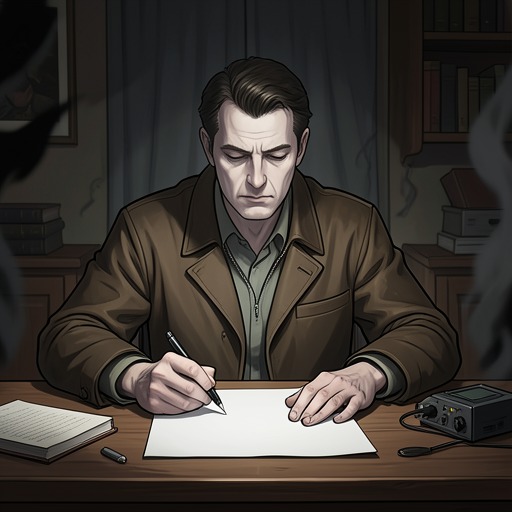
A letter from New York supplied the practical means for movement. Ben’s agent reported that Random House was offering a $12,000 advance and that a book-club sale was almost certain. Ben accepted the offer, quit his job at the gas station, and crossed the border with the boy. The writing contract gives the journey an outward purpose, but the emotional cause is more urgent: Ben is no longer willing to treat the past as something that can simply be blotted out.
The Call of the Town
A week later, Ben awoke sweating from a nightmare and called out the boy’s name. The shock of the dream crystallized into a declaration: “I’m going back.” The boy paled beneath his tan, revealing that the proposed return is frightening to him even before the destination is reached. Their movement toward Jerusalem’s Lot is thus shared physically but not emotionally; Ben chooses the road, while the boy responds with dread.
As Ben approaches the exit, a sudden blackness overtakes him. His mind brushes against the name of Miranda, his dead wife, but he refuses to let it speak fully. The memory remains tied to the motorcycle accident, the yellow moving van, and Miranda’s scream ending with sudden finality. His return is therefore entangled with two losses: the childhood world of Jerusalem’s Lot and the adult marriage that ended in catastrophe.
Ben considers driving past the exit, continuing toward Chamberlain or Lewiston, stopping for lunch, and then turning around. The hesitation exposes the contradiction at the heart of the journey. He questions what could be recovered from roads that may have been asphalted, straightened, logged, and littered with tourist beer cans. The magic of childhood, both “white and black,” seems to have vanished. Yet the question of where home might be draws him back: if there was a home, it had been Jerusalem’s Lot, even though he had lived there for only four years as a boy.
Crossing the Threshold
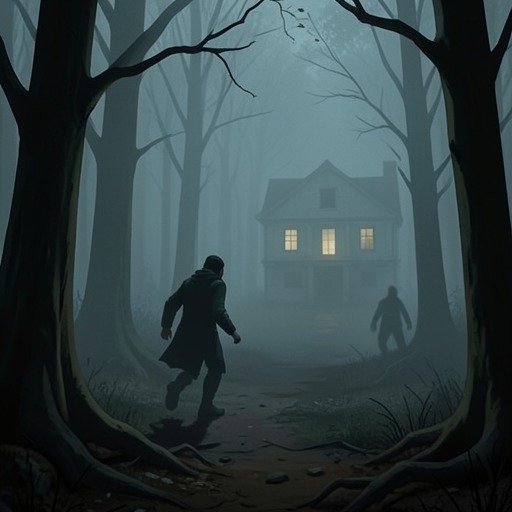
Ben signals, slows the Citroën, and takes the ramp. Near the point where the turnpike joins Route 12, he looks toward the horizon and brakes so violently that the car shudders to a stop and stalls. The town itself is hidden by trees, but the peaked, gabled roof of the Marsten House rises against the sky. The first visible sign of Jerusalem’s Lot is therefore not the street grid or a familiar neighborhood but the house that has governed Ben’s memory of the place.
Ben turns away from the house and postpones a direct encounter. He tells himself that later may be possible, but not yet. Simply knowing that the house is still there is enough for the moment. He immediately begins imagining a practical arrangement in which he could lease it: the kitchen might serve as a writing room, and he could sleep in the front parlor. He refuses, however, to go upstairs unless circumstances force him to do so. The return does not erase fear; it gives fear a location and establishes the Marsten House as the threshold Ben must eventually cross.
After this hesitation, he starts the car and drives down the hill to Jerusalem’s Lot. The movement is physically modest but narratively decisive. Ben has passed from considering return to performing it, carrying the boy, his manuscript, his grief, and his unresolved childhood encounter into the town’s ordinary roads.
Jerusalem’s Lot as a Social and Geographic World
The town is organized around Brock Street and Jointner Avenue, which cross at right angles through an almost circular township. On a map, the roads resemble a telescopic sight, an image that gives the town a visual structure of aiming, surveillance, and narrowed attention. The Royal River flattens the eastern boundary, while the Marsten House stands on the last of the wooded hills in the northwest quadrant.
Each section of the town carries a distinct social and physical character. North Jerusalem is the heavily wooded high ground, honeycombed with old logging roads and crowned by the Marsten House. The northeast contains open hay and alfalfa fields, the Royal River, the Brock Street Bridge, and the cliffs known to children as Drunk’s Leap. The southeast is the prettiest area, marked by farms, commuter homes, Schoolyard Hill, and the lingering memory of the 1951 fire. In the southwest, trailers and makeshift houses form the Bend, surrounded by junked cars, beer cans, rough laundry lines, children, vehicles, and hastily laid septic tanks.
This geography makes the return more than a private trip through remembered scenery. Ben is reentering a complete social organism, one bound together by party telephone lines and constant gossip. The Bend produces much of the town’s scandal, but no social class remains entirely outside the communal system of observation. The town’s ordinary confidence is also part of its vulnerability. Apart from familiar accidents, drinking, and distant national crises reported on television, Jerusalem’s Lot believes that nothing truly terrible can happen there. Its inhabitants treat the town as too pleasant to become the scene of catastrophe.
Consequences and Narrative Significance
Ben’s return restores the connection between his private history and the town’s concealed history. His first impulse is to write and to find a place where he and the boy can live, but the Marsten House turns that practical plan into a confrontation with memory. The house’s reappearance makes the past physically present, while the boy’s fear shows that the past has already traveled with them.
The return also establishes the novel’s movement from denial toward recognition. Ben has tried to protect the boy through education, shelter, and silence, but the boy’s nightmares demonstrate that suppression has not dissolved what he knows. Ben’s decision to go back accepts the danger of recollection in the hope that confronting the source of fear may be less destructive than continuing to flee it.
That decision places Ben inside the town just as its apparent normality begins to fail. Danny Glick’s burial on September 28 marks the first real day of fall, and the public funeral draws classmates, relatives, older mourners, and curious residents into a long procession toward Harmony Hill Cemetery. Later, even the town’s sleeping and waking rhythms become ominous: some homes remain brightly lit before dawn, yet none of the people who are awake knows the truth, and many instinctively search for religious symbols while refusing to look out their windows. Ben’s arrival thus precedes a transformation of Jerusalem’s Lot from complacent small town into a community surrounded by a danger it cannot yet name.
The event’s decisive irony is that Ben returns seeking a home and finds a threshold. Jerusalem’s Lot is the place he believes he must reclaim, but it is also the place where childhood magic, marital grief, the Marsten House, and the town’s supernatural darkness converge. His descent into the town begins the larger movement from flight to resistance, even though the return initially offers no restoration and no assurance that home can still mean safety.