Dell’s
'Salem's Lot: A NovelDell’s is the roadhouse just beyond the town line of Jerusalem’s Lot, a recurring public setting where the community’s social life becomes visible in concentrated form. It is at once a tavern, dance hall, gossip exchange, courtship ground, and refuge for drinkers; its location at the edge of town also gives it a boundary function, connecting the Lot to roads, commuters, trailers, and the wider world while remaining deeply embedded in local habits.
Setting and Physical Place
Dell’s stands near the point where Brock Street becomes Brock Road, in the southwest area associated with the Bend and its trailers. When Ben Mears returns to Jerusalem’s Lot, he notices the tavern just over the town line among other signs of modest change: new houses, gravel quarries, timber cut for pulp, and the still-unpaved Burns Road. The road remains full of chuckholes and washboards, while the town’s power pylons cut diagonally through the surrounding timberland. Dell’s therefore belongs to a transitional landscape rather than to the settled center of the Lot.
The Bend around it is marked by junked cars on blocks, tire swings, beer cans, improvised clotheslines, rough shacks and trailers, children, pickup trucks, snowmobiles, and motorbikes. Some trailers are well kept, but many yards are overgrown with dandelions and witch grass. Dell’s gleaming television aerials and colored televisions purchased on credit belong to the same material world: an exurban community pursuing modern consumer life without escaping poverty, disorder, or isolation. The tavern’s position makes it a social counterpart to that landscape, a public place where people can drink, listen to music, fight, and display the pressures of life at the town’s edge.
Business and Entertainment
Delbert Markey owns and tends the bar. Dell’s entertainment schedule gives the establishment a dependable weekly rhythm: a rock-and-roll band plays on Fridays, while a country-and-western combination plays on Saturdays. The building has already burned once, in 1971, and was rebuilt, a small but telling instance of local destruction followed by practical restoration. For the down-home cowboys and their girlfriends, it is the place to go for a beer or a fight.
The tavern’s public face is deliberately ordinary. At twilight, Delbert Markey switches on a new pink sign bearing “dell’s” in letters three feet high, with the apostrophe shaped like a highball glass. The sign turns alcohol into branding and spectacle, announcing the bar before the night’s regulars arrive. Ground mist gathers in the low places outside as the sunlight drains from the sky, giving the routine opening of the business an ominous temporal edge without making the tavern itself supernatural.
Inside, the atmosphere is crowded, smoky, and loud when a band is playing. During one Saturday-night visit, about forty couples dance to the Rangers, a country-and-western group whose performance compensates in volume for what it lacks in quality. Most dancers wear blue jeans. Construction and mill workers occupy the stools, drinking identical glasses of beer in nearly identical crepe-soled work boots laced with rawhide, while barmaids named Jackie, Toni, and Shirley move among the tables in white blouses with their names embroidered in gold thread. Dell draws beers behind the bar, and a hawklike bartender at the far end prepares mixed drinks with blank concentration.
The bar also exposes the small economics of its clientele. When Weasel Craig demands a pitcher of Budweiser, Jackie brings it on a tray scattered with beer-soaked change. The bill is short, and she counts the missing money rather than treating the order as effortless abundance. Weasel’s loudness becomes another form of performance within the tavern; Jackie mocks the rooster-like sound of his shouting. The exchange is comic, but it also locates Dell’s in a world where drinking is governed by loose change, credit, work, unemployment, and the humiliations of dependence.
Social Function and Local Networks
Dell’s is a place where the town’s private relationships become public, even when no one formally announces them. Two-, four-, and six-party telephone lines ensure that people always have someone to talk about, and the town’s scandal circulates through the same communal system. The Bend produces most of the gossip, but people of higher status periodically add their own contributions. Dell’s is one of the places where such knowledge is renewed through drinking, observation, and repeated encounters.
The tavern also gathers different kinds of local mobility. Young people drink there after the legal drinking age falls to eighteen, then race home at dangerous speeds. Alcohol is a larger problem than drugs for the town’s youth, and the consequences can be fatal: Billy Smith once drove ninety miles per hour into a tree on Deep Cut Road, killing himself and his girlfriend, LaVerne Dube. Dell’s is not presented as the sole cause of that violence, but it is part of the route by which leisure, alcohol, automobiles, and local recklessness connect.
At quieter times, the same place becomes a refuge for adults whose lives have stalled. Matthew Burke goes to Dell’s around nine o’clock for two or three beers after a night without play practice, deciding to prescribe himself something for insomnia because Jimmy Cody will not provide it. On that sparsely populated evening, Weasel Craig drinks alone in a corner, Floyd Tibbits sits under the pressure of his unsuccessful conversations with Susan Norton, and Mike Ryerson occupies a booth against the wall. The empty bar does not dissolve the town’s social web; it makes its tensions easier to see.
Encounters and Narrative Consequences
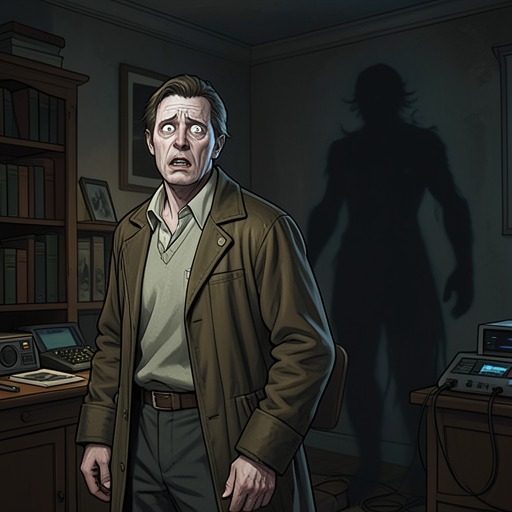
Dell’s is where Matthew Burke first confronts the altered condition of Mike Ryerson in a recognizable social setting. Mike had been one of Burke’s former English students: hardworking, above average despite ordinary intelligence, persistent in asking questions, humorous, individualistic, and popular with his classmates. At the booth, however, Burke is shocked by Mike’s appearance and initially suspects heavy drug use. Mike denies that explanation and describes an illness that began after he fell asleep at Harmony Hill Cemetery on Sunday night.
Mike says he had returned to the cemetery after Danny Glick’s funeral to finish the work, but Royal Snow never appeared. He waited for a long time, then became sick; since Monday he has felt progressively worse, with pain, weakness, difficulty thinking, and a voice that seems to cost him dreadful effort. The conversation at Dell’s thus turns an apparently familiar drink into an early diagnostic scene. The tavern’s ordinary explanations—drugs, alcohol, exhaustion, illness—stand beside the unspoken possibility that the cemetery and the funeral have exposed Mike to something beyond medicine.
Dell’s also serves as a meeting place for characters whose relationships are already fraying. Floyd Tibbits’s presence records his unsuccessful attempts to speak with Susan Norton, while Ben Mears’s visit after an emotionally charged encounter allows the narrative to move from private agitation into the town’s noisy public life. The bar’s music, beer pitchers, workers, dancers, and casual insults provide a social normality that contrasts sharply with the Marsten House, the cemetery, and the missing children associated with the Lot’s buried history.
Boundary Between Normality and Horror
The importance of Dell’s lies in its normality. Jerusalem’s Lot is a town that believes its distance from national crises protects it: war, political turmoil, and social change are received mainly through television, while local residents assume that nothing truly terrible can happen there. Dell’s embodies that confidence through its weekly bands, drinking rituals, commercial sign, and familiar regulars. Yet the same routines reveal how violence is already present in the town through alcohol-related deaths, domestic scandal, sexual jealousy, poverty, and collective surveillance.
The tavern therefore belongs to the novel’s larger structure of concealed knowledge. Jerusalem’s Lot remembers the Marsten House scandal and passes its horrors ceremonially from generation to generation, but it does not know the full truth behind Hubert Marsten’s murder of Birdie Marsten, the vanished children of 1928–1939, or the older histories buried in the town’s records and private documents. Dell’s is one of the places where partial knowledge circulates without becoming understanding. People can recognize sickness, resentment, drunkenness, and bad behavior while remaining unable to identify the supernatural pattern gathering around them.
As the vampire threat spreads, the contrast becomes more severe. The town’s inhabitants may sleep while danger occupies its houses; those who remain awake turn on their lights, search for religious symbols, and refuse to look out their windows, even without consciously knowing the truth. Dell’s belongs to the earlier, more public phase of the town’s life, when people can still gather under a pink sign and treat the night as entertainment. Its lasting narrative significance is precisely that it makes the later darkness credible: horror does not arrive in an empty wilderness, but enters a functioning community through places as commonplace as the local bar.