Dracula
'Salem's Lot: A NovelDracula is both a physical book within the novel’s world and the principal imaginative template against which its vampire outbreak is recognized, adapted, and deliberately inverted. It begins as a possible medical reference, becomes the key to identifying Danny Glick’s condition, and finally emerges in the afterword as the childhood reading experience that helped generate the novel’s entire conception of evil in modern America.
A Medical Clue in Jerusalem’s Lot
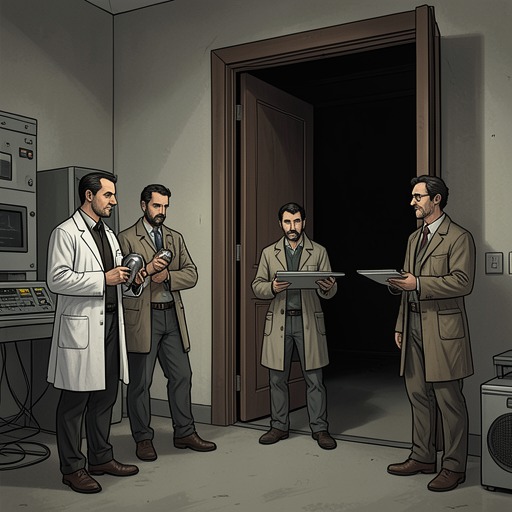
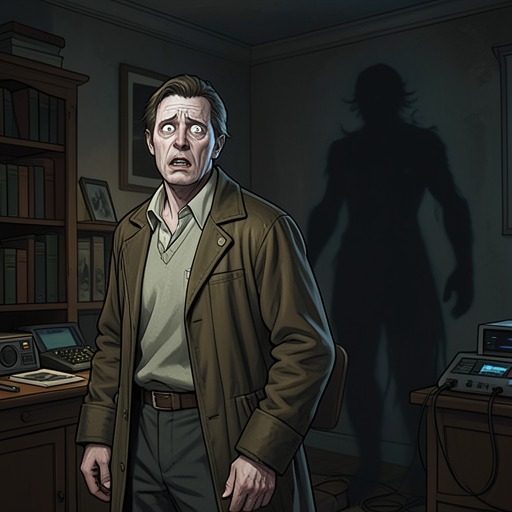
The book enters the plot through Matthew Burke’s conversation with Jimmy Cody about Danny Glick. Cody has examined the boy and initially considers a medical explanation, including the possibility that Danny was developing leukemia. The ordinary diagnostic tests were negative but not conclusive, and Danny’s corpse appeared so lifelike that his parents reacted hysterically when they saw him. Matt then asks whether the boy had innocent-looking marks on his neck. Cody recalls two small scratches just above the carotid vein, a detail that shifts the discussion from unexplained illness toward a pattern associated with vampirism.
Matt’s intervention is intentionally indirect and unsettling. He tells Jimmy that more technical reading is required and recommends the public library, then identifies Bram Stoker’s novel as a work that described all of Danny’s symptoms nearly seventy-five years earlier. When Jimmy asks whether Matt is joking, Matt answers, “I certainly hope so,” and names the book: Dracula. The exchange turns a piece of popular fiction into an evidentiary instrument. Medical observation has not solved the case; instead, its precise details—lifelike appearance, absent ordinary signs of death, and paired neck scratches—make the fictional diagnosis newly plausible.
The published novel does not contain the physical-checkup scene in which Matt mentions Dracula. It survives as a deleted scene referenced several times, giving the book an unusual structural status: Dracula is not merely read by a character in a fully presented episode, but is also an absent textual source whose importance is acknowledged through remnants of the novel’s composition. That omission reinforces the story’s larger pattern of knowledge emerging through fragments, delayed recognition, and evidence that initially appears too strange to accept.
The Book’s Form and Its Vampire Hunters
In the afterword, the book is recalled as the narrator’s first encounter with the epistolary novel and one of his earliest experiences of adult fiction. Its form consists not only of letters but also diary entries, newspaper cuttings, and Dr Seward’s phonograph diary recorded on wax cylinders. The mixture creates what the narrator remembers as a justified kind of snooping: the reader assembles a crisis from private records, public documents, and technological traces rather than receiving a single authoritative account.
The strongest early response was not simply to Dracula’s frightening episodes, although the imprisonment of Jonathan Harker, the staking of Lucy Westenra, and the burning of Mina Murray Harker’s forehead by a holy wafer all remain vivid. The decisive attraction was the intrepid group that pursues Count Dracula out of England, back through Europe, and finally to Transylvania, where the conflict ends at sunset. The book therefore provides a narrative pattern as well as a monster: dispersed observers become an organized band, modern investigation confronts ancient evil, and collective courage drives the pursuit toward a final reversal.
That pattern later colors the narrator’s response to The Lord of the Rings. When he encountered J. R. R. Tolkien’s trilogy, he understood it as a somewhat sunnier version of Stoker’s structure, with Frodo paralleling Jonathan Harker, Gandalf paralleling Abraham Van Helsing, and Sauron paralleling the Count. The comparison reveals why Dracula matters beyond its vampire lore. It established a durable architecture of entrapment, recognition, pursuit, and resistance that could be translated into other genres and historical settings.
From Childhood Book to American Vampire
The afterword traces the book’s first appearance in the narrator’s life to approximately 1957, when he was nine or ten. His mother brought it home from the Stratford Public Library after he requested it, treating it as acceptable “trash” rather than the “bad trash” represented by books such as Peyton Place, Kings Row, and Lady Chatterley’s Lover. The remembered library copy, marked by bent page corners, mustard on one page, and the smell of spilled whiskey on another, becomes evidence of circulation and shared reading: the book is materially worn by the community of readers through which its story persists.
The later discovery of E.C. Comics added a second vampire tradition. Those creatures were cruder and more physically monstrous than Stoker’s Count, with gigantic fangs, fleshy lips, and a taste for tearing rather than delicately drinking. Some drove cars, went on dates, and operated restaurants, transforming the aristocratic European vampire into an aggressively American figure shaped by commerce, appetite, and ordinary social life. Dracula therefore remained one pole of the novel’s imagination, while E.C.’s vampires supplied another: the old horror of the Count combined with a more bodily and grotesque popular-culture monster.
The narrator returned to Dracula in 1971 while teaching a high-school course in Fantasy and Science Fiction. Re-reading and teaching the book at twenty-four made it appear larger rather than smaller, confirming its status as a durable work whose significance expanded with age. The classroom experience reopened the question of what would happen if Count Dracula appeared not in turn-of-the-century London but in 1970s America. His wife supplied the decisive relocation: what if he came to Maine, to the countryside where his original castle had stood in the imagination?
The Model Reversed
That question generated the novel’s central adaptation. A vampire transplanted to a small Maine town could operate with lethal ease because the local population would resemble, in social structure, the peasants once ruled by Dracula. With assistance from greedy local intermediaries such as real-estate agent Larry Crockett, the aristocratic intruder could become once again what he had always been: the master. The book’s setting changes, but the social logic of domination remains recognizable.
The adaptation also combines Stoker’s aristocratic vampire with the fleshy leeches of E.C. Comics and the mass menace associated with George Romero’s Night of the Living Dead. In the post-Vietnam America that frames the afterword, this hybrid becomes a metaphor for social inequality: wealth consolidates at the top while the poor receive assistance only if they are fortunate. Dracula is thus not copied as a period artifact. It is translated into a contemporary system of class power, consumer life, and communal vulnerability.
The most important reversal concerns modernity itself. In Stoker’s novel, Victorian optimism shines through the story like newly invented electric light. Ancient evil comes to the city and is driven away by modern vampire hunters using blood transfusions, stenography, and typewriting machines. In the newer novel, electric lights and modern inventions instead help the incubus by making belief in him nearly impossible. The instruments of progress no longer guarantee recognition or protection; they can provide the very conditions under which supernatural predation flourishes.
That inversion is dramatized through Father Donald Callahan. Even when evidence appears before his eyes, he cannot fully believe in Mr Barlow, and his failure sends him eastward into exile. The intended possibility was that the vampires would win, drive their cars, run their restaurant, and turn Jerusalem’s Lot into a place whose specialty was blood sausage. The finished story resists that projected ending because its human characters prove stronger than expected. Dracula supplies the darkness and the machinery of the conflict, but the adaptation ultimately allows human solidarity to alter the outcome.
Lasting Significance
Dracula connects the novel’s local evidence to a larger tradition of supernatural fiction. Jimmy Cody’s clinical observations, the stolen bodies from the Cumberland County Morgue, and the examination of Marjorie Glick’s corpse all belong to a world of medicine, records, and institutional procedure. Yet those procedures repeatedly encounter bodies that refuse ordinary categories: death is uncertain, corpses look alive, and a small mark above the carotid can carry more explanatory force than a negative diagnostic test. The book provides the vocabulary by which medical anomaly becomes supernatural recognition.
Its influence is also visible in the novel’s ending and its surrounding reflection. The remembered original ends at sunset after a determined pursuit, while the modern story imagines technology assisting the monster and belief failing at the moment it is most needed. Dracula therefore functions simultaneously as precedent, contrast, and challenge. It offers the plot of ancient evil confronted by organized resistance, the documentary form through which scattered witnesses can be assembled, and the historical optimism that the newer narrative turns against itself.
The book’s decisive significance is that it makes the vampire outbreak legible without making it simple. It gives Matt a reference with which to expose the pattern in Danny Glick’s symptoms, gives the afterword a personal origin story for the novel’s conception, and gives the broader narrative a tradition to transform. Dracula remains the old book at the center of the new nightmare: a story first encountered in childhood, tested in adulthood, and finally relocated to Maine, where modern life does not automatically defeat the ancient dark.