Loss of childhood magic
'Salem's Lot: A NovelLoss of childhood magic names the painful distance between a remembered childhood world and the adult reality that survives it. In Jerusalem’s Lot, the past is not simply erased: roads, rivers, buildings, games, stories, and familiar silhouettes remain available for recognition. What has disappeared is the protective meaning once attached to them. The town therefore becomes both a place that can still seem miraculously intact and a place whose preserved surfaces conceal accumulated violence, grief, and supernatural danger.
Return and Recognition
Ben Mears’s return on September 5, 1975, makes the lost magic visible through motion and comparison. Driving north past Portland, he searches the changed landscape for something that might “jog his memory,” while reminding himself that twenty-five years have passed and that places change as people do. The journey is an attempt to test memory against geography: the modern turnpike has replaced older routes, and the roads toward Jerusalem’s Lot have been asphalted, straightened, logged, or littered. Childhood is thus approached through infrastructure that both connects Ben to the past and proves that the past cannot be entered unchanged.
A red barn with a white cupola briefly seems to answer his hope. It stands across a field much as it did when he was nine, and its apparent unchangedness gives him a burst of pleasure and recognition. For a moment, the survival of one visual landmark suggests that returning may be possible after all. Then trees blot it out. The image’s disappearance establishes the governing rhythm of the concept: memory offers a solid object, but the present quickly interrupts the illusion of permanence.
Familiarity increases as Ben passes over the Royal River, where he once fished for steelies and pickerel, and glimpses Cumberland Village and the water tower marked with the slogan “Keep Maine Green.” These details preserve a route through childhood, but they do not restore the child who traveled it. Even the remembered landscape is filtered through adult knowledge, changed transport, and the awareness that time has been moving while memory appeared to stand still.
The Trauma Beneath Nostalgia
The sign for Jerusalem’s Lot does not complete Ben’s homecoming; it triggers a sudden blackness that extinguishes his rising spirits. He has experienced such episodes since “the bad time,” and his mind approaches Miranda’s name only for him to reject it. The return is therefore not uncomplicated nostalgia but a confrontation with delayed grief. The past resurfaces as bodily dread before Ben can organize it as a story, and the town’s familiar name becomes a stimulus for trauma rather than a promise of comfort.
Ben asks what he is doing by returning to a town where he lived for four years as a boy and trying to recapture something irrevocably lost. His questions expose the contradiction at the heart of the journey: he wants the childhood world precisely because he knows it cannot be recovered. He imagines the old magic as having gone down the chutes on the night when his motorcycle went out of control, a yellow moving van grew before him, and Miranda’s scream ended abruptly. The loss of childhood magic is consequently bound to the loss of his wife and to the destruction of the future he once inhabited as an adult. Childhood innocence and adult security have been damaged through the same traumatic rupture.
The possibility of driving past the exit intensifies the conflict. Ben considers continuing to Chamberlain or Lewiston, stopping for lunch, and returning later, but he cannot identify where he would be returning. Home is no longer an unquestioned place; if a home existed, he thinks, it had been Jerusalem’s Lot, even though he lived there only four years. The town remains the location of belonging while also becoming the location of fear, making the return an act of both mourning and exposure.
Memory as a Living Social Form
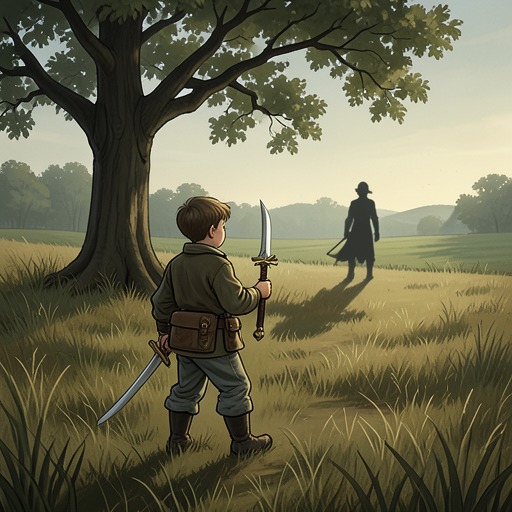
When Ben later speaks with Susan Norton, he describes Jerusalem’s Lot as haunted for him because he was a child there and feared that coming back would reveal it as different. Susan answers that things do not change there very much, a response that gives the town an eerie resistance to ordinary time. Ben’s childhood recollections then gather around specific activities: playing war with the Gardener children in the Marshes, playing pirates by Royal’s Pond, and playing capture-the-flag and hide-and-go-seek in the park. These games show childhood as a world of improvised myth, where ordinary places become territories, battlefields, and pirate waters through collective imagination.
Ben also remembers that the magic did not survive his departure intact. After leaving Aunt Cindy, he and his mother moved through difficult places; Aunt Cindy killed herself when Ben was fourteen, and he says that most of the magic dust had rubbed off him long before that. The phrase links the erosion of wonder to displacement, family instability, and death rather than to a simple biological transition from child to adult. Jerusalem’s Lot held what remained, so returning is an effort to find the residue of a self that has already been repeatedly stripped away.
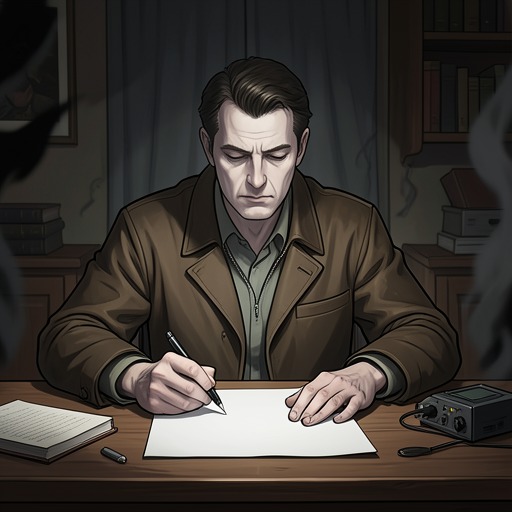
His metaphor of looking through a thin pane of ice gives the concept its most precise form. Childhood can still be seen through the present, but the image is wavy and misty; parts trail off into nothing, while most remains. The metaphor preserves both continuity and distortion. Ben’s memory is not false, yet it is inaccessible as direct experience. When Susan observes that he talks like his books, Ben is astonished because he has never made such a speech aloud. The act of telling converts private, previously unspoken memory into narrative, suggesting that language can witness the loss even though it cannot reverse it.
The Town’s Buried Past
Jerusalem’s Lot makes personal loss inseparable from collective memory. The town was incorporated in 1765 and celebrated its bicentennial with fireworks and a pageant, yet its public history coexists with grotesque local anecdotes and concealed violence. Its name derives from Jerusalem, a large sow that escaped, became wild and mean, and gave Charles Belknap Tanner a warning with which to frighten children away from his property. The comic origin story places childish fear, local folklore, and communal identity in the same imaginative register, but the town’s later history darkens that register.
The Marsten House is remembered as the town’s closest equivalent to a skeleton in its closet. Although the scandal and violence connected with Hubert Marsten and Birdie Marsten occurred before the younger residents were born, small towns pass horrors down ceremonially from generation to generation. This is childhood magic’s shadow form: stories are handed down like fairy tales, but the inherited tale contains murder, suicide, and the pressure of unprocessed communal knowledge. Ben’s personal haunting thus corresponds to a civic haunting in which the past remains active because it has never been fully understood or resolved.
The record of four children who disappeared between 1928 and 1939 further unsettles the town’s pastoral surface. None was ever found, and the absence of remains prevents ordinary explanations from closing the cases. Children who might otherwise belong to the protected sphere of play and family become evidence of a continuing darkness associated with the Marsten household. The contrast between childhood games in the Marshes and missing children in the town’s historical record shows how the same landscape can support imaginative freedom and real predation.
The town’s secrets exceed what its residents know. Local people believe they understand the fate of Albie Crane’s wife and know that Hubie Marsten killed Birdie, but the deeper circumstances remain hidden from communal memory. Charred papers, correspondence with an Austrian nobleman, and the relationship between Jerusalem’s Lot and a desecrated church emerge through private records rather than ordinary gossip. Robert Boone’s diary places the town’s origins in a 1710 splinter group of Puritans led by James Boon and connects family bloodline, religious fanaticism, incest, exorcism, and a sinister book. In this historical layer, the lost magic of childhood is inseparable from the discovery that the adult world has always contained secrets too terrible for the town’s comforting stories to disclose.
Children, Monsters, and Knowledge
The concept also appears through the novel’s treatment of children as interpreters of horror. Richie Boddin’s schoolyard identity is built on intimidation: at eleven, weighing 140 pounds, he imagines himself as the school’s reigning authority, while younger children treat him as a totem. The schoolyard is a miniature world of childish hierarchy and theatrical power, but its apparent rules are fragile. Adult labels and playground mythology cannot protect children when the town’s supernatural violence enters their rooms and homes.
Mark Petrie’s bedroom is filled with carefully staged monsters: Dracula menaces a girl, the Mad Doctor tortures a woman, and Mr Hyde creeps toward an old man. In this arrangement, death is initially something mediated by models, stories, and imaginative play. Mark understands monsters as figures that “got you,” but the statement remains a child’s manageable theory of danger. The model tableau becomes ominously inadequate when Danny Glick appears at Mark’s window with grave-pale skin, feral reddish eyes, bloodlike darkness around his mouth, and teeth that have grown long and sharp.
Danny’s request, “Let me in,” turns a familiar bedroom into a threshold and transforms a child’s horror culture into immediate knowledge. Mark realizes that he is in peril of more than his life, and his fear becomes a form of accurate judgment rather than childish helplessness. His plastic or tongue-depressor cross, kept beside him after it repels Mrs Glick, shows that childhood objects can acquire practical force within the novel’s supernatural system. Mark does not regain innocence; he develops a new capacity to recognize what adults might deny.
When Mark later hears twigs snapping near a spruce, he reasons that the vampires cannot emerge in daylight but can use human agents. He identifies Richard Straker as a likely danger, remembers Straker’s toadlike eyes, and carries his father’s target pistol even while understanding that bullets are generally useless against the vampires. The scene marks a transition from protected child to active observer and strategist. Mark’s knowledge does not restore the old magic, but it converts the imaginative vocabulary of monsters into a means of survival.
From Lost Innocence to Witness
Loss of childhood magic does not mean that imagination becomes worthless. Ben’s memories give him a language for recognizing what the adult town suppresses, while Mark’s monster stories help him interpret an actual supernatural threat. The difference is that imagination can no longer remain safely separate from history. Childhood games, horror models, local legends, private diaries, and inherited tales all become ways of approaching truths that official or communal explanations fail to contain.
The cost of this knowledge is substantial. Ben’s return forces him to acknowledge Miranda’s death, the instability of his earlier life, and the impossibility of returning to a home untouched by time. Mark’s encounter with Danny destroys the protective boundary between fiction and reality, while the town’s history reveals that violence has been recurring across generations. Even the later effort to locate Kurt Barlow depends on what Mark has seen, heard, smelled, and touched: a child’s testimony becomes strategically essential to adults confronting an evil they cannot yet map.
The concept therefore describes not a single moment when innocence disappears but a repeated movement from enchanted surface to buried fact. Jerusalem’s Lot preserves enough of Ben’s childhood world to invite return, yet its preserved forms lead toward grief, murder, missing children, corrupted religious history, and vampiric occupation. The town’s magic survives only in altered forms: as memory, testimony, imaginative pattern, and the courage to look again. What is lost cannot be recovered as innocence, but it can become knowledge—and, through knowledge, the basis for resistance.