Matt Burke’s house
'Salem's Lot: A NovelMatt Burke’s house is the domestic setting where ordinary hospitality gives way to the first sustained, practical confrontation with the supernatural danger overtaking Jerusalem’s Lot. At first it offers Ben Mears food, music, and companionship; soon afterward, it contains Mike Ryerson’s body and becomes the place where Ben Mears and Matt Burke begin testing folklore against physical evidence. Its decisive significance lies in that reversal: the house does not cease to be a home, but home itself becomes the chamber in which familiar life is forced to acknowledge death’s impossible return.
Setting and Domestic Character
Matt Burke’s house initially disorients Ben Mears. When Matt invited him to supper, Ben expected a small gray house after a red-brick one, but rock music poured from the building he approached, making him wonder whether he had come to the wrong place. He used the tarnished brass knocker, received no answer, and rapped again before Matt called from inside that the door was open.
The entrance led directly into a small living room furnished in what Ben perceived as Early American Junk Shop style. An ancient Motorola television dominated the room, while a KLH sound system with quad speakers supplied the music. Matt emerged from the kitchen wearing a red-and-white checked apron, with the smell of spaghetti sauce following him. He explained that he was somewhat deaf and therefore turned the music up, a detail that gives the room both warmth and a mild comic awkwardness rather than the solemnity of a conventional scholarly study.
Matt’s practical informality continues in the dining arrangements. He told Ben that the house was friendly and that he hoped Ben did not mind eating in the kitchen, because an antique dealer had offered two hundred dollars for his dining-room table and he had never replaced it. The kitchen was astringently neat: spaghetti sauce simmered on a small four-burner stove, a colander of pasta steamed nearby, and a small drop-leaf table held mismatched plates and glasses decorated with dancing cartoon figures. The cheap jelly glasses amused Ben, and the last constraint of being with a stranger fell away; he began to feel at home.
From Refuge to Scene of Investigation
The house’s meaning changes when Matt offers shelter to Mike Ryerson. Matt found Mike in a distressed and lethargic condition and asked him to come home, sleep in the guest room, and see Dr. James Cody the next day. The proposed refuge is compassionate and ordinary: Matt tries to protect a troubled man by bringing him into the private space of his own home and placing him under medical care.
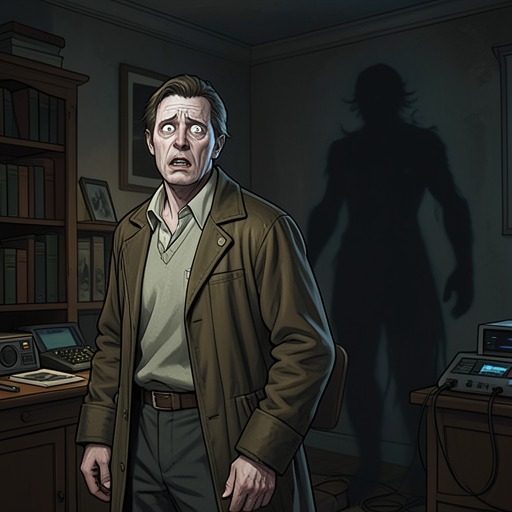
That protective gesture produces the first horrifying reversal. When Ben later returned, every lower-floor window was lit, and Matt opened the door before Ben reached it. Matt’s face was deadly pale; his mouth trembled, his eyes were wide, and he seemed scarcely to blink. He led Ben toward the kitchen and then stated that there was a dead man upstairs. The house, previously associated with supper and conversation, had become the container of a secret that Matt could barely articulate.
The dead man was Mike Ryerson, a town groundskeeper. Matt and Ben had to move through the familiar house toward the upper floor, where the body lay in the guest room. Matt’s attempt to restore the domestic order he had promised Mike has failed: the guest room is no longer a place of sleep or safety, and the house’s intimate rooms now provide the setting for an unexplained death.
The Body and the Medical Puzzle
The upstairs discovery draws local authority and medical expertise into the house. Parkins Gillespie walked around the body several times and even asked whether Mike was really dead and whether Matt had tried to wake him. Dr. James Cody arrived after completing a delivery in Cumberland, and Matt led the assembled men upstairs again. The scene retains traces of the house’s ordinary social life, yet the guests now gather around a corpse rather than a kitchen table.
The body’s condition resists simple explanation. There were no marks on Mike Ryerson’s neck. At 5:35 in the morning, while the men sat again at the kitchen table, Matt recalled the folklore rule that bite marks disappear when the victim dies. Ben recognized the tradition from Bram Stoker’s Dracula and from Hammer films starring Christopher Lee, but the reference does not make the event safely fictional. Instead, popular vampire lore becomes a possible interpretive tool for a death that medical observation cannot yet explain.
The house thus serves as an epistemological threshold. In its kitchen, folklore, memory, and professional medicine meet; upstairs, the body supplies the physical contradiction that forces those systems into conflict. The domestic sequence moves from Matt’s invitation to Mike’s shelter, from shelter to death, and from death to the suspicion that the apparent victim may not have died by ordinary means.
A Wider Crisis Enters the House
The events at Matt Burke’s house cannot remain private. News arrives that someone has taken bodies from the Cumberland County Morgue in Portland, an occurrence described as resembling something from Boris Karloff and Mary Shelley. That report enlarges the meaning of Mike’s corpse: what first appears to be an isolated death is connected to the disturbance of other bodies and to a pattern reaching beyond the house and beyond Jerusalem’s Lot.
The house also becomes linked to the examination of Marjorie Glick’s body. In Green’s workroom, Jimmy Cody examined her on a stainless-steel table and found her condition strikingly similar to Mike Ryerson’s: there was no surface lividity and no sign of rigor or incipient rigor. Although that examination occurs elsewhere, it confirms the investigative pattern first crystallized in Matt’s house. The medical irregularities associated with Mike are not unique; they belong to a spreading crisis.
Matt’s home therefore occupies a crucial position between the town’s social network and its supernatural infection. It is close enough to ordinary life to receive a guest, prepare spaghetti, play rock music, and host conversation, yet secluded enough to conceal a body temporarily. The house makes the crisis legible by placing impossible evidence inside a recognizable household structure.
Narrative Significance
As a location, Matt Burke’s house condenses the novel’s transformation of Jerusalem’s Lot. The town’s roads and neighborhoods may still appear familiar, and passersby may see only scattered lights in the early morning, but the meaning of those spaces is changing. Within Matt’s house, the difference between a safe interior and a threatened exterior collapses. A door opened in welcome can lead not to fellowship but to a corpse upstairs.
The house also establishes Matt and Ben’s investigative alliance through action rather than declaration. Ben enters as a returning resident and guest; Matt receives him as a friend; together they confront Mike’s death, compare it with vampire folklore, and connect it to the wider disappearance of bodies and the strange condition of other victims. The kitchen remains the emotional center of this process because it is where conversation, food, and reasoning continue after the upstairs discovery. The ordinary room becomes the place where the characters attempt to think clearly while the supernatural presses against the household’s boundaries.
Its final significance is therefore architectural and narrative at once. Matt Burke’s house is not merely a backdrop for an early corpse discovery. It is a refuge that fails, a social interior invaded by death, and a bridge between domestic normality and the vampire outbreak. The movement through its rooms—from music-filled living room to orderly kitchen to upstairs bedroom—maps the novel’s movement from comfort into knowledge, and from knowledge toward resistance.