Philip Boone
'Salem's Lot: A NovelPhilip Boone is the dangerous center of the Boone family’s buried history: a man remembered not merely as eccentric or misguided, but as someone who trafficked with the unholy. His pursuit of the forbidden volume De Vermis Mysteriis transformed a dispute between brothers into a legacy of violence, disappearance, and supernatural contamination. Although he belongs to the eighteenth-century past, the consequences of his actions reach into the present through Chapelwaite, Robert Boone’s descendants, and the continuing mystery of Jerusalem’s Lot.
Family Background and the Boone Rift
Philip Boone belonged to the Massachusetts Boone line established through his brother Robert Boone. According to the family history recounted to Charles Boone, Chapelwaite had been home to Philip Boone’s line since the 1780s, while Robert Boone settled in Massachusetts after a quarrel involving stolen papers. The family separation was therefore not an incidental disagreement: it became the origin point of a division that later generations inherited without fully understanding.
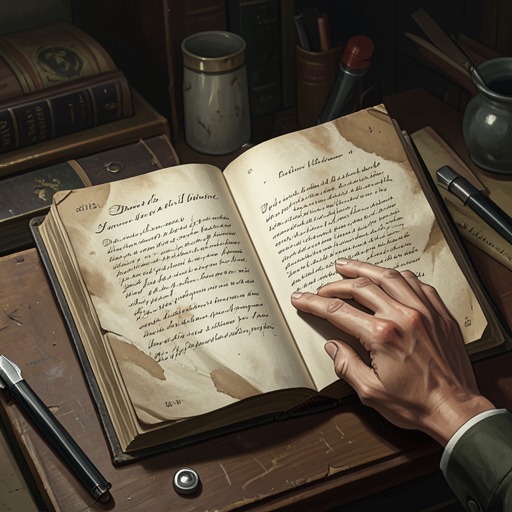
Robert Boone was discovered rifling Philip Boone’s desk, an act that exposed the immediate cause of the quarrel but not its deeper significance. The stolen material was not ordinary family correspondence. Philip Boone possessed a profane Bible written in old languages, including Latin and Druidic, and Robert’s attempt to remove it placed the brothers on opposite sides of a struggle over forbidden knowledge. The book was identified as De Vermis Mysteriis, a hell-book whose very survival continued to trouble the family long after Philip Boone had vanished.
The family’s later history preserved the consequences as an unhappy shadow extending from father to son to grandchildren. Marcella Boone died in a tragic accident, and Stephen Boone fell to his death. Chapelwaite was intended to become the home of Charles Boone and his family so that the old rift might finally be mended, but the inherited past resists that reconciliation. Philip Boone’s history makes the house less a neutral inheritance than the surviving structure of a family crisis whose original cause has never ceased to operate.
The Forbidden Book
Philip Boone’s defining action was his traffic with De Vermis Mysteriis. He was described as mad and as a man who dealt with unholy powers, but the evidence gives his madness a concrete object: a book written in bastard Latin and Runic script, associated with Druidic ritual and forbidden incantation. The volume was not treated as inert scholarship. It seemed warm to the touch and appeared to vibrate as though it contained an immense power, making the physical book itself a vessel of menace.
Philip Boone’s excitement when the book arrived revealed the intensity of his attachment to it. He nearly snatched it from Robert Boone’s hands, laughed in an ugly, crazed fashion, and repeatedly exclaimed, “We have it! We have it! The Worm! The Secret of the Worm!” Those words present the book as both possession and revelation: Philip believed that acquiring it granted access to a secret associated with the Worm. His response also confirms that the volume was not merely the subject of a scholarly dispute; it was the object of an active project.
Philip Boone had apparently promised to recant a blasphemous baptism or related religious commitment, but the arrival of the book destroyed the credibility of that promise. Instead of renouncing the forces represented by the volume, he laughed at the reminder and fled, presumably to his mad benefactor. The episode shows a decisive reversal from negotiation to surrender: Philip’s worldly or familial obligations become insignificant once the forbidden book is in his possession.
Connection to Jerusalem’s Lot
Philip Boone’s relation to Jerusalem’s Lot was one of blood. He was said to bear the Mark of the Beast while walking in the clothes of the Lamb, a contrast that casts him as a figure of concealed corruption: outwardly aligned with religious righteousness, inwardly marked by an opposing power. The language makes his identity inseparable from religious deception and from the possibility that evil can inhabit respectable forms.
On the night of October 31, 1789, Philip Boone disappeared, and the entire population of Jerusalem’s Lot disappeared with him. This simultaneous vanishing is the decisive event attached to his name. It turns the family quarrel over De Vermis Mysteriis into a historical catastrophe and makes Philip Boone more than a solitary occultist. His disappearance is bound to the disappearance of a whole community, suggesting that the book’s secret and the village’s fate were connected at the moment when both Philip Boone and Jerusalem’s Lot passed out of the ordinary historical record.
The account remains partly incomplete. The person who preserves the history knows the broad outline but can say little more, offering warnings about blood calling to blood and about those who watch and guard rather than a full explanation. That withholding keeps Philip Boone at the center of an unresolved mystery: the evidence identifies the book, the family rupture, the marked religious identity, and the date of the mass disappearance, while leaving the precise mechanism of the catastrophe obscured.
Legacy and Narrative Significance
Philip Boone functions as the hidden ancestor whose choices convert inheritance into danger. The Boone descendants encounter the effects of his conduct through family deaths, the unresolved history of Chapelwaite, and the continued presence of the forbidden book. The past is not presented as finished biography; it behaves as an active force, drawing later generations back toward the same places, objects, and questions.
His story also gives the novel’s supernatural history a human point of origin. The threat is not introduced as an abstract evil detached from family life. It enters through a desk, stolen papers, a brother’s attempted intervention, a promised recantation, and a book seized with ecstatic certainty. These domestic and material details make the larger horror legible: private betrayal and occult ambition create the conditions for public destruction.
Philip Boone’s final significance lies in the contrast between attempted protection and disastrous possession. Robert Boone tried to remove the hell-book, while Philip Boone embraced it and pursued its secret. The brothers’ conflict therefore embodies the central division carried through the family: whether forbidden knowledge should be resisted or used. Philip’s disappearance with Jerusalem’s Lot provides the answer in historical form. His pursuit does not yield mastery; it leaves behind a vanished village, a poisoned lineage, and a secret that continues to call the blood of the Boone family toward Chapelwaite.