Roy McDougall
'Salem's Lot: A NovelRoy McDougall is a resident of the trailer lot on Bend Road and a family man whose transformation into a vampire makes the outbreak’s reach brutally intimate. His fate is not presented as an isolated death: it is bound to the disappearance of ordinary domestic life, the loss of Sandy McDougall, and the formation of a practical alliance between Jimmy Cody and Mark Petrie. Through Roy, the novel shows how the infected are both victims and immediate threats to the living.
Domestic Loss and the Return of the Dead
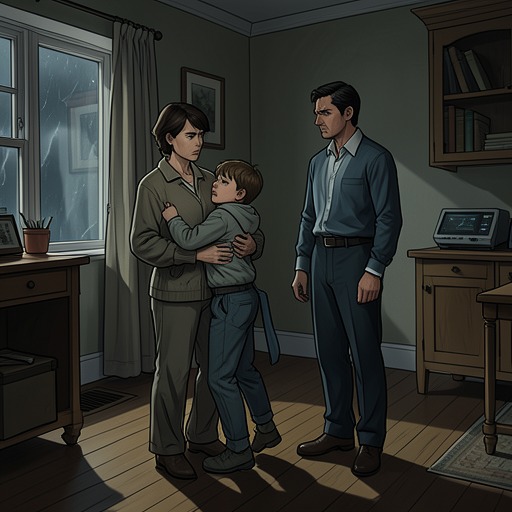
Roy’s home has already become a site of erasure when Sandy is taken back there after her encounter with the vampires. Roy drives her home heavily sedated, sitting on the far right-hand side of the front seat while she keeps her hands in her lap. In the trailer’s dining nook and living room, she sees that every sign of the baby has been removed: the playpen, toy basket, Raggedy Andy doll, caterpillar, and high chair where she had tried to feed him back to life. The emptied space makes the household’s collapse visible through absent objects rather than explanation.
Sandy’s subsequent dream of her son returning intensifies that domestic horror. She imagines the child scratching at the window and rushes to let him in because it is night and cold and he is naked. Roy’s household is therefore caught between grief and false restoration: the dead appear to return, but what returns is not the child or the family as they were. The family setting becomes the threshold through which vampirism turns attachment into danger.
Jimmy Cody and Mark Petrie Investigate
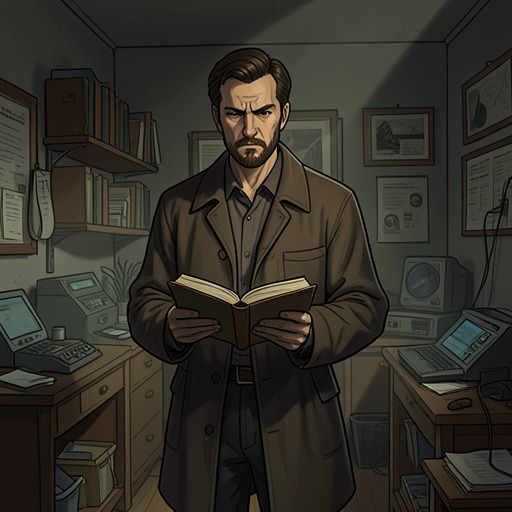
When Jimmy Cody and Mark Petrie begin actively dealing with the vampires, they accomplish more than dragging Roy McDougall into the sunlight. Roy’s car is standing in the driveway of the trailer lot on Bend Road on a weekday, and its presence makes Jimmy suspect that something is wrong. The practical details of the response establish the new conditions of life in Jerusalem’s Lot: Jimmy carries his black medical bag, Mark takes freshly sharpened stakes and a hammer with a two-pound head, and together they approach the trailer through the rain.
The house gives no answer. The bell does not work, and knocking produces no response from either the McDougall trailer or the neighboring trailer twenty yards away, although a car is parked there as well. Silence, parked vehicles, and the proximity of another apparently occupied home suggest that the vampire crisis has spread beyond one concealed victim. The familiar trailer lot has become a cluster of possible attacks, and investigation must proceed without the reassurance of ordinary human presence.
The Attack Inside the Trailer
Jimmy enters the trailer while holding his breath against the stench and pulls out Sandy McDougall. Mark then uses the hammer quickly and mercifully, treating her as someone who must be destroyed rather than saved. Roy is more difficult. He had been a strong man in the prime of his life, and his physical resistance is compared to that of a maddened horse. His bared teeth launch predatory lunges, making the transformed body a direct weapon against the men trying to end the outbreak.
The killing is dangerous even for the hunters. A square blow to Roy’s wrist could sever the hand completely, and Mark’s first attempts go wrong: one strike nicks the shoulder, while another cuts a shallow channel across Roy’s rib cage. Each wound releases blood, and Roy’s screams take on a horrible foghorn quality that nearly unnerves Jimmy. The scene refuses any clean separation between rescue and violence. To eliminate the threat, Jimmy and Mark must enter the infected home, confront a formerly strong neighbor, and endure the bodily consequences of their own necessary attack.
Death and Narrative Significance
In panic, Jimmy throws himself across Roy’s stomach and thighs and tells Mark to strike immediately. Mark brings the stake down with one heavy blow from the hammer. Roy’s thrashing briefly intensifies, tossing Jimmy away as if he were a piece of chaff, but then his whole body trembles and becomes still. One hand closes around a useless fistful of leaves; the two men watch it until the fingers loosen. That final gesture gives the destruction a stark physical conclusion: the vampire’s violence ends, and the hand that had clutched at the world can retain nothing.
Roy’s death marks a value shift from uncertainty to grim knowledge and action. Jimmy and Mark do not merely discover another vampire; they learn that the outbreak has entered homes where familiar people must be killed before they can kill others. Roy’s transformation also sharpens the novel’s recurring contrast between the ordinary and the monstrous. The trailer, the car in the driveway, and the neighboring vehicle belong to everyday life, while the stench, teeth, blood, stake, and hammer belong to a new predatory order. His brief appearance therefore carries the weight of a broader collapse: the town’s domestic spaces can no longer be trusted, and survival depends on recognizing the dead before they return to feed.