Technological pessimism
'Salem's Lot: A NovelTechnological pessimism is the governing contrast between Bram Stoker’s Dracula and the darker technological world imagined in ’Salem’s Lot. It treats modern invention not as an automatic defense against supernatural evil but as part of the historical atmosphere in which evil can spread, hide, and overwhelm human confidence. Its decisive claim is that technological progress without moral or ecological security produces not mastery but exposure: the very civilization that believes itself protected by reason, energy, machinery, and innovation may discover that those protections have become sinister.
From Technological Confidence to Technological Menace
In Dracula, modernity appears as an ally of the human characters. Abraham Van Helsing possesses medical knowledge of blood transfusions; John Seward records his diary on wax phonograph cylinders; Mina Harker writes in shorthand and becomes the secretary of the vampire hunters. These devices and techniques form a practical network of evidence, communication, and scientific cooperation. Count Dracula makes a fatal strategic error by leaving his isolated Transylvanian domain and entering London, where he encounters people equipped with the methods of modern reason.
The structure of Stoker’s novel therefore rests on a hopeful technological thesis. A foreign representative of the Dark Powers can be driven from Carfax, pursued back to Transylvania, and finally staked at sunset because the vampire hunters possess both courage and the instruments of a modern society. Their victory costs them dearly, but the larger outcome remains secure. Modern knowledge may be strained, yet it is not fundamentally discredited; the machinery of rational investigation still points toward human triumph.
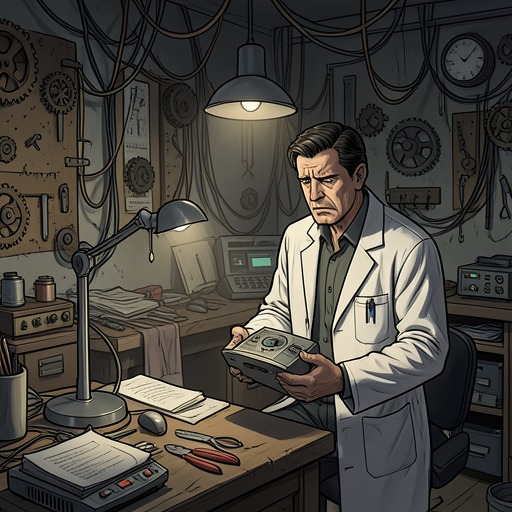
The technological pessimism associated with ’Salem’s Lot begins by refusing that assurance. The later world no longer regards every new device as hopeful. In this altered historical imagination, inventions that once promised liberation have begun to reveal dangerous consequences. Modernity is not a clean tool placed in human hands; it is an immense system whose waste, consumption, and destructive capacity return upon the people who depend on it.
The Historical Atmosphere of the Later World
The world envisioned for the vampire novel is described as one that has begun to choke on its own effluent. That image makes pollution more than a background condition: it becomes a figure for a civilization burdened by the consequences of its own production. The society is also described as having hooked itself through the bag on diminishing energy resources, an image of dependence that turns technological abundance into a trap. What appears to sustain modern life simultaneously tightens the conditions of its vulnerability.
The danger is not limited to environmental exhaustion. Nuclear weapons and nuclear proliferation enlarge the scale of human self-destruction, making the technological order threatening even before supernatural forces enter the narrative. Big-time terrorism remains beyond the immediate horizon of that historical moment, but the mention of it sharpens the sense that danger is continually developing faster than public confidence can absorb. The future is not imagined as a smooth technological rainbow; it is a narrowing field of risks produced by human ingenuity itself.
This outlook also changes the moral balance of the vampire story. If modern devices no longer embody reliable progress, then the human opponents of the vampire cannot assume that their civilization has already supplied the means of victory. The conflict becomes less a contest between darkness and a fully equipped rational order than a struggle conducted inside a damaged society. Human beings face evil while carrying the accumulated consequences of their own historical systems.
The Vampire as a Reversal of Progress
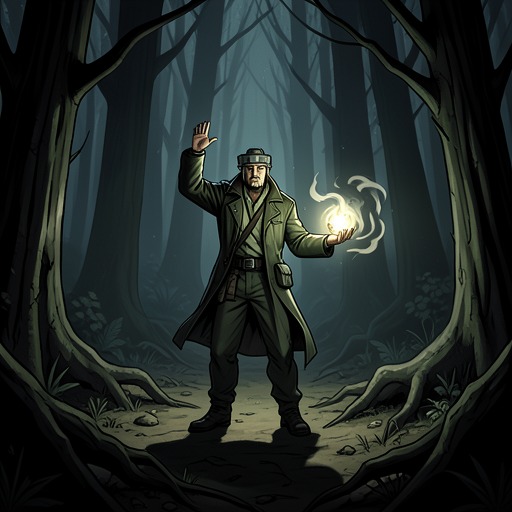
The technological pessimism of the novel’s conception is condensed in the reversal of Dracula’s ending. Instead of the vampire being driven back and destroyed by a disciplined company of modern investigators, the imagined outcome is one in which the vampire ends up eating the fearless vampire hunters for lunch. The joke is deliberately grotesque, and its comic timing does not weaken the idea. It gives the reversal a memorable physical form: the figures who once represented modern confidence become prey.
The vampire’s victory signifies more than the strength of one supernatural antagonist. It exposes the weakness of the assumptions surrounding him. In Stoker’s novel, machinery, documentation, medicine, and organized reason help the hunters convert fear into knowledge and knowledge into action. In the later vision, those guarantees have lost their innocence. The vampire is able to occupy the same modern world whose institutions and habits were expected to protect it, turning civilization’s confidence into an appetite that feeds the enemy.
The reversal is especially powerful because it joins technological pessimism to the older vampire myth rather than replacing one with the other. The supernatural remains genuinely dangerous, but its danger is intensified by a culture already anxious about pollution, resource depletion, nuclear destruction, and uncontrolled modern systems. The vampire therefore becomes an emblem of a broader historical fear: that humanity has created forces it cannot responsibly govern and has mistaken technical capacity for safety.
From Planned Control to Uncontrolled Storytelling
The concept also shapes the work’s form. The novel began under the title Second Coming and was initially imagined as a controlled project, but the writing process eventually displaced the author’s original plan. The principle later summarized as “The book is the boss” expresses a surrender of managerial control that parallels the larger distrust of systems designed to guarantee outcomes. Plotting is presented as controlled fiction, while storytelling allows the narrative to take over.
That formal movement does not mean that technology is literally responsible for the book’s composition. It does, however, create a productive structural echo. A world that distrusts the promise of total technological control is paired with a writing process that distrusts total authorial control. The story develops through characters who become more than the roles assigned to them and begin to act independently, sometimes intelligently and sometimes with foolish bravery. The resulting narrative resists the clean, engineered certainty that technological optimism would prefer.
The contrast is therefore double. The novel challenges the belief that modern machinery will defeat darkness, and it challenges the belief that an author can safely engineer every movement of a story. In both cases, control proves possible in principle but dangerous when imposed as an absolute. The work’s bleak premise is consequently complicated by the unexpected vitality of its characters: their independent actions prevent the book from becoming merely a demonstration of despair.
Significance and Limits of the Pessimism
Technological pessimism gives ’Salem’s Lot its historical edge. The vampire story is not only about an ancient evil entering a modern town; it is about modern society losing the confidence that its inventions have placed it on the winning side of history. Pollution, diminishing energy resources, nuclear weapons, and nuclear proliferation establish a world already threatened by its own achievements. Against that background, supernatural invasion feels less like an isolated breach than like the latest form taken by a civilization-wide crisis.
Yet the outlook is not pure nihilism. The characters refuse to remain merely puny representatives of rationality. They perform smart actions and foolishly brave ones, and their resistance gives the novel an unexpectedly optimistic character despite the young author’s original intention. Technological pessimism thus attacks the fantasy that progress automatically saves humanity without denying the possibility of human courage. What fails is the guarantee supplied by modern systems; what remains possible is purposeful action by vulnerable people.
The concept’s deepest tension lies there. Modernity cannot be trusted as a universal shield, but neither can its inhabitants simply abandon responsibility. The novel’s darkness comes from the collapse of technological confidence, while its residual hope comes from individuals who act after that confidence has collapsed. Technology may no longer promise salvation, yet human beings can still resist, choose, and oppose the forces that threaten them. The vampire’s apparent triumph over the modern world is therefore also a test of whether courage can survive after faith in progress has died.