You have to invite them inside
'Salem's Lot: A Novel“You have to invite them inside” is the Lot’s clearest statement of how vampire power crosses from the supernatural world into domestic life. The rule makes entry depend on human participation: the predator may appear at a window, plead for admission, or exploit a victim’s confusion, but the decisive breach occurs when someone opens the door and welcomes it. In this form, a commonplace gesture of hospitality becomes the mechanism by which private homes are converted into sites of contagion and control.
Definition and Operation
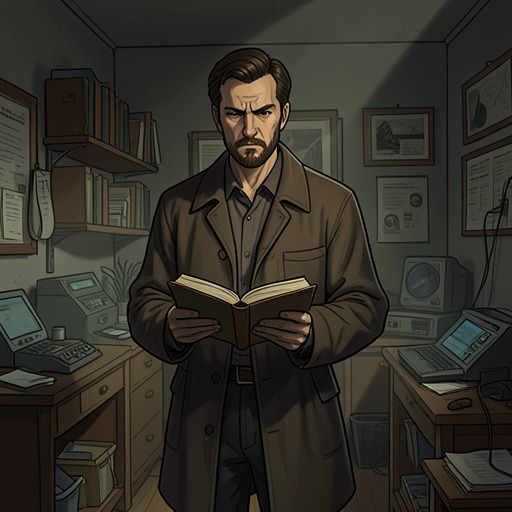
Matthew Burke articulates the rule while trying to defend an experience that no rational listener could accept at face value. He explains that, according to old vampire literature, a vampire cannot simply walk into a man’s house and drink his blood; admission must be granted. His account immediately makes the rule personal and tragic: Mike Ryerson had invited Danny Glick in, and Matthew Burke had himself invited Mike. The supernatural danger therefore does not remain outside the town’s social order. It enters through an apparently ordinary act performed by people who believe they are receiving a guest or helping someone in need.
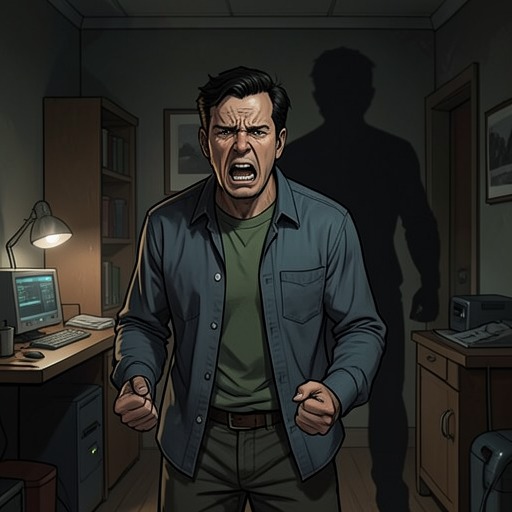
The rule also gives the vampire attack a distinct psychological structure. The victim is not merely overpowered at the threshold; the victim is induced to suspend judgment. Mark Petrie recognizes this when Danny Glick appears outside his second-story window, a place where the creature seems physically unable to cling or stand. Mark knows that opening the window and calling Danny in would end his fear by making him one with Danny and the others. The invitation is thus presented as both temptation and surrender: it promises relief from terror by abolishing the boundary between victim and vampire.
Thresholds, Faces, and Temptation
Danny’s appearance at Mark Petrie’s window shows how the rule works as a contest over attention before it becomes a contest over space. The face outside is pallid and grotesquely distorted, but Mark discovers that looking into the eyes changes his response. The gaze offers emotional release, making the invitation seem easier than continued resistance. Mark’s survival depends on recognizing that this apparent comfort is the trap itself and forcibly looking away. The scene makes the threshold psychological as well as architectural: the vampire must first gain access to the victim’s will.
The same danger spreads through imagined scenes of ordinary social contact. Mark later describes a dream in which vampires go from house to house, telephoning and begging to be admitted. Some residents understand at a deep level that something is wrong, yet let them in because accepting the terrible possibility seems harder than surrendering to it. The rule therefore explains the epidemic not only as supernatural assault but as a chain of compromised decisions. Each invitation turns one household into another point of entry, allowing the vampire threat to move through the town’s network of homes, telephones, and relationships.
Ritual Protection and the Reclaimed Threshold
The invitation rule is countered by deliberate acts of faith and ritual. Jimmy Cody asks Ben Mears to bless a makeshift cross formed from two tongue depressors bound together with Red Cross tape. The improvised object matters because protection depends not simply on material quality but on the act of assigning sacred force to an object in the face of an immediate threat. Religious language and practical urgency meet at the bedside, where the investigators attempt to establish a barrier against what ordinary medicine cannot explain.
The strongest communal reversal occurs when Father Donald Callahan leads the group toward the Marsten House. The house seems to exude evil from its cracked paint, but Callahan does not pause at the entrance. He raises his crucifix, commands the evil to leave in the name of God the Father, and strikes the door. Light flashes, ozone fills the air, the fanlight and bay window burst outward, and the newly installed Yale lock is welded into an unrecognizable mass. The scene reverses the earlier logic of invitation: instead of allowing evil to define the threshold, a ritual command violently reasserts human and sacred authority over it.
Consequences for the Vampire Epidemic
Once the invitation rule is understood, apparently disconnected incidents become part of a single mechanism. Danny’s return, Mike Ryerson’s attack, and the later fear that the vampires are visiting houses are not isolated hauntings. They are stages in the conversion of domestic space. A home that should provide privacy and safety becomes vulnerable precisely because its residents retain the social instinct to answer a plea, receive a caller, or trust a familiar face.
The rule also clarifies why the threat is contagious without being mechanically automatic. The vampires require access, but they repeatedly seek access through human recognition and consent. This makes each household partly responsible for its own defense while also exposing the limits of responsibility under hypnotic pressure, grief, fear, and uncertainty. The invitation may be spoken knowingly, as in Matthew Burke’s account, or approached through manipulation, as in Danny’s appeal to Mark. In either case, the boundary fails when the threatened person is persuaded to treat the predator as a guest.
Narrative and Thematic Significance
“You have to invite them inside” is both a supernatural law and a figure for the vulnerability of a community organized around familiarity. Its force lies in the contrast between the harmlessness of welcome and the irreversible consequences of granting it to the wrong visitor. The rule turns the front door, the window, and the telephone into charged narrative objects, while making hospitality itself ambiguous: kindness can become complicity, and trust can become the instrument of invasion.
The rule also links knowledge to survival. Matthew Burke can state it, Mark Petrie can remember it under pressure, and Father Donald Callahan can oppose the breached threshold with ritual authority. But knowledge alone does not guarantee safety; the victim must resist the invitation, withdraw the gaze, or replace ordinary hospitality with an active protective rite. The expression consequently marks the moment when the characters learn that the vampire epidemic is governed by rules, yet those rules operate through human weakness. The supernatural enemy waits outside, but the decisive opening is made from within.