the town’s darkness
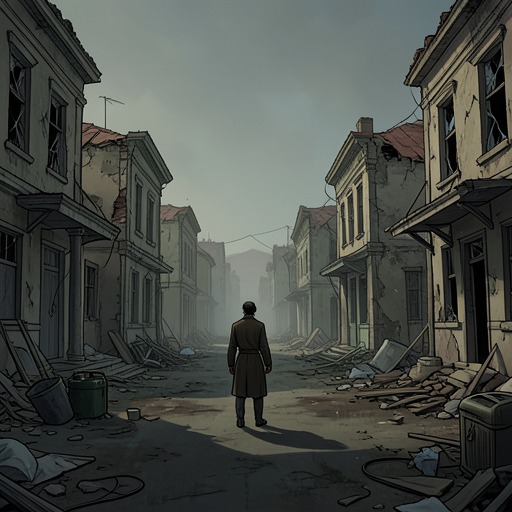
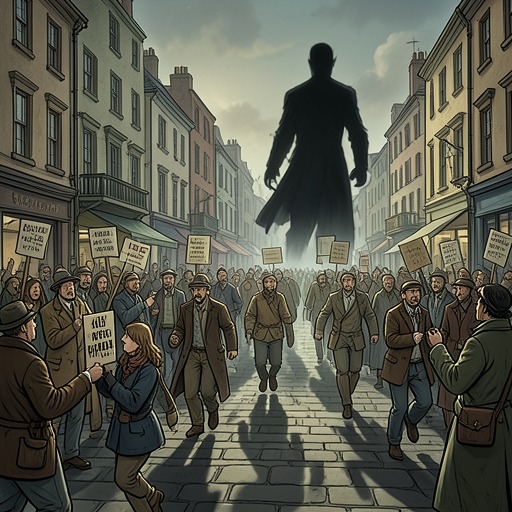
'Salem's Lot: A NovelThe town’s darkness is the defining moral and narrative condition of Jerusalem’s Lot. It is not merely the absence of sunlight or a metaphor for individual wickedness. The town’s darkness is the accumulated secrecy of a close community, the physical arrangement of its roads and houses, the private violence hidden behind familiar names, and the collective failure to recognize an extraordinary danger until it has entered ordinary domestic space. Because the town is intimate enough to know everyone and insulated enough to dismiss what it knows, evil can move through it with the quiet inevitability of a local custom.
A Town Made of People, Buildings, and Land
The concept is introduced through the town’s material structure. Brock Street crosses Jointner Avenue at right angles, dividing the nearly circular township into quadrants and giving the map the appearance of a telescopic sight. Each section carries a different social and physical character. North Jerusalem is wooded high ground, with old logging roads climbing toward the Marsten House. The northeast is open pasture and hay land, shaped by the Royal River, its bridge, fishing spots, and the cliffs called Drunk’s Leap. The southeast contains farms, commuter homes, Schoolyard Hill, and the visible reminder of the 1951 fire in the volunteer fire department’s readiness. The southwest Bend, by contrast, is the town’s roughest margin, crowded with trailers, junked cars, frayed clotheslines, beer cans, children, and hastily installed septic tanks, with Dell’s serving as a place for drinking, fighting, and weekend music. The geography therefore becomes social geography. The town’s roads connect workplaces, farms, schools, bars, cemeteries, and isolated houses, but they also distribute status, mobility, visibility, and danger. The Bend produces much of the town’s scandal, while the wooded heights conceal the Marsten House and the old roads that lead toward it. The settlement is not a neutral backdrop: its boundaries determine who is watched, who is overlooked, and how easily a private disturbance can remain private. The narrator defines the town as an accumulation of three parts: its people, the buildings they have erected for dwelling and business, and the land itself. The people are predominantly Scotch-English and French; the buildings are largely wooden, with old saltboxes and false-fronted stores; the soil is thin over granite, making farming a punishing cycle of rocks, broken harrow blades, bills, and labor. This physical stubbornness gives the town a sense of material endurance, but it also makes life repetitive and constricted. The same ground that seems solid and permanent holds wells, secrets, old crimes, and buried bodies.
Gossip, Intimacy, and Concealed Violence
Telephone lines commonly serve two, four, or six parties, so residents always have someone to discuss. Gossip is the town’s informal surveillance system: it carries information rapidly, but it does not necessarily carry truth. Residents know who has been laid off, who is having marital trouble, where men drink on Friday afternoons, and how to cross the Marshes without wetting their boots. The town knows its inhabitants through their bills, bodies, habits, lies, and hopes, while the inhabitants understand themselves as part of the town’s daily life. This intimacy is described as more complete than private sexual union, at once prosaic, sensuous, and alcoholic. Yet the same closeness that produces knowledge also produces concealment. The town knows that Albie Crane’s wife disappeared with a traveling man, or believes it knows; the hidden reality is that Albie murdered her after the man abandoned her, weighted her body, and threw it down an old well. The truth remains buried beneath blackberry creepers, just as the town’s public story covers its private violence. The Marsten history is even more deeply protected. Residents know that Hubert Marsten killed his wife, but not what preceded the shooting or that Birdie Marsten begged him to do it. Older women remember that Larry McLeod found charred papers in the upstairs fireplace, but they do not know that the papers belonged to twelve years of correspondence between Hubert Marsten and an Austrian nobleman, correspondence initiated through a peculiar Boston bookseller who later died violently. The local community preserves fragments of knowledge while suppressing the pattern that would make them meaningful. Its silence is not ignorance alone; it resembles a communal taboo. Matthew Burke explains that only a small circle of older residents shares the secret gossip about Hubert Marsten’s supposed devil worship. Even Mabel Werts will discuss Hubert only with that circle. The town can speak freely about the murder, but conversation stops when it approaches the years Hubert and Birdie spent in the Marsten House. Rumors that Hubert kidnapped and sacrificed children intensify the sense that the house contains a history the community has chosen not to examine. The secrecy is described as almost tribal, a shared prohibition maintained across generations. The catalogue of hidden lives extends beyond the Marsten story. Private fantasies, sexual betrayals, shameful desires, religious nightmares, and unspoken crimes coexist with respectable routines. Floyd Tibbits spends a day in a pale, sickly daze after attacking Ben Mears, unable to remember the assault clearly but anticipating sunset with gratitude. Carl Foreman cannot scream when Mike Ryerson’s corpse begins to move on the mortuary table. A baby is taken from its crib by Danny Glick, its body already marked by maternal abuse. These secrets do not belong to one villain or one house. They are the town’s submerged life, and the town keeps them with an “ultimate poker face.”
The Ordinary World and the Arrival of Evil
Jerusalem’s Lot has learned about wars, burnings, and national crises mainly through television. Vietnam produces local casualties and altered veterans, but the country’s torment remains academically distant. The children’s hair grows longer, a high-school dress code disappears, some teenagers use drugs, and alcohol causes fatal driving accidents such as Billy Smith’s crash on Deep Cut Road. These events are real, but they are absorbed as exceptions within a reassuring civic story. The town’s governing assumption is that nothing truly terrible can happen there. That assumption is the first protection given to evil. The town’s knowledge of catastrophe is mediated, remote, and categorized; its own tragedies are treated as isolated accidents, family matters, or old scandals. The phrase “Not there” expresses not confidence based on evidence but a habit of exclusion. Jerusalem’s Lot imagines itself as the kind of place where horror belongs to cities, history, newspapers, or television—not to its own bedrooms and cellars. The death of Danny Glick exposes the weakness of that belief. His burial at Harmony Hill Cemetery occurs on September 28, the first real day of fall, and draws classmates, relatives, curious residents, and older people habituated to funerals. The funeral procession climbs Burns Road with headlights burning despite the daylight, turning a familiar civic ritual into an image of collective unease. The town gathers to acknowledge a death while remaining unable to understand the force that has already begun to cross its boundaries. As the vampire colony develops, the town’s ordinary institutions become potential camouflage. Jimmy Cody observes that Jerusalem’s Lot is largely a bedroom community for Portland, Lewiston, and Gates Falls, with little local industry and schools consolidated across three towns. Absences could increase without attracting notice; many residents attend church elsewhere or nowhere; television has weakened neighborhood gatherings. A vampire colony could therefore be established behind the scenes with alarming ease. The social system that once promised mutual observation has become fragmented enough to hide a spreading infection. Ben Mears recognizes the practical consequences of this fragmentation. People might be lying in beds, standing in closets, or waiting in cellars for sunset while a visitor passing through saw only another one-horse town that rolled up its sidewalks at nine. Each sunrise could leave fewer people visible in the streets. The horror is not simply that residents are attacked; it is that the town’s social arrangements make disappearance appear normal until the pattern becomes impossible to deny.
Darkness as Collective Knowledge
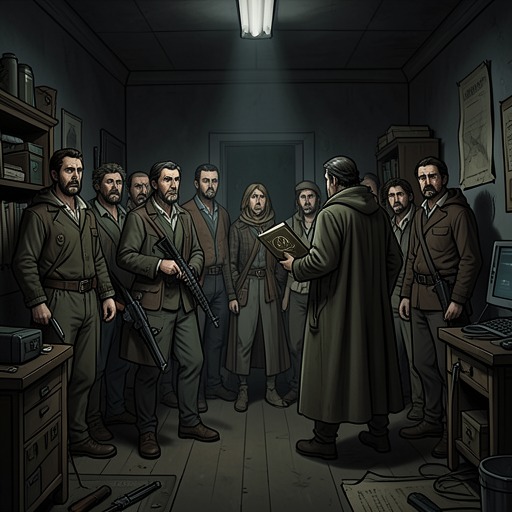
The central formulation is direct: the town knew about darkness. It knows the darkness produced by the earth’s rotation and the darkness of the human soul. It also anticipates the arrival of supernatural evil, as though the town already possessed the shape of the thing approaching it. This personification makes Jerusalem’s Lot an active participant in its own history. The settlement does not merely contain secrets; it stores, repeats, and protects them. The town’s darkness is morally indifferent. It cares no more for the devil’s work than for God’s work or humanity’s work. That indifference is more disturbing than a simple allegiance to evil. The town does not consciously summon darkness, nor does it defend virtue. It accommodates whatever enters its routines, provided the surface of daily life can remain intact. Its silence can shelter a murderer, a sexual betrayal, a religious shame, or a supernatural predator without changing tone. This condition also explains the contrast between private suspicion and public action. When the vampire crisis becomes unmistakable, some residents wake and turn on every light in their homes. They search bureau drawers, attic boxes, and jewelry collections for religious symbols even though they do not understand why. None knows the truth; some suspect that something is wrong, but their suspicions remain vague. Most importantly, they do not look out the windows. Their instinctive rituals show that buried communal knowledge can survive after conscious understanding has failed, while their refusal to look outward shows fear becoming a form of self-imposed blindness. The same pattern appears in the investigation of the dead. When the bodies are taken from the Cumberland County Morgue in Portland, the news sounds like a grotesque story from a horror film. Carl Foreman is gone, along with the bodies of Floyd Tibbits and the McDougall baby; Mike Ryerson is also missing. Yet the possibility of a town-wide outbreak initially remains difficult to admit. The dead are not only victims but evidence, and their disappearance from institutional custody demonstrates that the crisis has escaped private houses and entered the systems meant to preserve reality. The mortuary scenes make that epistemological collapse physical. Marjorie Glick’s body lies on a stainless-steel table while Jimmy Cody notes the absence of surface lividity and rigor, signs that resist an ordinary medical explanation. Later, Mark Petrie and Jimmy pull Roy McDougall from a crawl space into weakening daylight. His body writhes, steams, sags, and retreats into shadow, while his breathing stops changing as soon as the light no longer reaches him. Medical observation and supernatural recognition converge: the body itself becomes a record of what the town has refused to see.
Spatial Contagion and Narrative Significance
The town’s darkness spreads through thresholds. It travels along roads, through party telephone lines, into bedrooms and cellars, across cemeteries, and through institutions such as the hospital and morgue. The boundaries between public and private space, living and dead, ordinary illness and vampirism, become unstable. The quiet of a house can conceal an attack; a graveyard can become an active site of return; a crawl space can shelter a body that behaves neither as a living patient nor as an inert corpse. The Marsten House gives this diffusion a focal point, but the narrative does not reduce darkness to architecture alone. Matthew Burke insists that houses are only houses and that evil dies with the commission of evil acts, while Ben Mears’s knowledge and the town’s older gossip suggest that the house has become inseparable from the acts, memories, and prohibitions attached to it. The disagreement reveals two models of darkness: evil as a completed human action, and evil as a continuing atmosphere that gathers around places and communities. The town’s social structure makes the second model persuasive. Its people are bound by work, debt, kinship, scandal, and local memory; its land is hard, old, and thinly covered; its buildings preserve the forms of earlier lives while concealing what lies behind their façades. The result is a community whose apparent stability is also a mechanism of repression. When supernatural evil arrives, it does not need to invent a new society. It exploits the one already present: its isolation, its routines, its trust in appearances, and its reluctance to turn private knowledge into public accusation. The town’s darkness therefore names both a subject and a method. It is the content of the secrets Jerusalem’s Lot keeps, and it is the narrative principle by which those secrets are revealed slowly—through gossip, medical anomalies, missing bodies, remembered crimes, and changes in the night. Some secrets later become known; others never do. The town remains a keeper even after its inhabitants begin to understand that the darkness was not outside the community waiting to invade it. It had been embedded in the town’s geography, memory, and habits of looking away.