Ross
𝐋𝐚𝐜𝐮𝐧𝐚 | 𝑱𝒆𝒐𝒏 𝑱𝒖𝒏𝒈𝒌𝒐𝒐𝒌Ross enters the narrative through Dorcas’s account of a developing romance, becoming a figure associated with tentative attachment, emotional steadiness, and the possibility of happiness after upheaval. His introduction also gives Shelby a moment in which she can observe affection from the outside and recognize that both of her friends are moving forward, just as she is beginning to do with Jungkook.
Introduction and Background
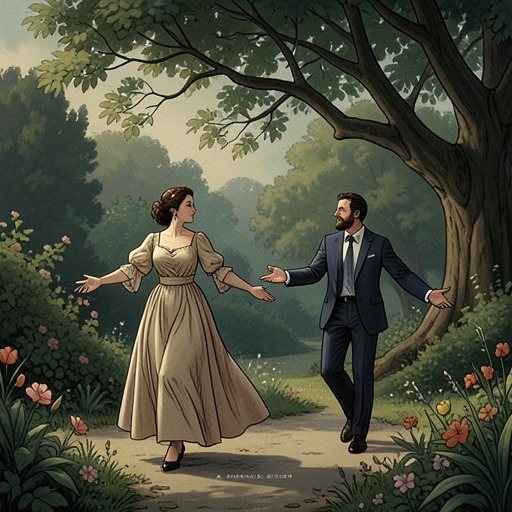
Ross is a student from another department at the university whom Dorcas has been seeing for several weeks. Their relationship is still at an early stage: Dorcas explains that they have not yet developed strong romantic feelings, but that she is becoming attached to him gradually. Their first described date includes dinner at Aurora, a film, and a nighttime walk through the town center. The sequence presents their connection as ordinary and exploratory rather than sudden or consuming.
Dorcas is sufficiently pleased by the encounter to tell Shelby about it when she enters the amphitheater. She embraces Shelby, kisses her cheek, and recounts the previous evening with visible enthusiasm. Shelby responds with genuine happiness for her friend, although she has long imagined that Dorcas might eventually end up with Namjoon. Ross therefore arrives against an existing social expectation, not through a dramatic confrontation but through the quiet rearrangement of Dorcas’s emotional possibilities.
First Meeting with Shelby
Dorcas later brings Ross to the university cafeteria so that Shelby can finally meet the person whose name she has been hearing. Shelby finds them at a table and notices that Ross is a handsome blond with hazel eyes. His presence carries a dual impression: he seems benevolent, yet also somewhat mysterious. Shelby compares his inscrutability with Jungkook’s, suggesting that Ross is not presented as completely transparent even while his conduct appears reassuring.
Ross recognizes Shelby and greets her warmly, while Shelby answers with playful familiarity about finally putting a face to a name. The meeting immediately becomes relaxed rather than strained. Ross laughs as Dorcas opens the conversation, and Shelby notices that he smiles while watching Dorcas’s happiness. His eyes reveal an appreciation for her that Dorcas herself appears not to understand fully, making his affection more legible to an observer than to its recipient.
Character and Relationships
Ross’s defining evidence is behavioral rather than biographical. He is attentive, kind, and explicitly unlike an opportunist in Shelby’s judgment. That impression matters because Shelby has learned to examine the motives of people who approach those she cares about. Ross does not exploit Dorcas’s excitement or compete for attention; instead, he participates in the conversation and allows her enthusiasm to remain central.
His relationship with Dorcas is consequently characterized by gradual attachment and mutual interest. Dorcas wants Shelby to meet him, and Ross’s response to Dorcas’s animated conversation confirms that he values her presence. Shelby sees more clearly than Dorcas that he likes her, creating a gentle irony: the developing couple’s emotional situation is visible through the eyes of a friend before it is fully acknowledged by the people involved.
Ross also becomes part of Shelby’s broader circle through this introduction. When Shelby asks him and Dorcas about their relationship, the two exchange a look and shrug before returning their attention to her. The gesture preserves the tentative quality of their bond. Neither offers a grand declaration; their connection remains something being discovered through shared time, conversation, and increasing comfort.
Narrative Function and Significance
Ross’s appearance occurs during a period in which Shelby is assessing the changes in her life at Ellensburg. She reflects that moving away from Los Angeles was difficult but ultimately beneficial, because the new environment helped her trust herself, continue healing, and find love with Jungkook. Dorcas and Cassiopée have also changed: Cassiopée is no longer living with drugs as part of her daily life, and Dorcas is beginning a relationship that may bring her happiness. Ross thus functions as evidence of a wider social recovery rather than as an isolated romantic addition.
The contrast between Ross’s quiet attentiveness and the violence, coercion, and emotional instability elsewhere in the story gives his limited presence particular weight. He belongs to a form of intimacy built from approach, recognition, and patience. In a narrative repeatedly concerned with whether care can replace control, his conduct offers a modest counterimage: affection is allowed to develop without pressure, while Shelby’s scrutiny confirms that he appears safe to those around him.
Ross’s role remains secondary, and the available narrative does not establish a completed romantic future with Dorcas. Its significance lies instead in the hopeful direction of the relationship. By the time Shelby meets him, he represents the possibility that the people surrounding her can form gentler bonds, and that ordinary pleasure—a meal, a film, a walk, and an unforced conversation—can coexist with the difficult work of recovery.