Shelby Anderson Barnum
𝐋𝐚𝐜𝐮𝐧𝐚 | 𝑱𝒆𝒐𝒏 𝑱𝒖𝒏𝒈𝒌𝒐𝒐𝒌Shelby Anderson Barnum is the novel’s central figure: a young Californian whose former optimism has been reshaped by loss and trauma into guarded pessimism, emotional distance, and a fierce need for control. Her decisive significance lies in the tension between the “broken one” identity attached to her and the persistent agency visible beneath it. She does not simply recover from suffering; she repeatedly learns how to inhabit her body, accept care, make art, form attachments, and speak publicly about what was done to her.
Identity and Background
Shelby enters the story as a first-year student at Central Washington University, already carrying a profound reluctance toward social connection. She arrives on campus wearing headphones and listening to AC/DC’s “Highway To Hell,” while privately longing to return to California. Her reserve is immediately contrasted with the fiery energy of a new acquaintance, and her exhaustion at that positivity shows how thoroughly ordinary contact has become difficult for her. The novel frames her not as naturally cold but as someone whose earlier openness has been forced into defensive stillness.
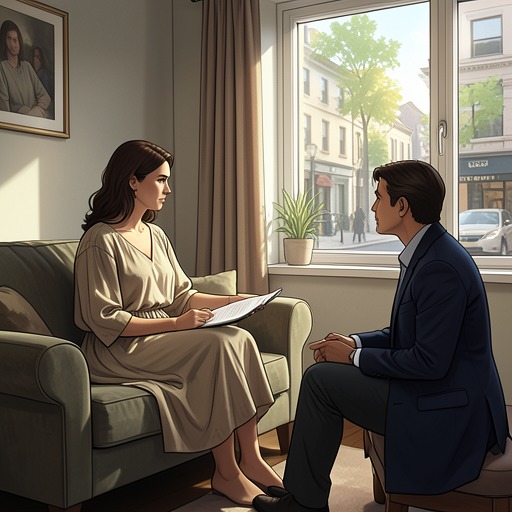
Her past contains both a sustaining source of love and a devastating bereavement. In therapy with Sunmi Eun, Shelby recalls her mother as a radiant, constantly smiling presence whose voice was gentle and calming. That memory remains an “eternal source” of happiness, but it is inseparable from the memory of illness: Shelby was eight when her mother developed generalized cancer, and she stayed beside her, trying to be her father’s and mother’s “sun” despite being a child herself. Her mother’s death becomes the first overwhelming trial in the history Shelby tells about herself, establishing why tenderness and grief remain so closely linked.
Drawing is the discipline that gives her pain a channel. After the accident that altered her life, the once-positive girl became pessimistic, imperturbable, harsh, and withdrawn, closing off possible futures while turning toward art as a way to discharge anger and sadness. This artistic practice is not presented as a complete cure. It is instead a means by which feelings that cannot yet be spoken can continue to exist without entirely consuming her.
Trauma, Body, and Daily Survival
Shelby’s suffering appears in physical routines as much as in explicit recollection. On the morning of 2 September, her alarm rings at eight, although she has already been awake since five. After showering, she wipes the fog from the mirror and looks at herself for the first time in years. Tears follow immediately: her body seems to her to reflect her anxiety and inner misery, while resentment continues to erode her. She dresses in a black Nirvana shirt, ripped high-waisted boyfriend jeans, black Dr. Martens boots, and an oversized denim jacket, using a carefully recognizable style to move through a world in which her own reflection feels alien.
The most acute manifestations of her trauma are panic, insomnia, and involuntary bodily memory. During an art class, a recalled childhood scene gives way to pain throughout her body, a racing and constricted heart, accelerated breathing, and tears. She flees the classroom without speaking and hides in an isolated place, covering her pierced ears while panic and anxiety seem to whisper her deepest fears back to her. When Cassiopée Smith places hands on her shoulders, Shelby recoils and cries out in pain, making clear that unexpected touch can itself become a threat. Cassiopée then stops forcing contact and tries to approach her calmly, while Shelby remains curled inward and unable to ask for help directly.
Afterward, her treatment schedule leaves little room to breathe. She moves between classes, appointments with Sunmi, and meetings with a nutritionist, while her father, Connor Barnum, responds with concern and encouragement. Insomnia keeps her walking through campus at night in an effort to empty her mind, but the novel repeatedly returns to the image of demons sitting on her shoulders, whispering fears and memories she wants to erase. Even after she manages to sleep, fatigue remains visible, and her cheeks have hollowed over the weeks.
Her body is also endangered by violence outside the mind. At a bar, an intoxicated man grabs her, draws a penknife, and stabs her in the abdomen before fleeing. Shelby nevertheless struggles to stand and find her way onward while holding her stomach. The scene makes survival brutally concrete: she is not merely remembering danger but moving through its immediate aftermath, wounded and forced to keep herself alive.
Relationships and the Possibility of Care
Shelby’s relationships develop around the problem of touch, trust, and choice. Cassiopée’s response during the panic attack is significant because she remains present without treating Shelby’s distress as an invitation to impose physical comfort. Jungkook Jeon likewise finds her trembling in the showers at Ares Garden and, rather than demanding an explanation or attempting to control her, turns off the water, crouches before her, and waits beside her until she calms. Shelby notices that he remains with her again, and the repetition slowly turns his presence into something she can recognize as dependable.
The connection with Jungkook is built through mutual disturbance rather than easy romance. Shelby first sees him on the underground ring at Ares Garden, where he climbs into a fight without gloves beneath the excited cheers of a crowd. She is startled by the adrenaline of the sight, fascinated by the tattoos covering his arms, and only gradually understands that the venue is illegal. Her attraction is therefore entangled with danger, curiosity, and recognition: Jungkook’s violent public persona stands beside the quieter fact that he can sit helplessly near her and wait.
A later moment of care makes the contrast even clearer. After Shelby sees the bruises Jungkook received, she breaks down beside a bathroom wall. He crouches near her and places his right hand on her knees, a contact she actively seeks because she needs comfort. His regret that he took her to the dangerous place is met by her attempt to minimize the harm, but the scene shows a developing exchange in which care is negotiated rather than assumed.
That fragile trust is shattered when Shelby is shown a video of Jungkook and Kayla Brown having sex. The images compress betrayal, sexual history, and Jungkook’s apparent relapse into a single unbearable revelation. Shelby drops the phone, runs from the nightclub, falls and injures her left knee, then returns to her dormitory and smashes the bathroom mirror with her bare hand. She falls asleep only after exhausting herself, her right hand bleeding. The next day she rereads messages while crying and asks Namjoon Kim how Jungkook could have done this; Namjoon’s embrace gives her immediate companionship while she is unable to make sense of what she has seen.
The later panic attack in Los Angeles shows both the persistence of the wound and the changed structure of her support. When Madison Jefferson’s presence triggers images of pain and water, Shelby collapses, covers her ears, and pleads not to be touched because she believes she may be harmed. Madison recognizes the episode, finds Jungkook, and tells him what is happening. He runs to Shelby, draws her against him, and calms her through familiar presence and gentle attention until her breathing returns to normal. The scene does not erase the trigger; it demonstrates that Shelby can now have a route back from it through trusted care.
Art, Witnessing, and Public Resistance
Art links Shelby’s private survival to a future shared with others. She initially regards relationships and physical contact with suspicion, envies couples from a distance, and believes she will not allow anyone into her life romantically. Yet she eventually accepts a photography exhibition project with Jungkook after their work is well received at Central Washington University. At a Dale Chihuly exhibition in a former amusement park, she becomes absorbed by the harmony between glass sculpture and nature. The photography exhibition is set in the Glass House, beneath orange and yellow glass flowers, a setting that gives her art a public and almost ceremonial space.
Her decision to continue the project matters because it follows rupture rather than naïve trust. Shelby’s willingness to exhibit with Jungkook is not evidence that the earlier betrayal has become irrelevant; it is evidence that she can distinguish the possibility of meaningful collaboration from the demand to forget injury. Artistic practice becomes a form of controlled exposure to the world, allowing her to create something visible without surrendering all boundaries.
The most consequential act of witnessing occurs in court. Shelby’s long-suspended future had once been organized around attending UCLA, but Robert Jefferson’s assault destroyed that confidence and opened the door to persistent anxiety. When she later encounters Robert in Los Angeles, her breathing stops, her chest tightens, and the past returns with its hatred and violence. She freezes as he approaches and addresses her with false familiarity, while she answers him without warmth or hesitation.
At the hearing, Shelby takes the stand before Robert’s hostile gaze and Jungkook’s murderous anger. She swears on the Bible to tell the truth. The defense attempts to destabilize her by suggesting that the trial is merely an effort to obtain money, but she keeps her expression controlled until she must recount what happened with her abuser. Then tears rise and run down her face, while Cassiopée and Dorcas Peters cry in response. Her testimony is therefore neither an image of invulnerability nor a collapse into helplessness. She speaks while visibly wounded, making the act of testimony a form of resistance that does not require the body to conceal its pain.
Change, Future, and Narrative Role
Shelby’s trajectory moves from retreat toward chosen participation. At the beginning, she avoids social bonds, cannot bear her reflection, remains awake through the night, and treats the future as something closed by trauma. The recurrence of panic, self-directed violence, and bodily distrust shows that improvement is neither linear nor guaranteed. Every movement toward intimacy can be followed by terror, and every public step can reactivate the past.
Nevertheless, the novel gives her change a concrete direction. She accepts help from friends, continues treatment with Sunmi, works with a nutritionist, allows Jungkook’s care when it feels safe, participates in a university exhibition, and confronts Robert in person and in court. These actions revise the story she tells about herself. Shelby remains marked by grief, sexual violence, anxiety, depression, and fear, but those marks no longer exhaust her identity.
Her departure for Los Angeles makes that revision visible. By the time she leaves with Jungkook, she has regained enough happiness to refuse further retreat from the future she once planned. Connor struggles to let go of her and embraces Jungkook as well, while the nearly nineteen-hour road journey restores enthusiasm to both travelers. Shelby is not returning to the carefree optimism of childhood; she is carrying pain, relationships, art, and hard-won trust into a life she has chosen to continue. Her significance rests precisely there: she becomes neither untouched nor magically repaired, but a survivor whose renewed will to live is expressed through movement, creation, testimony, and the gradual acceptance of love.